september 20, 2023
Interview for Bloovi : WEB32 brings together a community of technological visionaries
WEB32: “It’s about connecting, experimenting and inspiring”
Bloovi, April 10th, 2023
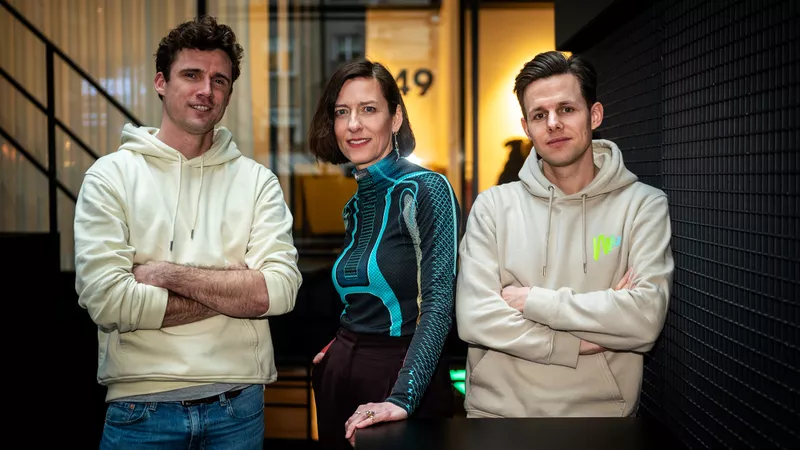
In June 2022, the WEB32 networking event brought professionals and those interested in web3 together for the first time in the Waagnatie in Antwerp. Due to the great interest and the positive reactions, a second edition of the ‘inspiring deep dive into web3, NFT’s and The Metaverse’, as the organizers describe it, will be held on September 27. “WEB32 is not about which NFTs to buy, how to make money from them or any other financial advice. Bringing the community together, highlighting the innovative possibilities of web3 and looking for potential: that is our goal”, emphasize the three organizers Ann Claes, Gilles Den Haese and Thomas Lambert. A matchmaking event, in other words, which the city of Antwerp supports 100%, and therefore also financially supports it.
For those who hear it thunder in Cologne: web3 is a decentralized version of the internet where not the big tech companies, but the user himself is in control. Concepts such as blockchain technology, NFTs and token-based economics are central here. “Web3 and blockchain technology can create added value in the back-end on the one hand, so on the supporting and practical side.”
“On the other hand, web3 creates numerous opportunities on the soft side. It makes it possible to work even more customer-centric. In co-creation, segmented, transparent and with extra experience, in order to build and serve a community.” explains Gilles Den Haese, who has long been fascinated by the wonderful web3 world.
Den Haese is the co-founder of 0x32, the first NFT/web3 community in Belgium that brings together professionals and interested parties to exchange thoughts and experiences and thus learn from each other. In addition, the self-proclaimed cryptonative entrepreneur is active with his company OG studio in various web3 projects, from strategy and education to development and community building.
Den Haeses 0x32 co-founder Thomas Lambert also said he struggled ‘deep into the web3 rabbit hole’. As a co-partner and creative director of OG Studio, he helps companies and other creatives discover the many possibilities of web3 and convert them into impactful projects.
Sharing knowledge about web3 via WEB32
“In 2022 we organized a meetup in Antwerp with 0x32 and we met Ann Claes there”, Den Haese recalls about their meeting with the fashion project manager at Flanders DC and founder of Mutani, which aims to form a bridge between (fashion) designers and digital worlds and games. “We got talking and it quickly became clear that we shared a huge passion for web3. One thing led to another, namely the idea of organizing an event together in Antwerp”, he continues.
“NFTs, the metaverse: it all evolves at lightning speed and for many it remains something very abstract. Nevertheless, interest is increasing and we see many creative initiatives and valuable projects emerging, also locally,” says Claes. A good example is the ‘Signum’ platform recently launched by diamond and tech company HB Antwerp, where blockchain technology brings diamonds to life in the metaverse.
Venly is also fully committed to the blockchain to help companies make an impact with web3. Together with Shopify, they developed a standard webshop template with which the Antwerp digital fashion network can sell Mutani NFTs. And let’s not forget the Tomorrowland NFT collection, with which fans experience ‘the ultimate experience’ with exclusive content and first access to new activities, among other things.
“Because of all these great examples of impactful web3 projects in our own country, we thought: let’s organize an event in Antwerp that makes this all very concrete, recognizable and accessible,” Claes continues. No sooner said than done: based on their shared fascination, knowledge and drive to bring people together, Claes, Den Haese and Lambert joined forces. WEB32 was born.
B2B matchmaking supported by the city of Antwerp
The first edition of WEB32, which took place in June 2022, was created with the support of the city of Antwerp. Every year, the city provides a budget for the financial support of matchmaking events. At these events, entrepreneurs can make the right contacts with companies and organizations that help them to find capital or talent, or to further grow their business.
“Since we focus on a professional target group and want to bring people together and inspire, we fit in perfectly with that picture. The city believed in our idea,” says Claes. “We were ‘just’ three people who came up with an idea to bring together entrepreneurs who want to know more about web3 and to share knowledge and expertise in the matter, not a big company with a real marketing machine. We are therefore very grateful to the city of Antwerp for giving us the opportunity to realize this.
We are therefore very grateful to the city of Antwerp for giving us the opportunity to realize this
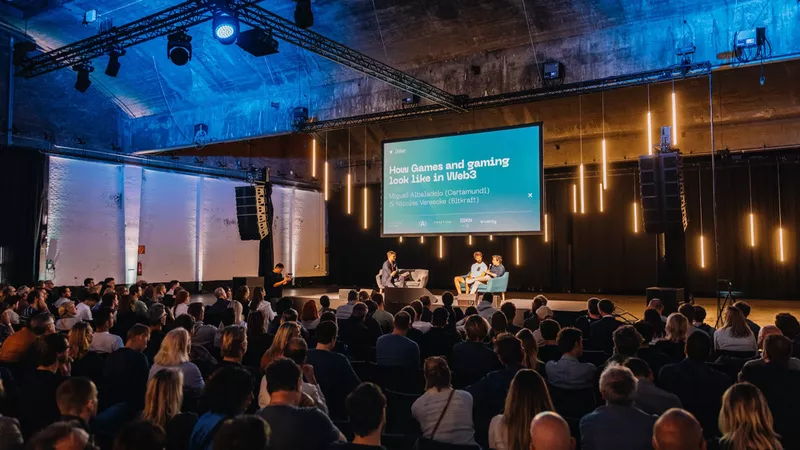
In 2022, the event welcomed just under 400 visitors to the Waagnatie in Antwerp. “It was clear that there is a great need for clear information, concrete cases and the exchange of experiences,” says Claes. After last year’s great interest, there will be a second edition of WEB32 on September 27, 2023.
“The last event was in June, which in hindsight may not have been the best time as many young people were taking exams then. This year we are aiming for autumn because we consciously want to involve the young generation as well. After all, we believe in their potential to make a contribution, and we notice that they are open to the new possibilities that web3 offers and that they feel like immersing themselves in it”, says Claes.
Empower visitors
What can visitors expect from WEB32? Just like last year, you can attend an inspiring mix of talks and panel discussions with leading companies, creatives and other visionary thinkers. You get the chance to fully connect with the community and discover what web3 and the metaverse can offer you and your company.
In addition to technology, a lot of attention is paid to creativity. “We also organize ‘meet the expert’ sessions where you have a one-on-one conversation for half an hour with people who are active in the web3 world in various fields. Our focus is on ‘local heroes’, because there are already so many great projects in our own country and we should be proud of them. Networking and making the network work: that’s what we want to achieve with WEB32,” says Claes.
“We all realize the value of the technology, but we especially want to look beyond the hype to concrete use cases. But also what it can mean for entrepreneurs, creatives and companies looking for a solution, or just for inspiration,” says Lambert. “We target both people and companies who are already involved in the whole web3 thing and those who want to get started and need a little extra push and accessible information. In this way we want to empower visitors so that they can get to work and make an impact.
The organizers emphasize that they do not want to push anyone in a certain direction. Both supporters and opponents are welcome on WEB32 to learn, experiment and inspire. “We realize that there are still pain points with the technology, it is certainly not all ready yet.”
“This is how we push each other forward and that ensures that we were able to grow in such a short time. While in the beginning we had to pull the cart everywhere ourselves, people and companies are already coming to us with ideas and proposals to work together for WEB. It is nice to experience how everything is growing organically.”
We hope that we can once again welcome many enthusiastic visitors on September 27!
“What I especially like is that none of our team knew each other before. This entire project really stems from our shared passion. We all do this in addition to our main job, so that proves our drive and mindset to go for it. We do not have a major economic goal, we just want this technology to be used as much as possible because we believe 100% in the impact it can make.”
“WEB32 was the very first web3 event in Flanders, and also the largest in Belgium. That makes us forever unique. This is really from the community and for the community. We hope that we can once again welcome many enthusiastic visitors on September 27!” conclude the organizers.
Subscribe HERE to the WEB32 newsletter to be the first to know about the next edition.
september 20, 2023
Interview Fashion United: More legislation is required in order to change the industry
Interview with Jasmien in Fashion United about European policy and her Master’s thesis on the subject, written by Natasja Admiraal
Isn’t it a crying shame that an industry responsible for producing so many beautiful products, simultaneously has such an incredible impact on both people and the planet? Anyone who decides to take a somewhat more detailed look into the ‘ugly’ side of the fashion industry will not be able to help but lose sleep over this, according to Jasmien Wynants. She has spent the last seven years conducting research into sustainable entrepreneurship and the circular economy at Flanders DC (the umbrella organisation for creative individuals in Flanders), with one single goal in mind: to improve the fashion industry.
It was starting to become abundantly clear to her that changes in both the industry and consumer choices simply wouldn’t be enough. “Legislation and policies are essential for removing a number of barriers and accelerating the transition to a circular economy”, Wynants states. She recently completed her Master’s in Environmental Science at the University of Antwerp and wrote her master thesis on textiles and European policy. FashionUnited spoke to her about this research and about the recommendations which resulted from this.
How did your interest in sustainable fashion first come about?
I was given the opportunity to inform and guide Flemish fashion companies towards a better way of working during my time at Flanders DC, via the Close The Loop programme. I spoke to numerous inspiring entrepreneurs and innovative start-ups and came to the conclusion that we were dealing with a sustainability revolution. Only a few players were involved with this in the past, now virtually everyone is losing sleep over this subject.
An increasing number of companies, from small to large, are now looking for ways to change their business model and work with respect for both people and the environment. However, I’ve also noticed that companies are all faced with the exact same hurdles. There is a growing interest in sustainable fashion among consumers too, but many people find making the right choices anything but easy. And that’s simply because the system behind it isn’t right.
Do explain...
The fast fashion model, which once stood for positive development, i.e. the democratisation of fashion, has been completely derailed over the last 15 years. An item of clothing’s life cycle has become shorter and shorter. The fashion industry is largely based on rapidly changing trends with overconsumption at the root of the issue. This has major consequences for both people and the planet.
Enormous volumes of non-renewable resources are used to produce clothing that is only worn for a very short period of time, only to then be dumped or incinerated. A huge amount of water is used during this process and a fair amount of pollution is involved too. The complex production chains are well known for their exploitation in the producing countries.
What is needed to change this system?
This is almost impossible for a company. Policies and legislation are needed for this. If a change to a system is required, a government can take on a guiding role in order to accelerate this process. This can be done both by imposing obligations and by providing positive incentives, for example, by rewarding companies with tax benefits if they introduce sustainable measures.
Are you more in favour of negative or positive incentives?
I tend to choose the latter from a consumer perspective. You can compare it to the food industry. You’re not going to make anyone happy by telling them they can’t eat meat anymore. People will feel attacked and this can lead to defensive behaviour. You would be much better off trying to convince people with inspiring vegetarian recipes. So a positive incentive will certainly prove useful if you’re trying to convince companies to opt for sustainable materials.
You can make it economically interesting for them to make responsible choices by making sure they can maintain their margins and that their product remains profitable. Whilst at the same time, it’s certainly also a good idea to impose a number of obligations on the industry. This could include, for example, a ban on harmful chemicals or a minimum quality for textiles. It will therefore always be about a combination of those two methods. The art and the difficulty is in finding the right mix in policymaking.
You have certainly timed your master thesis very well: the research perfectly fits within the European Commission’s Green Deal context.
That’s right, the European Commission launched a new action plan for the circular economy in March 2020. It will become one of the most important building blocks of the new European Green Deal, the plan with which the EU wants to make the economy sustainable, with the main objective being to realise a climate-neutral union by 2050. Extra attention will be devoted to certain sectors as a result of their impact on the environment or the circular opportunities and one of these sectors is… textiles!
What is going to be addressed in this action plan?
It contains measures aimed at the entire life cycle of products. Specific actions are being worked out for textiles and a comprehensive European strategy with measures will be drawn up. The focus will be on creating a framework for sustainable products, but also on improving the business and regulatory climate for sustainable textiles.
Even though your master thesis is based on a Flemish perspective, your recommendations definitely look at things from within a broader Belgian and European context. Why is that important?
Demarcation is crucial, you’ve got to start somewhere. Eventually, everything is connected. For example, we are currently looking into how a reduction in VAT on certain products or services could play a role in convincing and stimulating consumers and companies to buy sustainably. A measure that is anchored in national legislation, but for which the European VAT Directive will first need to be revised. Flanders, therefore, formed the starting point for my research, but you can naturally repeat this exercise for other countries or parts of other countries too.
What was the biggest challenge you came across during your research?
The complexity of policies and legislation. As I said, it’s a huge tangle of connected little radars in a big hole. Laws, regulations, guidelines… it’s so important for these matters to be effectively established and written up, with input provided by the sector. But not every company is going to have time to provide input, let alone actually get immersed in the complexity of the material.
You managed to bring those two worlds of policy and industry together through round table discussions.
Yes and I’m very pleased with the excellent industry stakeholders’ attendance during these round table discussions. Once again proof that the sector itself wants to move forward. One of the aspects which came to the surface during the discussions with policymakers is that it’s quite exceptional for a sector to ask for more legislation.
What are the most important recommendations in your master thesis?
Firstly, there’s a need for clarity and demarcations. One of the things which emerged from the round table discussions is that there is no clear definition for circular textiles. And this is absolutely crucial to be able to prepare an effective policy. It starts with all of us measuring with the exact same measurements. After all, everyone uses different criteria where sustainability is concerned and there’s a proliferation of quality marks and certificates.
Another recommendation is the importance of quality. There are always plenty of discussions about animal welfare, lower CO² emissions and less water consumption, but the products’ lifespan is definitely essential too. We must encourage companies to produce products that will last a long time and are recyclable, in order to do something about the growing mountain of waste, full of non-recyclable textiles. And to avoid low-grade qualities.
Uniformity is once again important here, in order for us to realise a minimum quality standard: you can’t draw up a policy and subsequently enforce it too until everyone is speaking the exact same language.
And finally, you state that subsidies are important, providing there’s a sales market for them too.
It’s obviously fantastic that governments are investing in innovation, but in practice there often isn’t enough insight into where that money goes. Four comparable projects were recently approved instead of centralising these and stimulating collaborations. More coherence, that’s what it should start with. Not just turning on the money tap, but instead streamlining and coordinating the subsidies more effectively. And then specifically focusing on creating a sales market for the innovations which will arise from this.
The course awarded your master thesis with a mark of ‘great distinction’. Does this encourage you to continue with academic research?
There’s certainly plenty of potential for further research. Even though I have now actually headed off in a different direction. I now work as a Sustainability Coordinator at Xandres two days a week, a Belgian fashion house with a long history and where quality has always been a central focus point. The company was looking for someone who could turn the sustainability objectives, a long-term strategy, into concrete short-term actions.
And I work at Flanders DC three days a week too. A fantastic combination, as any issues we’re faced with at Xandres, and undoubtedly other fashion companies too, can subsequently be tackled at Flanders DC. This can definitely work the other way round too, as I certainly come across organisations at Flanders DC which could potentially be of interest to Xandres. I truly believe working together is the only way for us to realise real progress.
This article was previously published in Dutch.
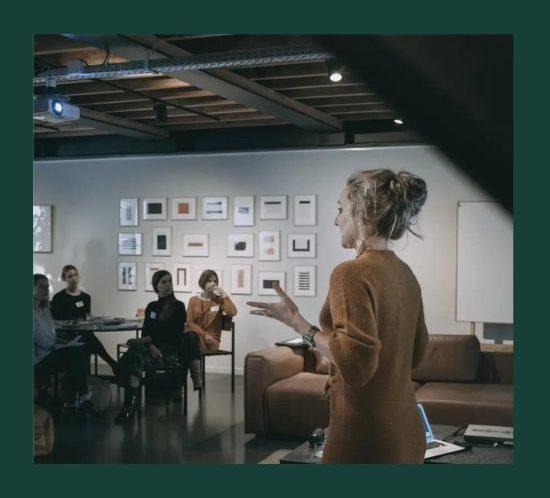
september 20, 2023
Fashion United on Xandres’ change management, led by Jasmien: Sustainable business? It’s all about employee engagement
Fashion United, Natasja Admiraal
Interview with Jasmien Wynants and Veerle Spaepen (Thomas More University of Applied Science) in Fashion United, written by Natasja Admiraal.
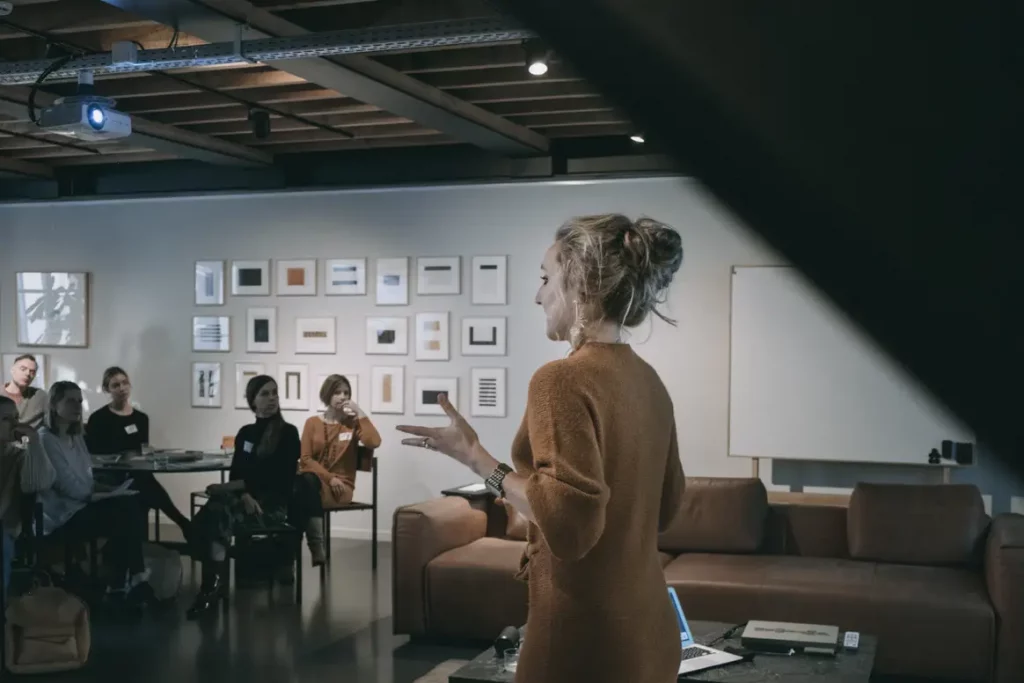
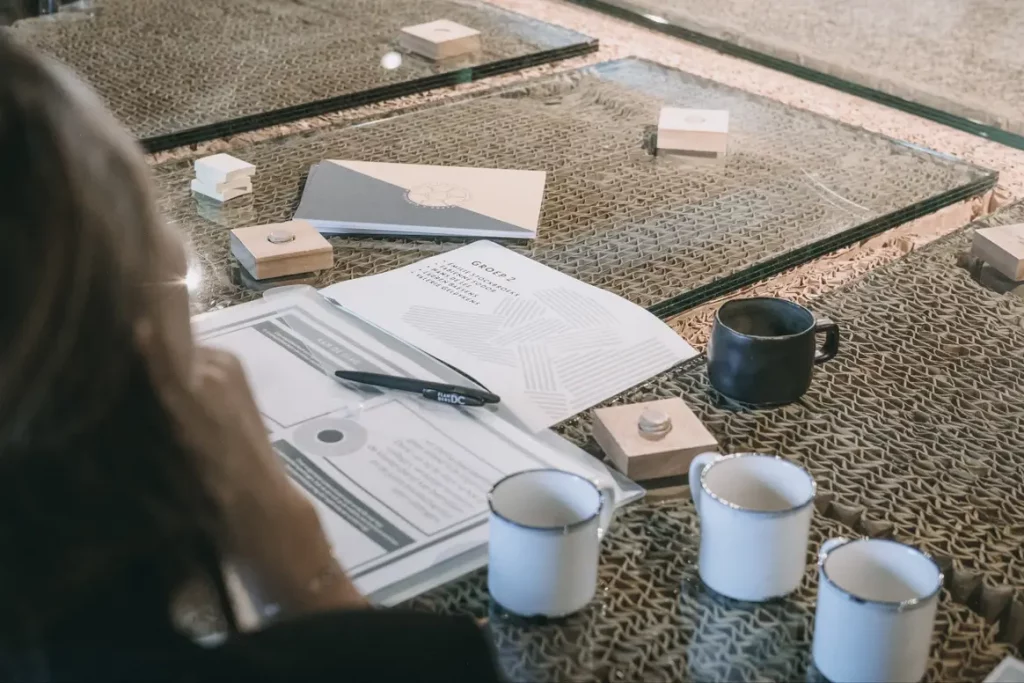
Do you, as a fashion company, want to do sustainable business and realize circular ambitions? Then it is essential to focus on employee engagement, research shows. This is an opportunity that often remains unused in practice. The project ‘In Fashion’ wants to accelerate the circular transition in the fashion industry by focusing on (re)education of current and future professionals. FashionUnited spoke to two driving forces behind this project: sustainability expert Jasmien Wynants and Veerle Spaepen, researcher at Thomas More University College, about the importance of employee engagement and change management.
Time, space, and budget alone are not enough
Many companies would like to make the switch to more sustainable business operations. In doing so, a number of factors determine the chances of success. “Motivated leadership is crucial to making the switch to a sustainable policy,” says Wynants.
“After all, time, space and budget must be made available for this. But, that alone is not enough. Enthusiastic involvement of all employees is the key to success.”
“Implementing CSR (Corporate Social Responsibility) within a company requires a lot of adjustments in the business operations. To ensure that employees have the right knowledge and skills, retraining or additional training is often necessary. It is also important to convince employees of the importance of sustainable business practices.”
Small changes, with a bigger goal
The ‘In Fashion’ project offers companies tools to properly tackle the transition to a sustainable policy. “In doing so, we work according to a step-by-step plan,” Spaepen explains. “That starts with defining the change goals. Suppose a company has the goal of incorporating twenty percent more eco-fabrics into its collection. We then link a change goal to this. Because in order to achieve this, the purchasing team may first need more knowledge of sustainable materials. The next step is to map out the preconditions needed to achieve that learning goal. Think: time to study eco-substances, visiting trade fairs and negotiating with suppliers. In this way, we implement small changes per department to ultimately reach a larger goal.”
From scientific research to concrete tools
A great deal of research has been done in recent years on change management, or in other words: a structured approach to implementing change within an organization. The ‘In Fashion’ project therefore started with scientific research. Spaepen: “Based on this literature study, we developed a methodology that we are currently testing in practice. We are doing this at two different companies.” Wynants adds: “These consulting processes help to translate the step-by-step plan into a method that the entire industry can use. It should eventually become an additional module of Flanders DC’s Close The Loop program on circular fashion. The goal is to motivate companies to get started with this themselves.”
Employee engagement: a win-win situation
Involving employees in the sustainability transition is a strategic move. It increases the chances of success and, conversely, it also has a positive effect on the employees themselves. Spaepen: “It results in greater involvement among employees, relationships improve and this ultimately leads to less staff turnover. It also motivates employees to take action themselves and to support the actions of your company.” In addition, employees are increasingly looking for meaning. A sustainable policy can provide an answer to the demand for meaningful work. “More and more people prefer to work for organizations with a social message. This can be important to retain your current employees, but can also be important in new job applications.”
Sharing numbers and success stories helps
Communication also plays an important role in this story. “Sharing numbers and success stories is a great way to keep employees’ passion and inspiration warm,” Wynants states. “Whether that’s an increase in sales of sustainable products, a decrease in energy consumption, a new technology developed or a sustainable partner recruited. Rewarding behavioral change positively can also give people a boost. As a manager, you can be a good example for the rest of the team in this regard.” So making visible the sustainability efforts you take as a company certainly makes sense. It is tangible evidence that provides positive confirmation that you are on the right track as a company.
Indirectly, employee engagement also creates more satisfied customers. After all, engaged employees have a positive influence on customers and their opinion of the company. Spaepen: “A simple example: imagine that a sales employee in the store has no idea which sustainable steps you are taking as a brand. Then that person won’t be able to answer any questions from customers about it either. A missed opportunity. Good external communication can therefore be crucial in the customer’s perception of your company’s values. Store employees do not work at the head office, but they are in close contact with the end customer and know what they are looking for. They can therefore provide good feedback, for example what effect sustainable efforts have on buying behavior. That, too, strengthens commitment.”
Good communication about sustainability is an art
Sustainability and climate change are not intrinsic drivers for many consumers to make a purchase. “Translate this, however, into convenience, luxury and life extension of products, and it is suddenly an appealing story. Behavior change should be fun and have a positive outcome,” Spaepen says. “At Thomas More, separate from this project, we also do research on sustainability communication. Marketing and sales departments are used to focusing on sales and conversion. But how does the sustainability story get a place? Which concepts are important, and how can you tailor the communication to the target group and ensure that the message is effective? All of this listens very closely, it really is an art to do it well – and for that very reason worth investigating.”
september 20, 2023
Ann new member for Board of Directors at CRG group (JBC, Mayerline, CKS)
Retail Detail, October 7th, 2022
Complementary knowledge
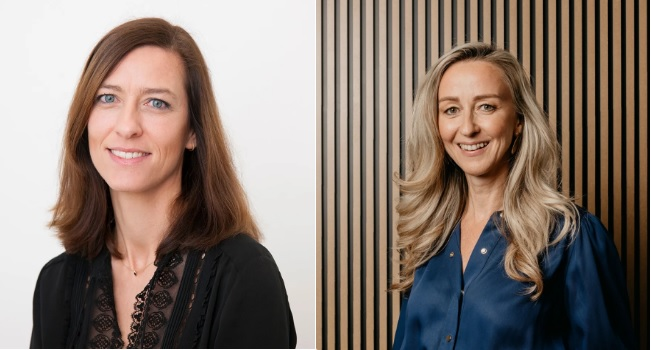
Ann Claes, not to be confused with the eponymous co-owner of JBC, is co-founder of digital fashion agency MUTANI and project manager at Flanders DC. Lieve Pattyn is marketing director at EG, the so-called ‘white products’ of the Belgian pharmaceutical sector.
“The expertise of Ann Claes and Lieve Pattyn in the field of creativity, marketing, consumer behavior and digitization is complementary to the knowledge already known to the CRG board of directors,” says Bart Claes, CEO of Claes Retail Group. Claes is also proud of gender equality in the company and now also the board. “With JBC, we were even awarded the X² Award for it, as the most progressive company in the field of gender-equal entrepreneurship.”
In addition to Ann Claes and Lieve Pattyn, co-owners Ann and Bart Claes, Ter Beke CEO Dirk Goeminne, Concentra CEO Patrick Hermans and Veepee COO Peter Grypdonck sit on the board of directors.

september 19, 2023
Consultancy & coaching for fashion brands at MAD Brussels
Jasmien coaches start-up fashion companies in their sustainability efforts for the Belgian non profit MAD Brussels.
She advises them in one-on-one coaching sessions and provides a monthly session about sustainability in the fashion industry for start-up companies.

september 19, 2023
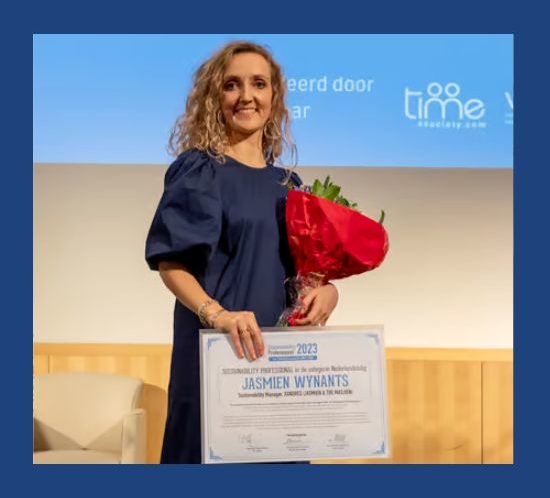
Jasmien awarded Sustainability Professional of the Year 2023
Jasmien received the honourable ‘Sustainability Professional of the Year’ award in 2023.
Jasmien Wynants has been elected Sustainability Professional 2023 by a joint initiative of Time4Society and VBO FEB. The award is the final part of a selection procedure that started in November 2022.
The Sustainability Professional is someone who inspires, motivates and implements initiatives in the field of sustainability within his company or organization, according to the press release.
The jury selected three Dutch-speaking and three French-speaking finalists from a list of 230 professionals over several rounds. A final online vote was to announce the final winner.
The jury appoints Jasmien as a Sustainability Professional because in all her actions she has one goal in mind: making the fashion world more sustainable. Jasmien provides inspiring training, motivational talks, workshops and advice. She also writes for various trade magazines and is writing a children’s book about sustainable fashion.
“I am very happy with this award. Both large and small victories should be celebrated. This also contributes to the visibility of sustainability in the fashion sector, and we will continue to focus on this in the future.”
Jasmien competed against Wouter De Broeck, Sustainability Manager at Alsico, and Geert Aelbrecht, Chief People Officer, Group Sustainability & ESG Officer at BESIX.
september 19, 2023
Column by Ann for De Tijd : Blockchain makes business models more sustainable
A myriad of individuals converge at blockchain events, an occurrence not limited to Belgium. This technology finds application across domains, fostering sustainable practices in sectors like fashion while elevating creator recognition.
March 30, 2023 – De Tijd
My recent and forthcoming weeks orbit around the world of blockchain once more. A stint in Paris marked my presence at the Paris Blockchain Week, where I addressed the audience at an event spotlighting Metaverse Fashion Week (unveil more details through #MVFW23). Presently, I hold a slot among 35 speakers at the inauguration of Blockchain4Belgium, elucidating the profound impact of blockchain on diverse business paradigms
What consistently astonishes me is the sheer scale of these events. Paris once again beckoned 10,000 enthusiasts (merely three weeks post the NFT Paris event, which drew 18,000 attendees). Belgium, too, has embraced blockchain with fervor, boasting a professional cohort of about a thousand aficionados.
Thursday heralds a physical rendezvous, with 300 attendees assembling at Blockchain4Belgium, an initiative spearheaded by Mathieu Michel, the Federal Secretary of State for Digitization. Here, insights and requirements will be exchanged, paving the way for policy recommendations. The purview encompasses regulations, along with educational and sectoral support.
Blockchain, inherently a versatile technology, encompasses multifaceted applications. Notably, non-fungible tokens (NFTs) serve as ownership certificates within the blockchain realm. Naturally, cryptocurrencies like Bitcoin and Ethereum also have their role. My primary focus, however, pivots away from cryptocurrencies. I even believe it should be nearly invisible, a facet pivotal to seamless integration of blockchain technology into widespread business models. Increasingly, platforms offer dual payment options – cryptocurrencies and traditional fiat (euros, dollars, etc.).
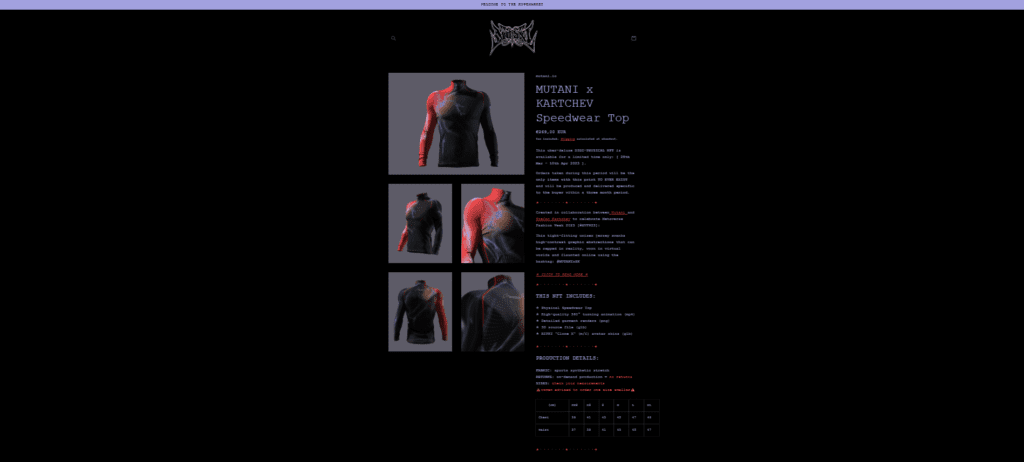
Phygital. Blending the Physical and Digital Realms.
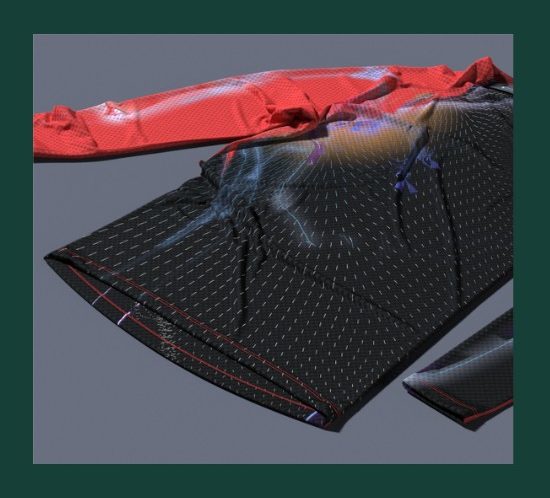
For Metaverse Fashion Week we are launching a phygital with Mutani.This entails the simultaneous purchase of physical and digital assets, intertwined through a chip. This unique offering graces an ordinary e-commerce venue hosted on the Shopify platform. Thanks to our partnership with Belgian Venly, NFTs are available in our webshop, including a design cycling jersey, attainable in both physical and digital formats.
The buyer pays in fiat and does not have to go through complicated procedures. Immediately upon purchase, the buyer receives the NFT and its digital iteration, accompanied by a blockchain-linked certificate of ownership for the physical jersey. All of this is bundled into a digital wallet, generated for the customer and delivered straight to their email inbox, streamlining the entire process.
For our designers, this marks an evolution in crowdfunding, an advanced realm where digital prototypes carry no carbon footprint, circumventing overproduction. The certificate of ownership establishes a precious rapport between the consumer and their acquisition, transforming it from a disposable item into a cherished possession. Furthermore, this certificate enables future resale, with designers garnering royalties. As the second-hand market gains traction, smart contracts ensure the original creator’s enduring involvement.
My curiosity is piqued regarding the cycling jersey buyers and their perception of the digital variant and accompanying NFT. As with any technological stride, adaptation to customer and corporate needs remains paramount. Government’s role, too, is pivotal, albeit a work in progress.
september 19, 2023
Article by Jasmien for Fashion United: How global warming and the fashion industry are inextricably linked
ON ‘Sustainability Clarified’ – a series of Jasmien Wynants for Fashion United.
In this series, we take you into the wonderful world of environmental science. Each article clarifies a key topic related to ‘sustainability’. We zoom out to the bigger picture and then look in more detail at how these complex concepts are linked to the fashion industry.
This time, we talk about… global warming.
October 11, 2022, Fashion United
Global warming, what is it?
It is important to distinguish between ‘global change’ and ‘climate change’. The latter is just one example of the many changes on our planet that we are aware of and falls in line with examples like ‘biodiversity loss’ and ‘nitrogen enrichment’.
Global change is nothing new. Consider the ‘continent drift’: the continents as we know them today did not exist in that form millions of years ago but stuck together. Those movements admittedly took millions of years to take place. Such changes had a lot of impact but were slow, whereas today’s climate change is happening much faster. Two major tipping points caused that acceleration, which is why we can now see the world changing before our eyes.
The first tipping point is found with the industrial revolution. In the eighteenth century, this made us much less dependent on human and animal power for heavy labour because machines could take over. In addition, the production of artificial fertilisers in the early twentieth century led to a huge increase in agricultural productivity.
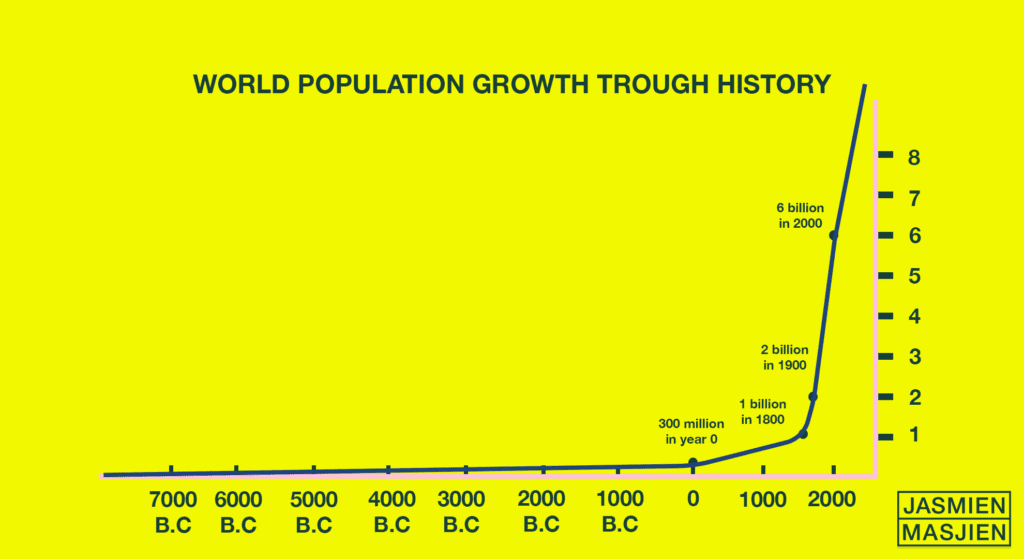
Together with a general advance in medical science, these “revolutions” allowed us to feed more mouths, and live better and longer. Population growth exploded, and that had consequences… Because more people means more CO2.
Global warming, what is it?
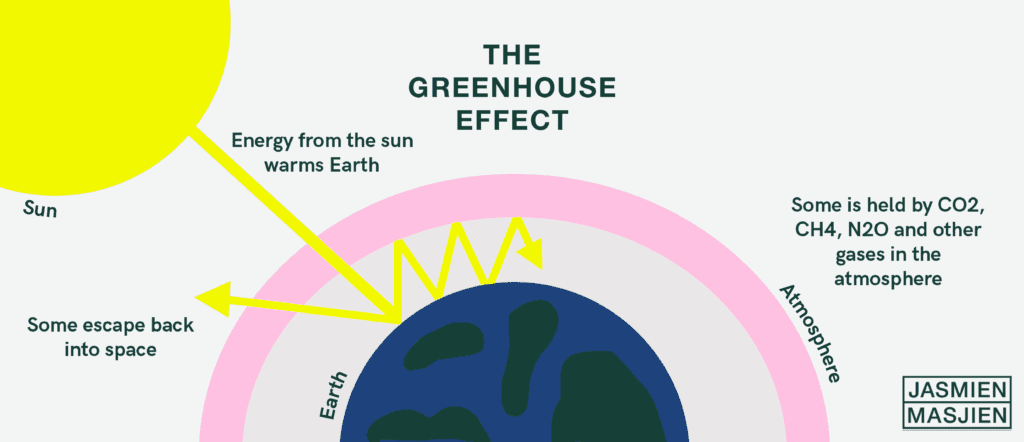
Humans live. We move around, heat our homes, switch on the lights, and we use fossil fuels to do so (oil, gas, coal, lignite). The enormous increase in population and the use of more and more machines (industrial revolution) have caused us to burn more and more fossil fuels. And it is precisely these fuels that cause rising CO2 concentrations … which in turn lead to global warming. The food industry and the fact that we have started eating more and more meat over the past 100 years are also major contributors to greenhouse gas emissions. Cutting down forests to make way for (food for) livestock releases a lot of CO2. (Plants and trees extracted and stored CO2 from the atmosphere for tens of millions of years. We now burn that CO2 and it all returns to the atmosphere in a very short time).
The greenhouse effect: it’s not just CO2 that warms the earth
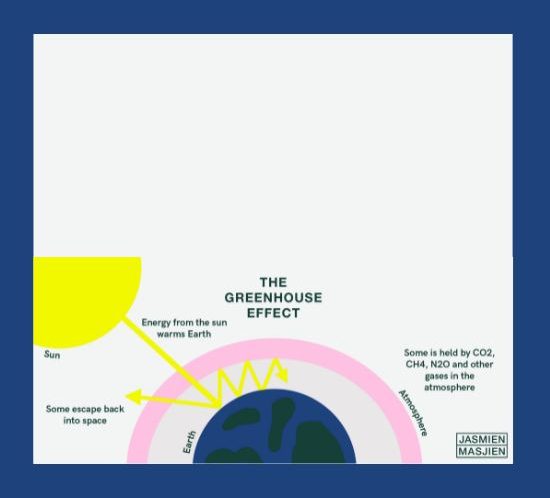
Just over half of global warming is caused by the increase in CO2 thanks to the famous ‘greenhouse effect’. Besides CO2, methane and nitrous oxide are also important greenhouse gases because they cause more warming per molecule. Methane comes mainly from agriculture (cattle are ruminants and emit methane in the digestion process, for instance). Nitrous oxide also occurs in agriculture but also in industry and traffic.
Greenhouse gases help the earth keep up with heat. And that is just as well. We know that without greenhouse gases, the Earth’s average temperature would be more than 30 degrees lower than now. And so our planet would be largely unlivable. But… the concentration of greenhouse gases has skyrocketed in recent years, trapping much more heat.
This ‘greenhouse effect’ has more consequences than just global warming. The expected increase in extreme weather (drought, heat waves, downpours,…) is just one of the consequences. Entire ecosystems are put under pressure by climate change, there are shifts in seasons, impacts on fresh water, a strain on agriculture, rising sea levels, melting glaciers, flood hazards for low-lying areas, increased mortality from extreme heat, economic consequences, dehydration, wars, climate refugees,…
And the biggest danger? That’s what climate scientists call the ‘snowball effects’. There are many possible ‘positive feedbacks’ that we don’t all know about yet, but which it is estimated that ‘once set in motion, they are still hard to stop’. Like a ball that pushes you down a small slope and into a deep valley. To get that ball back down the slope, you have to push much harder than to get it moving initially.
The danger of the global temperature rise exceeding 1.5-2 °C is there… and climate scientists fear that we will then end up in a ‘hothouse earth’ that will be difficult to get out of.
So that 1.5°C, what about it?
So in 2015, world leaders at the Paris Climate Agreement agreed that the warming of our planet should be limited to 2 degrees (and preferably 1.5 °C) compared to pre-industrial levels. The 1.5 limit is an important one because it is the point at which climate effects will thus become increasingly harmful to humans and the planet. And some of those effects are also irreversible.
Unfortunately, the likelihood of faster global warming is increasing all the time. The World Meteorological Organisation (WMO) announced in May 2022 that there is a 48% chance that we will be at that 1.5 degree warming even before 2027. (The years before, that probability was assumed to be rather small).
And can we talk about fashion now?
There is a strong call for industry, governments, consumers, all of us to make a maximum effort to combat global warming. So the fashion industry also has a role to play in this.
According to the Ellen McArthur Foundation (A New Textiles Economy: Redesigning Fashion’s future), total annual greenhouse gas emissions from textile production are more than those of all international flights and shipping combined (1.2 billion tonnes per year).
The fashion industry emits a lot of greenhouse gases during the production phase, but it is also an international industry that sends parcels and containers all over the world to get clothes from the producing countries (often in the Far East) to shops and customers. Not to mention the amount of packages we order and return every day while shopping online.
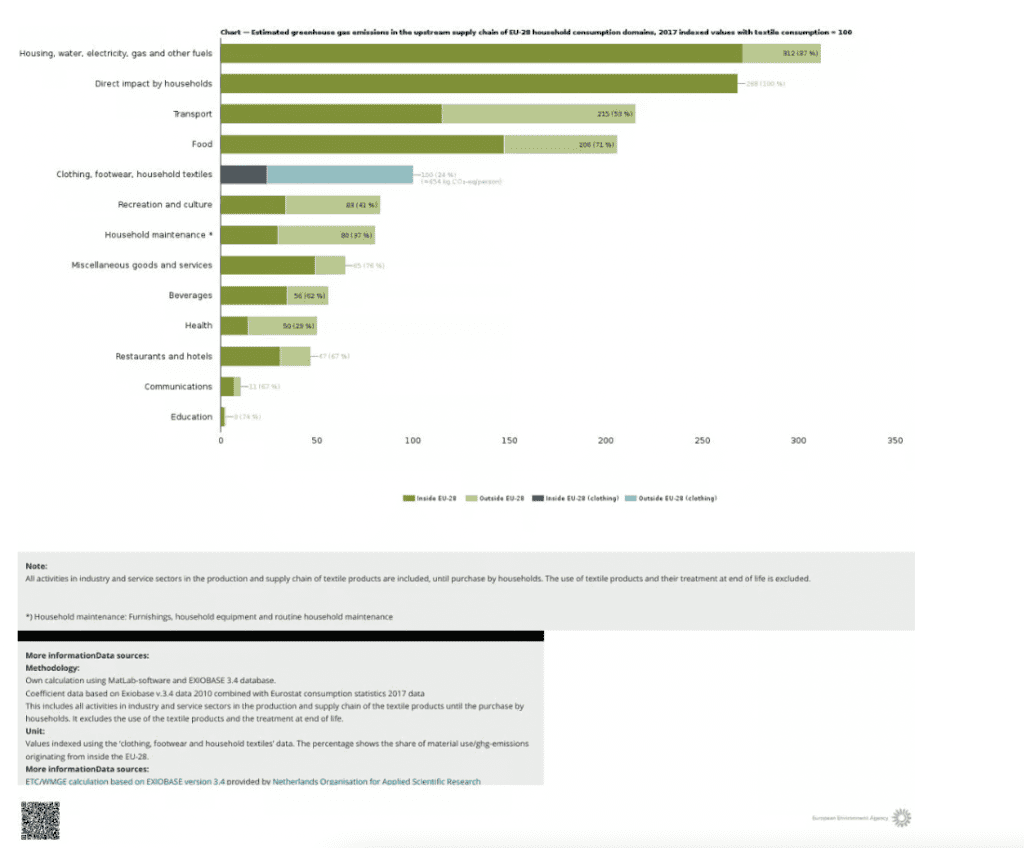
According to the European Environment Agency (EEA), textile production generates around 15-35 tonnes of CO2 equivalent per tonne of textile produced. Clothing, shoes and household textiles rank fifth in the EU in greenhouse gas emissions. This is more emissions than : recreation & culture, beverages, health, restaurants & hotels and communications, among others (Figure 3 from EEA below).
Not only does the use of fossil fuels in making and transporting our clothes lead to an increase in CO2, deforestation also contributes. Trees store carbon, but so when you burn them, that carbon is released back. When trees are cut down, the roots rot and the organic material is converted into CO2 and methane… which again leads to more greenhouse gas emissions. So every time we have to make space to grow livestock (both for food and leather) or establish cotton plantations, for example, this has an effect.
A lot of fashion companies are therefore now setting up ‘Science Based Targets’ (SBTs). This is part of an initiative by CDP, UN Global Compact, WRI and WWF whereby company targets are set to stay within the 2°C increase. Companies start by measuring their carbon footprint (Carbon Footprint) to get a better picture of where their major impacts are and how to reduce them. They then set concrete targets for their short-term and long-term emissions reduction strategy.
Finally, it is important to look not only at the industry but also at the fashion consumer. We then spontaneously think of how we can reduce our impact by washing, ironing or using the dryer less, washing at lower temperatures but also by cherishing our clothes for longer. After all, it is too bad to throw away a garment that required so many raw materials and fossil fuels after only a few uses?to the fashion consumer. We then spontaneously think of how we can reduce our impact by washing, ironing or tumble-drying less, washing at lower temperatures but also by cherishing our clothes for longer. Surely it is too bad to throw away a garment that has required so many raw materials and fossil fuels after only a few uses?
We asked the scientist… Hans De Boeck, Global Change Ecologist at the University of Antwerp
“Keeping climate warming within limits, below +2°C and if possible below +1.5°C, is very important because scientists from all kinds of fields estimate that the negative consequences for people and nature become very large above these limits. Every sector will have to make a solid effort, including the fashion industry. This is not only necessary, it is also useful in the longer term for the sector itself, e.g. because energy costs can be reduced.”
“There is work to be done. The clothing sector is very wasteful: hardly any discarded clothing is recycled (< 1 per cent), and unsold products are still too often simply destroyed by incineration. Moreover, we buy more and more clothes, in the US, for example, 3x more than in the 1960s. Fast fashion is a minor disaster for the environment. Although it does not sound very appealing, the best ‘climate measure’ is simple enough to buy less new clothes. Other options for greening: consciously look at the fabrics used, with animal products like wool and silk grosso modo having a higher climate impact than plant-based ones like flax, hemp and cotton. Further: recycle and reuse more. Finally: putting clothes in dryers or ironing less or not at all, as both are energy-consuming activities. Clear indications on clothing about the climate and/or environmental footprint may be useful to raise awareness, although care must be taken to avoid greenwashing (selling something as environmentally friendly when it is not) encouraging consumers to buy ‘more’ anyway.”
Future Fabrics, what?
september 18, 2023
“Introduction to Web3 & Metaverse” presentations by Ann
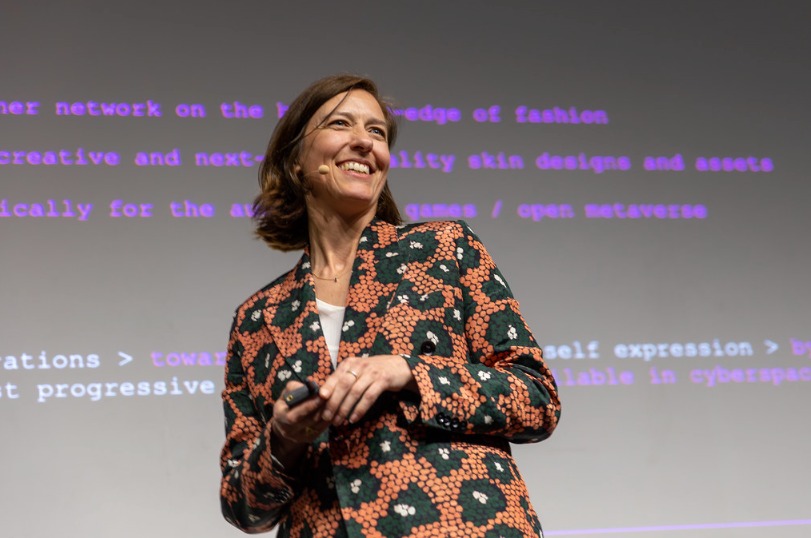
Ann Claes has been giving presentations to companies and organizations in the field of fashion, communication, real estate, entrepreneurship, … The aim is to give an introduction to the different concepts and keywords of web3 and metaverse, besides sharing different use cases. But above all, create an open discussion where there are no stupid questions and everything can be on the table.
She has been introducing these kind of presentations to Lola Liza, MMBSY, Voka Antwerpen, Dewaele Vastgoed, MAD Brussels, FinTech Belgium, Furt’her, etc.
Loading new posts...
No more posts