I was given the opportunity to inform and guide Flemish fashion companies towards a better way of working during my time at Flanders DC, via the Close The Loop programme. I spoke to numerous inspiring entrepreneurs and innovative start-ups and came to the conclusion that we were dealing with a sustainability revolution. Only a few players were involved with this in the past, now virtually everyone is losing sleep over this subject.
An increasing number of companies, from small to large, are now looking for ways to change their business model and work with respect for both people and the environment. However, I’ve also noticed that companies are all faced with the exact same hurdles. There is a growing interest in sustainable fashion among consumers too, but many people find making the right choices anything but easy. And that’s simply because the system behind it isn’t right.
The fast fashion model, which once stood for positive development, i.e. the democratisation of fashion, has been completely derailed over the last 15 years. An item of clothing’s life cycle has become shorter and shorter. The fashion industry is largely based on rapidly changing trends with overconsumption at the root of the issue. This has major consequences for both people and the planet.
Enormous volumes of non-renewable resources are used to produce clothing that is only worn for a very short period of time, only to then be dumped or incinerated. A huge amount of water is used during this process and a fair amount of pollution is involved too. The complex production chains are well known for their exploitation in the producing countries.
This is almost impossible for a company. Policies and legislation are needed for this. If a change to a system is required, a government can take on a guiding role in order to accelerate this process. This can be done both by imposing obligations and by providing positive incentives, for example, by rewarding companies with tax benefits if they introduce sustainable measures.
I tend to choose the latter from a consumer perspective. You can compare it to the food industry. You’re not going to make anyone happy by telling them they can’t eat meat anymore. People will feel attacked and this can lead to defensive behaviour. You would be much better off trying to convince people with inspiring vegetarian recipes. So a positive incentive will certainly prove useful if you’re trying to convince companies to opt for sustainable materials.
You can make it economically interesting for them to make responsible choices by making sure they can maintain their margins and that their product remains profitable. Whilst at the same time, it’s certainly also a good idea to impose a number of obligations on the industry. This could include, for example, a ban on harmful chemicals or a minimum quality for textiles. It will therefore always be about a combination of those two methods. The art and the difficulty is in finding the right mix in policymaking.
That’s right, the European Commission launched a new action plan for the circular economy in March 2020. It will become one of the most important building blocks of the new European Green Deal, the plan with which the EU wants to make the economy sustainable, with the main objective being to realise a climate-neutral union by 2050. Extra attention will be devoted to certain sectors as a result of their impact on the environment or the circular opportunities and one of these sectors is… textiles!
It contains measures aimed at the entire life cycle of products. Specific actions are being worked out for textiles and a comprehensive European strategy with measures will be drawn up. The focus will be on creating a framework for sustainable products, but also on improving the business and regulatory climate for sustainable textiles.
Demarcation is crucial, you’ve got to start somewhere. Eventually, everything is connected. For example, we are currently looking into how a reduction in VAT on certain products or services could play a role in convincing and stimulating consumers and companies to buy sustainably. A measure that is anchored in national legislation, but for which the European VAT Directive will first need to be revised. Flanders, therefore, formed the starting point for my research, but you can naturally repeat this exercise for other countries or parts of other countries too.
The complexity of policies and legislation. As I said, it’s a huge tangle of connected little radars in a big hole. Laws, regulations, guidelines… it’s so important for these matters to be effectively established and written up, with input provided by the sector. But not every company is going to have time to provide input, let alone actually get immersed in the complexity of the material.
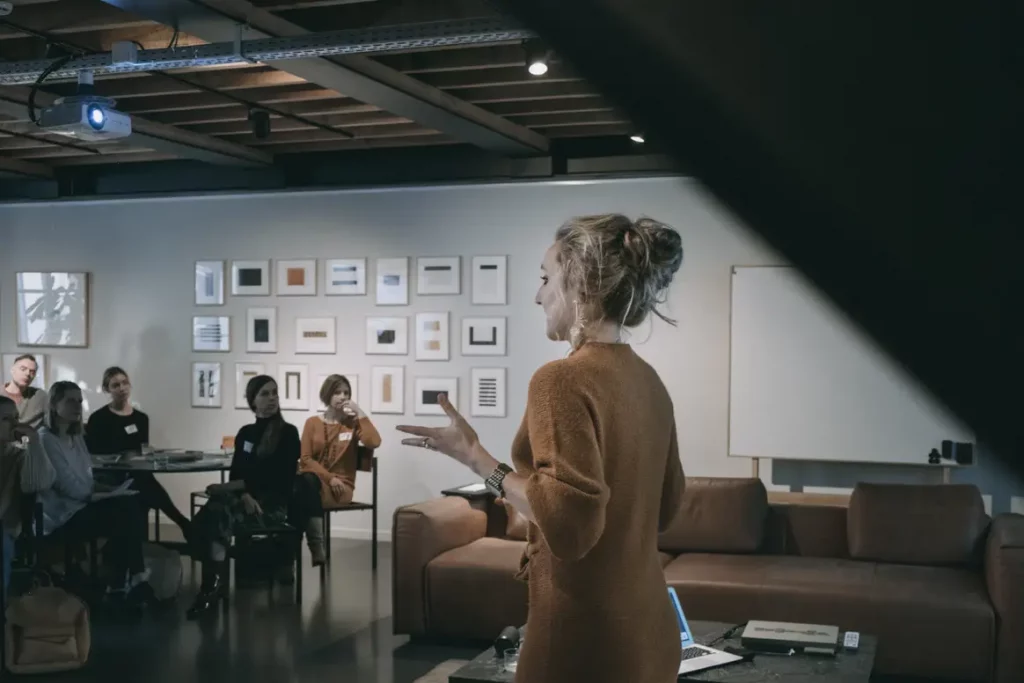
Yes and I’m very pleased with the excellent industry stakeholders’ attendance during these round table discussions. Once again proof that the sector itself wants to move forward. One of the aspects which came to the surface during the discussions with policymakers is that it’s quite exceptional for a sector to ask for more legislation.
It’s obviously fantastic that governments are investing in innovation, but in practice there often isn’t enough insight into where that money goes. Four comparable projects were recently approved instead of centralising these and stimulating collaborations. More coherence, that’s what it should start with. Not just turning on the money tap, but instead streamlining and coordinating the subsidies more effectively. And then specifically focusing on creating a sales market for the innovations which will arise from this.