Interview for De Tijd on MUTANI : Antwerp fashion rebels embrace metaverse and blockchain

De Tijd, Roland Legrand December 2, 2021

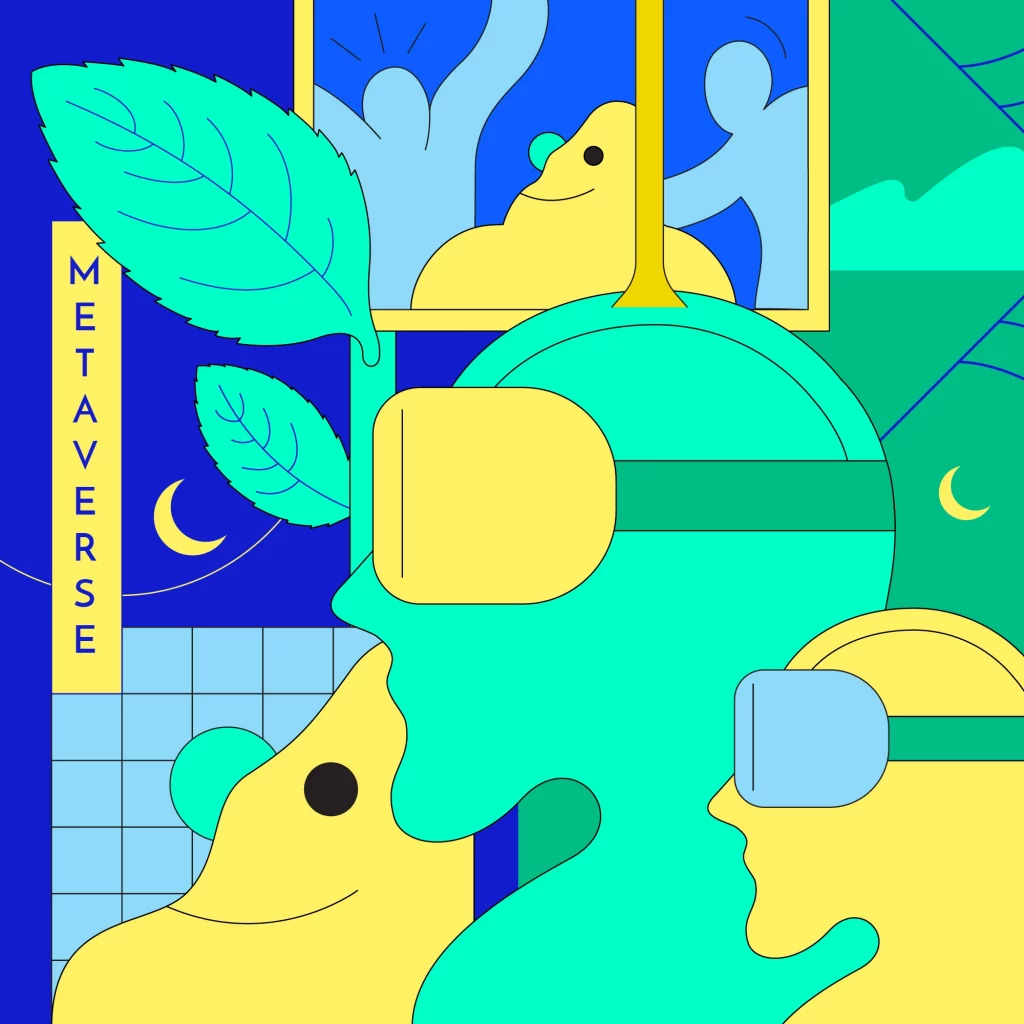
The Antwerp start-up MUTANI helps creative fashion makers conquer digital worlds. A first collection will be launched on a digital marketplace on Friday
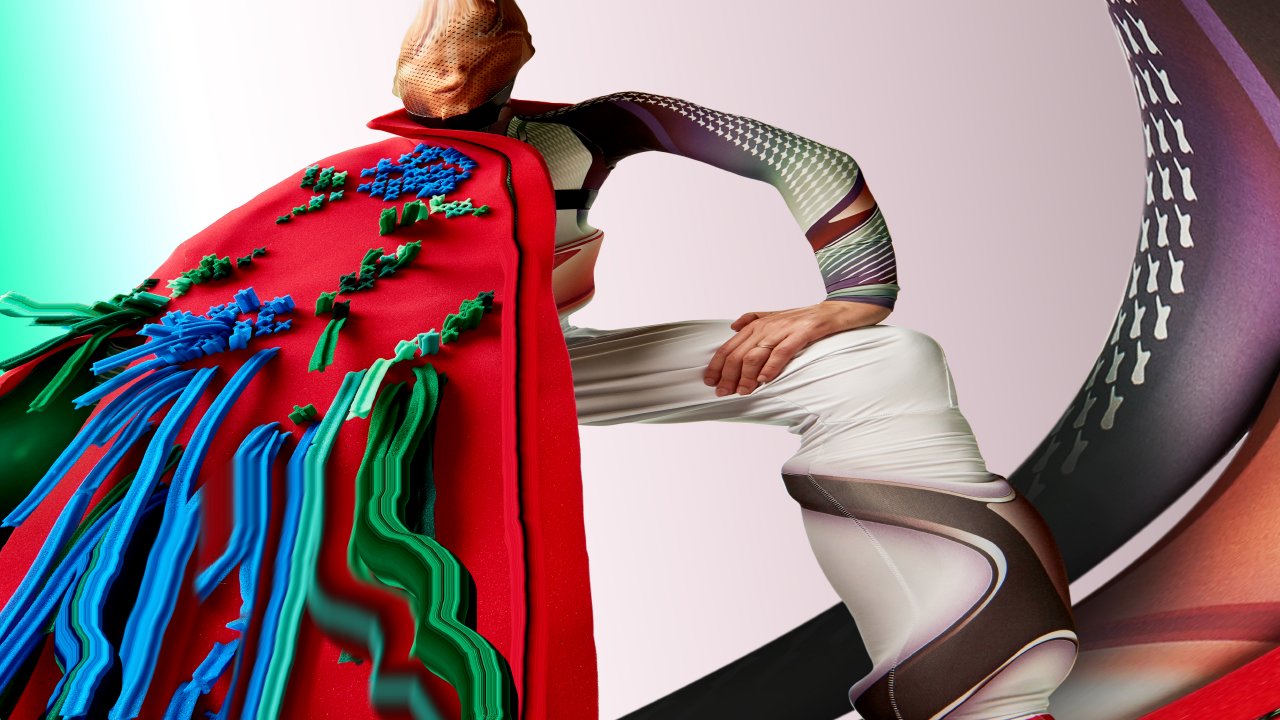
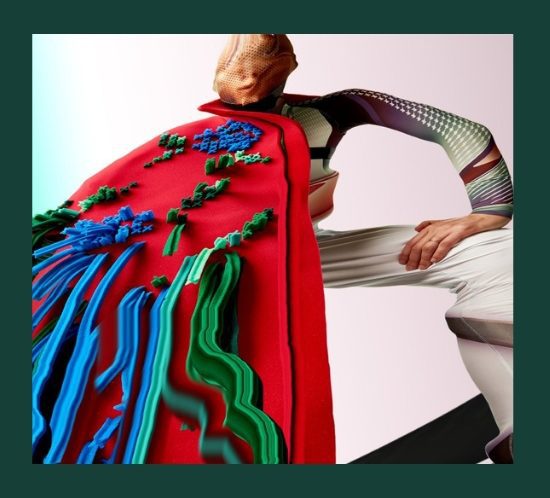
Antwerp fashion academy Alumni Stefan Kartchev is collaborating with MUTANI
Antwerp academy alumnus Stefan Kartchev in collaboration with MUTANI

MUTANI bringing the most far out fashion to the cyberscene

The Australian Shayli Harrison moved to Antwerp in 2013 to study at the famous Fashion Academy. She graduated in 2018 and in the meantime she had started working with 3D printing, 3D scanning and virtual reality (VR). She participated in the exhibition Dissidence in the Hasselt House for Contemporary Art, Design & Architecture Z33. This dissidence is also of great importance to her start-up Mutani (pronounced like ‘mutiny’, rebellion) that was founded in February.

Co-founder is Ann Claes, who is senior project manager Fashion at the non-profit organization for the creative sector Flanders DC. ‘The fashion sector is known for rapid innovations in content, but there have been hardly any changes in the way of working over the past sixty or seventy years,’ Claes notes.

The essence

The Antwerp start-up MUTANI wants to offer fashion designers an alternative to earn money with their creativity, in addition to the established channels. MUTANI digitizes the designers’ work and puts it on the blockchain in the form of NFTs. This allows gamers and other users of the metaverse’s digital environments to actually own those digital objects.
A first NFT launch will take place on Friday, with work by an alumnus of the Antwerp Fashion Academy.

That has to change. On it’s site, MUTANI says it is waging a “rebellion against the oppressive and exploitative nature of the fashion industry.” In the metaverse, roughly the entirety of virtual environments, a fashion designer can be unfettered in his creativity. Blockchain technology enables new business models. Young designers are given an alternative to a poorly paid seven-day-a-week job at a major fashion house.

Mutani works with non-fungible tokens (NFTs), registrations on a blockchain that refer to digital or physical objects that can be traded. “Now you can really take ownership of 3D digital objects and use them in different digital spaces,” explains Harrison. She refers to large gaming companies such as Epic Games and Electronic Arts, which are open to blockchain integration. ‘The player gets more autonomy.’

Harrison notes that gamers “work” quite hard to acquire certain objects in the game environment. Now they can finally own it too. ‘Ultimately it’s about self-expression, which is also the case with clothes in the physical world,’ adds Claes.

And fashion designers can attract new audiences with their creativity. Mutani helps them by digitizing their work and making it ready for the digital marketplaces.

Digital activewear

On Friday at 7 p.m., Mutani will unpack with a first NFT launch, also called ‘drop’. These are fashion pieces by Stefan Kartchev, who graduated from the Fashion Academy in 2018. He has worked for the fashion designer Walter van Beirendonck, for the vegan footwear manufacturer Rombaut and for Bioracer, which designs and makes cycling clothing. Kartchev searches for new ways to interpret activewear and explore the limits of the human body.

For sale on digital fashion platform The Dematerialised

Sales are made via the online sales platform The Dematerialised. That platform promises to guarantee transparency and authenticity through LUKSO blockchain technology.

The prices are 150 euros and 250 euros. There is also an exclusive NFT phygital (portmanteau of physical and digital) that the buyer can wear offline. The price for the phygital is 2,000 euros. In addition to payments in crypto coins, The Dematerialized also allows regular money.

‘We bring a wave of creativity that has no equal in digital fashion,’ emphasizes Claes. Although major brands launch digital versions of their products in the virtual worlds of Roblox and Fortnite, Harrison says that these are digital copies of the physical products. They don’t necessarily fit into those virtual worlds. It is her intention that fashion designers can respond with unfettered creativity to the possibilities of the metaverse and the numerous subcultures that reside there.

With the support of the City of Antwerp, Mutani is working on a new project involving six designers. Everything is made with the Unreal Engine, software that allows you to create high-quality digital objects.

Even though Mutani is very critical of the fashion sector, brands have shown interest in their services. Harrison does not reject that. “It can help us do more for independent fashion designers,” she says.
Mutani wants to ‘unburden’ the fashion designers of technical problems. The start-up takes care of digitization with freelance developers spread all over the planet in exchange for a share of the proceeds. “It is crucial that the digital developers are inspired by our creative vision,” says Harrison. The founders of Mutani do not believe that the fashion designer should become a digital designer. ‘It is important for fashion designers to know what the opportunities and that there is an additional business model,’ says Claes. ‘A fashion designer traditionally needs pattern makers, sewing studio and textile experts. Now it’s about developers.’ Mutani bridges the gap between both worlds. At the Antwerp Fashion Academy, Harrison notices interest from students and a number of teachers. She sees potential in a collaboration with the internationally renowned game design and development department of Kortrijk Howest.

Talk new business models in the circular economy

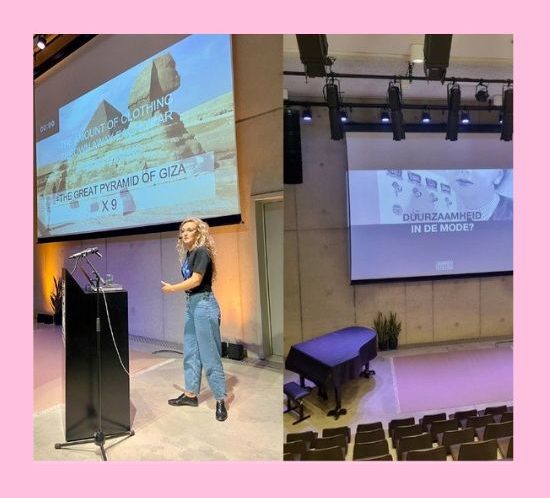
For the Belgian second hand market players Kringwinkel/HerWin, Jasmien created an inspirational keynote about new business models in the circular economy. Catered to the needs of these local players, we inspired them in their big ‘strategy day’ to take a leadership rol.

I talked about second hand clothes and the role that Kringwinkel could play in this.

Did you know that the amount of clothing thrown out each year is 48 billion kg. That is the equivalent of nine times The Great Pyramid Of Giza. If that doesn’t shock you, I don’t know what will.

We see a huge rise of ‘new’ platforms for second-hand shopping like Vinted and Vestiaire Collective. Even fashion brand themselves are jumping on the bandwagon like Filou and Friends with Filou Forever or Essentiel Antwerp with their RE-SSENTIAL website.

Will this be enough to lower that scary number?

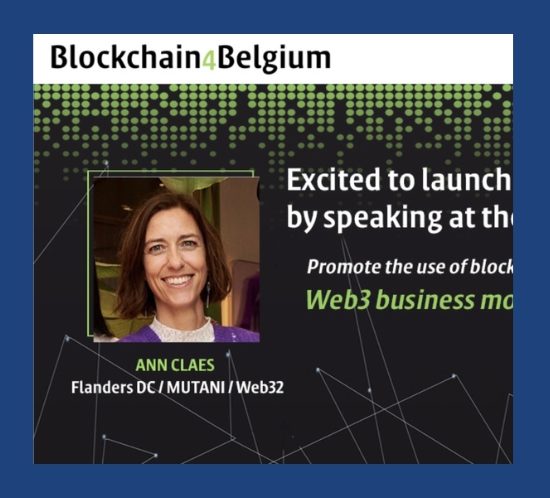
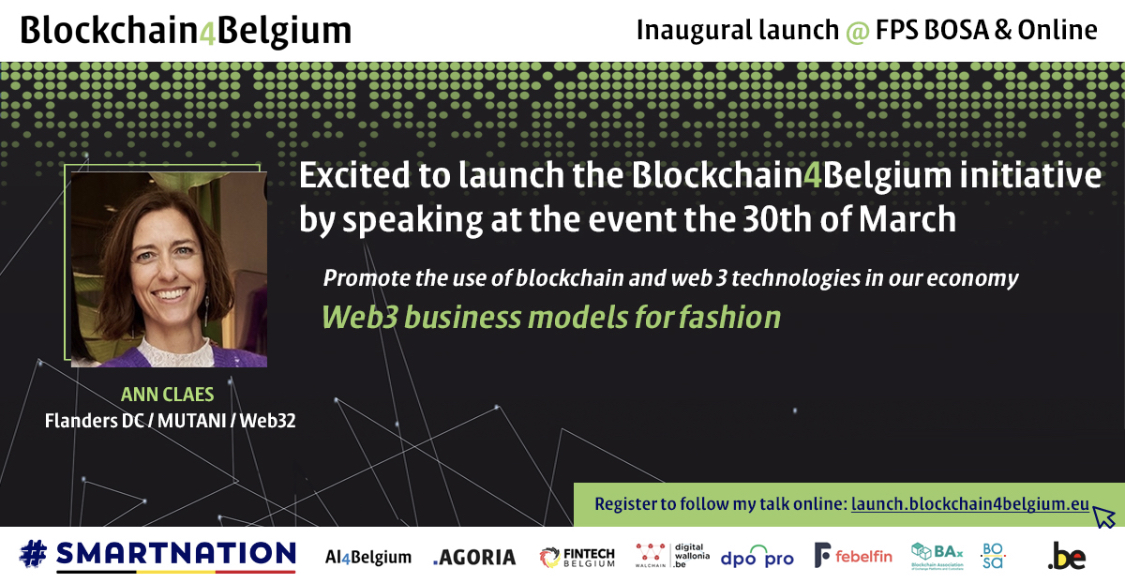
Speaker at Blockchain4Belgium

Blockchain4Belgium: By the Belgian community for the Belgian community

Blockchain4Belgium is first and foremost the gathering of the Belgian ecosystem composed of more than 1000 belgian experts, industry players, academics, civil society, and public administrations. 

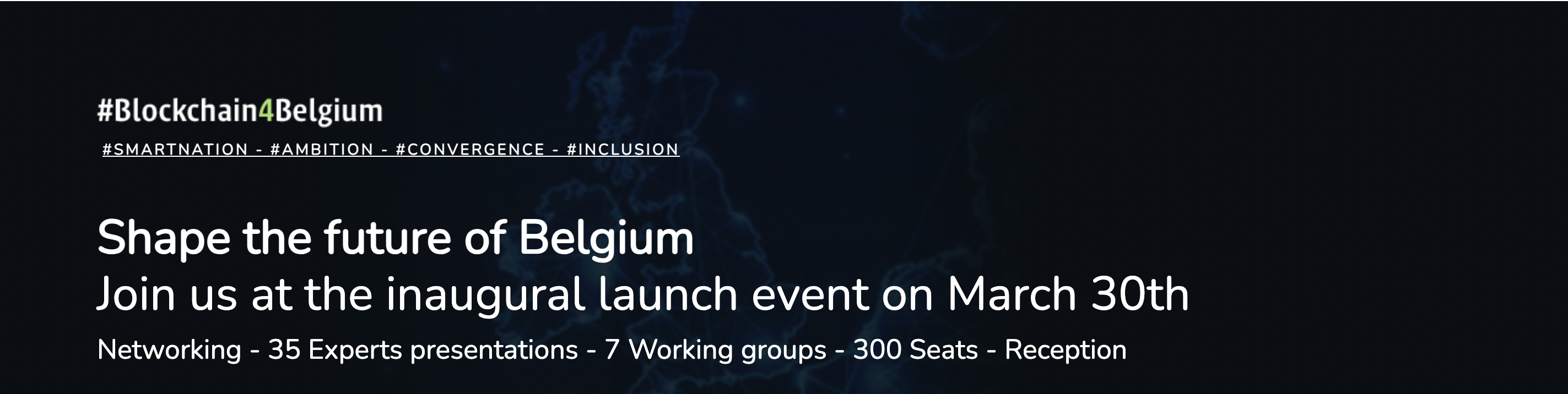
We are delighted to invite your for the inaugural launch event of Blockchain4Belgium planned the 30th March at FPS BOSA in Brussels during the European AI Week.

Where you and the ecosystem will be contributing & building the future of Belgium by participating in one of our 7 working groups that will formulate recommendations to the Belgian’s governement. 

This event will offer you an excellent opportunity to connect with other members of the community, gain knowledge and insight from experts presentations.

Attendance is virtual, as the event has been soldout in 4 days.

Masterclass – Sustainable Entrepreneurship & Change Management

Jasmien provides a talk/workshop in communication and change management related to sustainability in your SME.

Masterclass series provided be Belgian University Karel de Grote Hogeschoool.

Masterclass Sustainable Entrepreneurship
Work sessions and coaching for companies or teams
For companies and teams that want to work on a sustainable policy.
Central question: how do you, as a company or team, contribute to a future-proof world? You look for a balance between economic, ecological and social interests.
You follow the masterclass as a whole or in modules (full program 10 months).
You get a total package, from strategy to implementation. Topics such as materiality analysis, reporting, communication, HR, stakeholder management, change management.
You can immediately apply what you learn in a structured, efficient and hands-on manner.


Panel discussion – Textiles 2023: Rethinking the thread that binds us

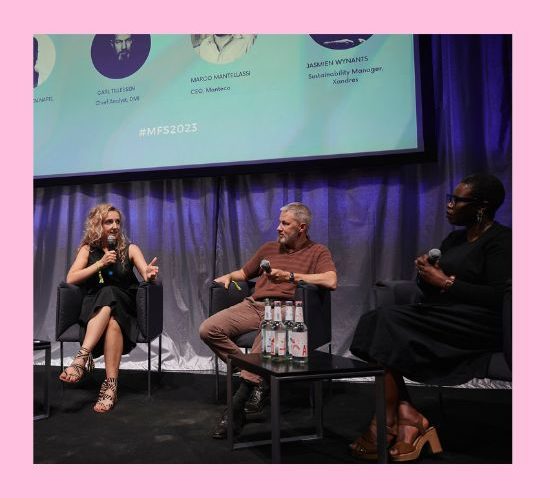
In this panel discussion during the Munich Fabric Start in 2023, Jasmien goes into conversation with Carl Tillessen (DMI), Marco Mantellassi (Manteco), moderated by Muchaneta Ten Napel (Shape Innovate / UN).

This panel aims to address the multifaceted nature of textiles in 2023, taking into account the rise in fabric innovation, the importance of sustainability, and the many challenges and opportunities associated with textile waste and recycling. 

We venture beyond the usual discussions about textiles and dive into the significant but lesser-explored subjects such as the impact of EU legislation on the textile industry, the myths surrounding harmful textiles, and the intricacies of the supply chain.

Talk sustainable fashion at Captains of Industry

Talk in 2023 about sustainability in the fashion industry and how to change as a company. Inspirational event for female leaders and C-level employees linked to a sailing cup in Belgium. Fashion as an inspiration to other industries.

Jasmien’s reflections on the event:

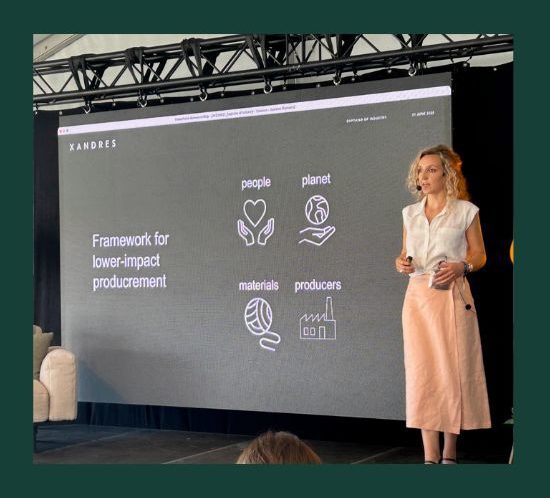
“A few weeks ago, I was honoured to speak at the Captains of Industry Ladies Cup in Nieuwpoort. Mieke Pieters from The Circular Kickstart invited me to talk about sustainability in the fashion industry and how Xandres is trying to lower its environmental and social impact. 

When we wrapped up, Mieke asked me ‘which woman inspires me’. I answered that on an entrepreneurial level, I admire Lies Mertens for her amazing work but that earlier that week, a woman really close to me inspired me on a sustainability level as well… my grandmother, or ‘moemoe’ as we say in my hometown.

I visited moemoe  that week and whilst she was preparing a classic Flemish dinner (‘chipolata’ sausage, potatoes, carrots and peas), I looked at her standing in the kitchen and realized that her kitchen sink and cooking fire were probably about 70 years old. That the pots and pans she was using were probably also used by her mother.
And then I saw her salt shaker. It was a regular plastic salt shaker from a convenience store but the label was so faded that I asked her ‘moemoe, you don’t use salt that often, do you?’.
And she said ‘no, not really, why?’.
I mentioned her salt shaker and the fact that she’s been using that tiny object for quite some time probably. And she answered ‘oh but I refill it of course’.

In my generation, people sometimes build entire ‘temporary kitchens’ because they want to renovate later on without realising the materials and energy we waste in this process. 

So what woman inspires me when it comes to sustainability? My moemoe, and an entire generation of women that still ‘use’ instead of ‘consume’ the valuable objects in our life.”


The world of web3 in 8 keywords by Ann for Flanders DC

You’ve probably heard of web3 by now. Web3 heralds a new evolution of the internet, in which the end user plays a crucial role. What exactly does that mean and can it be useful for entrepreneurs in the creative sector? And what exactly do terms such as blockchain, wallet and metaverse mean?  An article written for the online magazine of Flanders DC

1. Web3

What exactly is web3? To understand this properly, let’s go back to the beginnings of the world wide web. Initially, the internet was intended to provide information in an easy and global way. Web pages made content available to anyone whose computer had an Internet connection. That was web1.

Over time, this static content became increasingly dynamic and interactive. Responding became possible, even sharing content was possible, photos and videos took their place on the internet and social media also saw the light of day. That is web2, the internet as we know and use it today and where major players (Google, Amazon, Meta,…) are in control and especially our data. These large companies use our data (content, reactions, play time, insights,…) to earn money, so that the user immediately becomes the product of these services.

Web3 takes a different approach and wants to return the power of data to its owner in order to create a more democratic internet. You therefore remain the owner of your information, your ‘work’,… and can decide for yourself what happens to it. And that is just now possible by means of a new technology. Instead of storing this data centrally at the major players, it ends up in a network of different computers and servers. This system is called a blockchain.

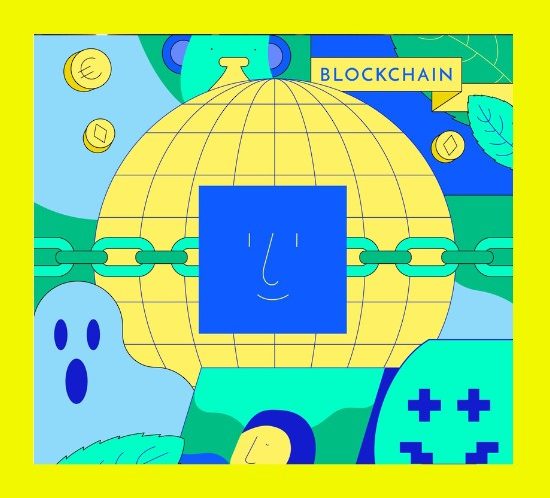
illustration © Toykyo
2. Blockchain
 

Simply put: each blockchain consists of several computers and servers that contain part of the data (or copies of it) as links. Together, these links form a chain of data called a blockchain. Because these different computers and servers always compare the stored data with each other, it immediately becomes impossible to modify or falsify and the dependence on one external party for data storage is therefore also superfluous. The data is encrypted, making the blockchain decentralized, traceable and secure.

There are different blockchains, each with their own uniqueness, such as Bitcoin, Ethereum, Solana, Lukso, Algorand, Tezos, Cardano, …

Be sure to check out this video in which expert Jef Cavens explains blockchain with references to the fashion world.

3. NFT
 

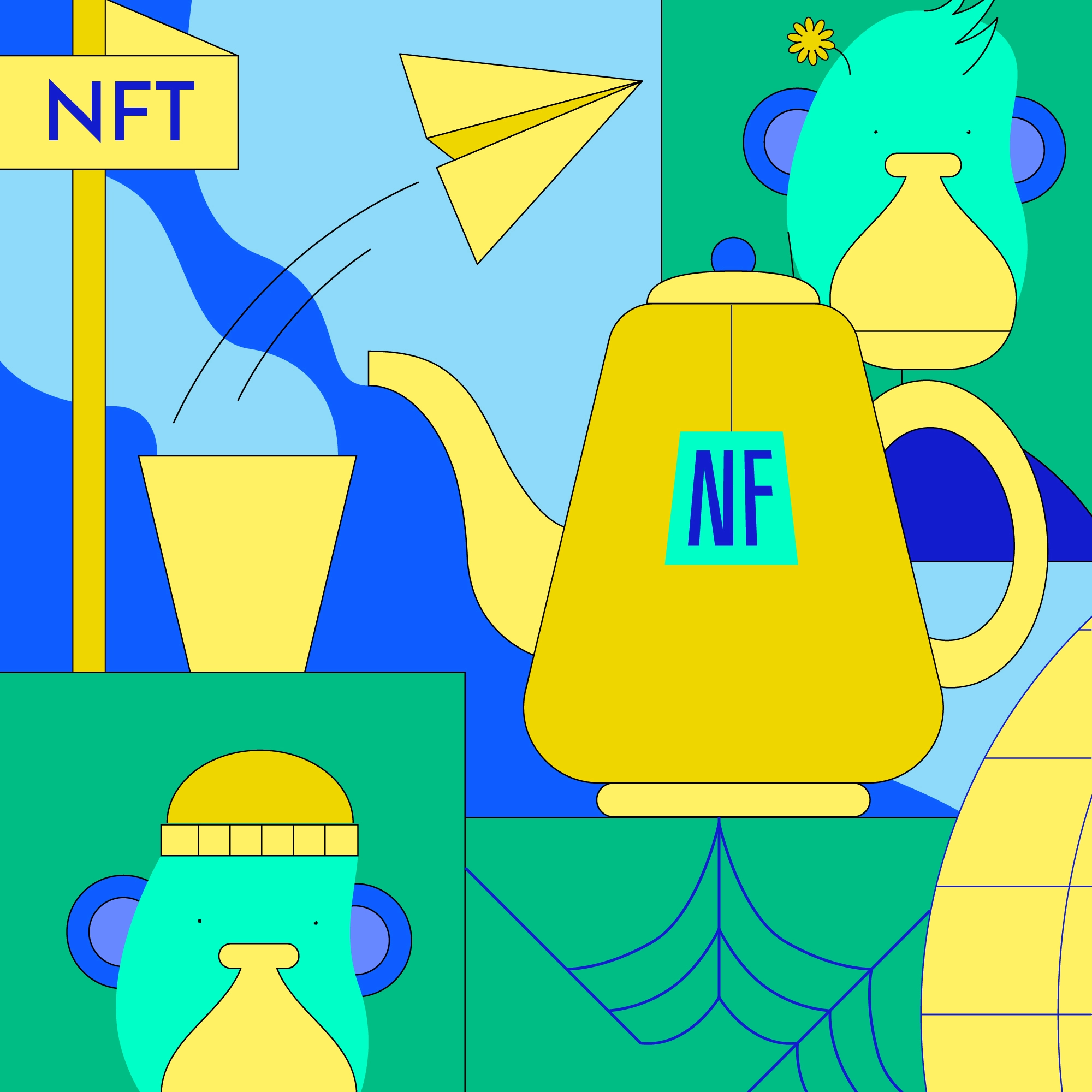
We often hear the word NFT in the news these days, but what exactly is an NFT? NFT stands for ‘non-fungible token’ (translated: non-fungible or unique token) and works on the basis of the technology that creates a digital ownership certificate with which you can prove that you are the owner of the digital content. An NFT is therefore not the item in itself. The information about this certificate, with a timestamp, is stored on a blockchain, making it unique and traceable. Storing this information on a blockchain is what we call “minting”.

Discover together with Ryan Gill from Crucible & Ann Claes in this Flanders DC webinar what exactly NFTs can mean for creative entrepreneurs.

illustration © Toykyo
4. Smart contracts

When you place an NFT on a blockchain, you also create a smart contract. This smart contract describes what the NFT entails, which rights have been sold exactly (copyrights, commercial rights,…), but also whether or not royalties flow back to the original author in case of resale. That makes it interesting to be able to follow every transaction in the future and, if it continues to increase in value over time, to even earn money from it.

5. Cryptocurrency

Cryptocurrency is a form of digital money that does not require the intervention of banks or other financial institutions to register transactions. All transactions are tracked on a blockchain. Bitcoin is by far the best known digital currency, but there are hundreds of other digital coins including Ether, Tezos, Polkadot, Dogecoin and Ripple.

6. Wallet

A wallet is literally a digital wallet where you can store your belongings. This contains the items you own on the blockchain(s). These can include NFTs and crypto coins. The wallet is anonymous and publicly accessible. Anyone can view your wallet and add something to your wallet. If someone else puts something in your wallet, it’s called an airdrop.

To move items in a wallet, you need the security codes. If you have lost these codes, you can recover your wallet by using a unique code of 12 words, also known as a ‘seed phrase’. Popular systems for a wallet are, for example, Metamask and Trust wallet, but there are also external, cold wallets such as Ngrave and Ledger. Please note, if you have lost access to your wallet, there is no one who can help you further. There is no help desk or customer service. You are therefore responsible for this yourself.

Wallets are regarded as an important part of your digital identity and, in addition to the functional aspect, also have a showroom effect. For example, Twitter, Instagram and Spotify make connections with your wallet so that you can ‘flex’ or display your valuable assets on other existing platforms.

7. Metaverse

The term metaverse is currently used in a variety of ways. The term is often used for an immersive virtual world where people — usually on the basis of an avatar — can meet each other, work together, learn, play, etc. This 3D world can be supplemented with Virtual or Augmented Reality experiences to offer a more immersive experience.

Metaverse and web3 are often linked as the metaverse can also be seen as a third and immersive version of the internet, as a digital version of normal life where you can work, shop, relax, earn,…

However, the web3 philosophy does apply to the metaverse. Just think of buying and owning digital clothes for an avatar in a decentralized way. These title deeds can be stored with blockchain technology. Emerging platforms such as The Sandbox and Decentraland are built on this concept.
8. Digital identity

We spend more and more time online. The digital world will become increasingly important in the future, especially among the younger generations. Just like in the real world, the will for an own identity is very strong. In daily life, the choices about our clothing, haircut, possessions, who our idols are, which parties we attend, … make us who we are and how we present ourselves to others. This need also exists in the digital world. Consider, for example, the use of filters, the number of likes, the type of contacts, …

Creating a digital personality (or even several) will go hand in hand with the items you own. Here, too, uniqueness and scarcity are important, which is where NFT technology comes in handy. For example, you will be able to unpack or even trade a limited edition digital sneaker, just like in the real world today.

Do you want to know more? Then listen to this podcast episode of Vers van de Metapers (also available via Spotify).

Article on NFT Evening: Web32 : What You Missed At Belgium’s Hottest NFT Event

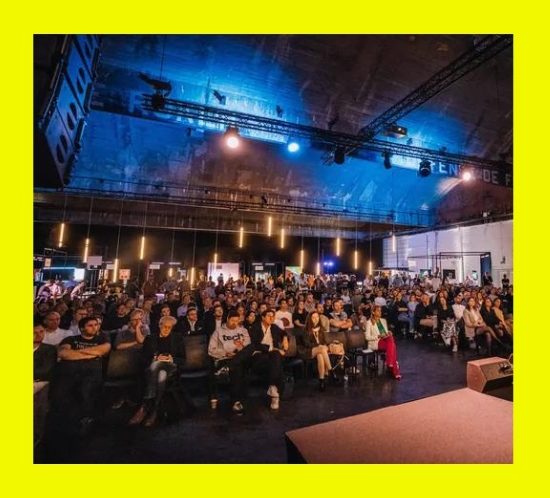
This year’s edition of Web32, a web3 conference in Antwerp, Belgium, took place back on June 9th. The major one-day event brought together a community of builders, designers, creators, and more. There was a lot going on so let’s run down some of the highlights of Belgium’s major web3 event. The Web32 conference brought together Belgium’s web3 community on June 9th 2022.

NFT Evening, July 5, 2022

What is Web32?

Overall, the goal of Web32 was to help web3 professionals discover the potential of the blockchain. As such, the event included a tech expo, as well as a number of great talks and pitches from web3 projects. And of course, it was a major networking opportunity for the web3 community in Belgium and beyond.

The biggest artists at Web32

Jeroom Snelders x Venly x Catawiki

One of the biggest names at Web32 is none other than the legendary Flemish comic artist, Jeroom Snelders. The conference highlighted an ongoing auction for 40 pieces of Snelders’ artwork, including some of his best work for the Belgian weekly Humo and Reddit. To clarify, the auction ran from May 31 to June 12. In addition to a physical print, buyers will also receive an NFT of the cartoon in a Venly wallet.

Snelders launched the auction with the help of Belgium-based blockchain tech provider and Web32 sponsor, Venly, and online auction marketplace, Catawiki.

Musketon & Dirty Belgium

Web32 also saw a special collaboration between the artists Musketon and Dirty Belgium. There the two artists co-created a handmade piece of art live at the event! Furthermore, the artwork was digitized and minted as an NFT after the conference. Amazingly, each visitor got the NFT in their wallet.

Web32 also featured major speakers and more

Shayli Harrison of Mutani

For those who don’t know, Mutani is a digital fashion unitive based in Belgium. Shayli Harrison from Mutani joined Evelyn Mora of Digital Village on stage for a talk about “Web3 Fashion, creativity, and sustainability”.

NFT Vending Machine

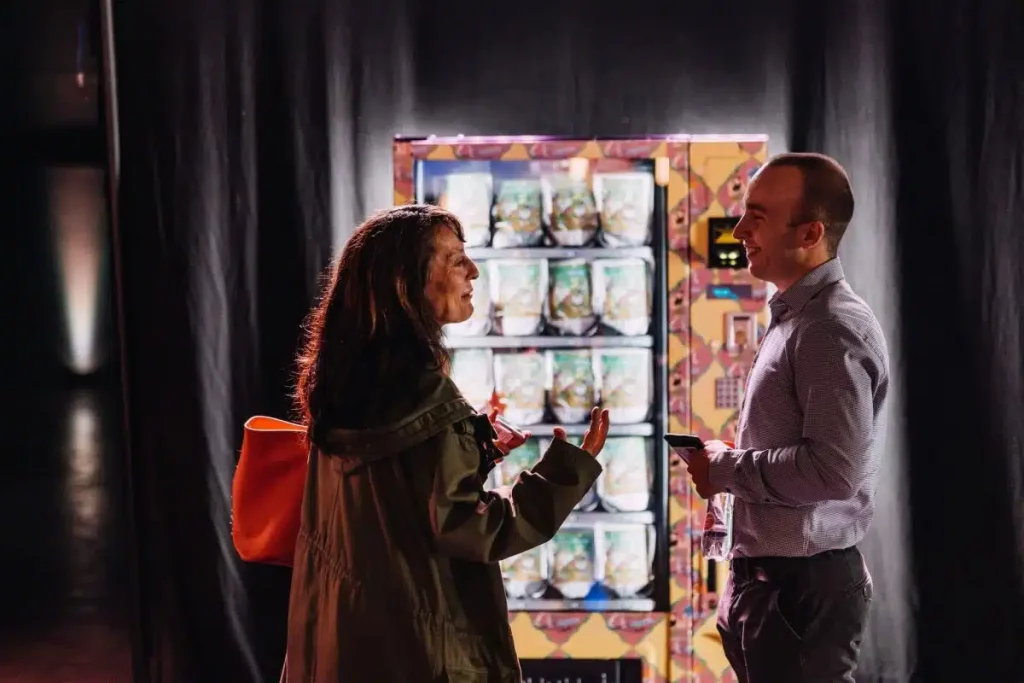
What is a good web3 conference these days without an NFT vending machine? Web32 delivered on that with some exciting NFTs that attendees could “physically” collect. These awesome collectibles featured the work of Belgian artist Brecht Vandenbroucke.

Overall, it’s fair to say that Web32 was a major success! It’s great to see IRL events expanding across the globe, bringing the web3 community together and laying the groundwork for the future of the space.

Webinar – Large-scale companies vs. fast-growing startups – Fashion Sustainability Practices

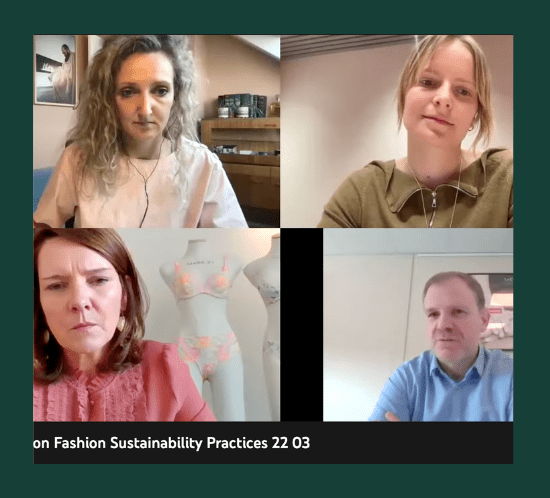
In this webinar for Lectra, Jasmien goes into conversation with Lieve Vermeire (CSR Manager Vandevelde) & Eva Engelen (HNST).

Not all fashion companies are created equal, so sustainability will seem like a totally different challenge – or opportunity! – to each of us. 

To answer the question “Can sustainability go hand in hand with profitability?”, we need to establish that sustainability strategies can and will vary enormously.

That’s why Lectra invited customers, experts and partners from the industry to discuss the topic of sustainability from different and even opposing points of view. All related to Product, Process and People.

Speakers:
• Jasmien Wynants – Freelance sustainability expert, Jasmien has experience at Flanders DC and is the co-author of the “Close the Loop” circular fashion initiative. She is also Sustainability Coordinator at Xandres, the Belgian women’s fashion brand.
• Jeroen Deweer – Account manager at Lectra, Jeroen enables fashion companies across the Benelux to transform, digitalize and become future-proof.
• Lieve Vermeire – Sustainability and CSR manager at Van de Velde, the Belgian lingerie and swimwear giant that’s been shaping women’s bodies and minds for over a century.
• Eva Engelen – Sustainability and product manager at HNST, the up-and-coming jeans brand that challenges the industry’s current practices by being fully transparent, recyclable and sourced in Europe.

Webinar – How to make your fashion brand more sustainable?

In this webinar of Flanders DC, you get an introduction to sustainability thinking and circular economy. In addition to some concrete tips & tricks, you are shown the necessary tools to develop your own strategy.
As a fashion entrepreneur, you have an impact on different parts of the fashion cycle: designing with less textile waste or better materials, releasing fewer collections, producing locally and ethically, looking for take-back and recycling solutions,… You can also bring your customers into this story. During this webinar, we’ll familiarize you with the Close The Loop program. You will get an introduction to sustainability thinking and circular economy. In addition to some concrete tips & tricks, you will be given the necessary tools to develop your own strategy. Jasmien Wynants is a sustainability expert and the driving force behind the Close The Loop platform, the reference in the field of circular fashion. She helps fashion companies develop a sustainability strategy and how to put it into practice.
Loading new posts...
No more posts