September 20, 2023
Interview for Bloovi : WEB32 brings together a community of technological visionaries
WEB32: “It’s about connecting, experimenting and inspiring”
Bloovi, April 10th, 2023
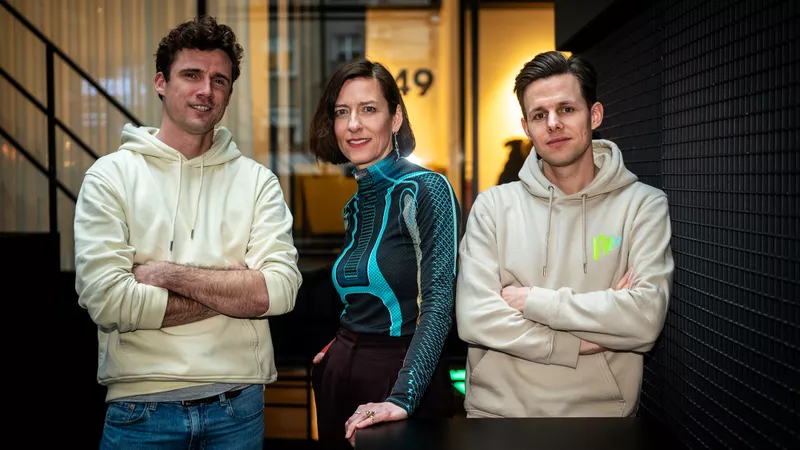
In June 2022, the WEB32 networking event brought professionals and those interested in web3 together for the first time in the Waagnatie in Antwerp. Due to the great interest and the positive reactions, a second edition of the ‘inspiring deep dive into web3, NFT’s and The Metaverse’, as the organizers describe it, will be held on September 27. “WEB32 is not about which NFTs to buy, how to make money from them or any other financial advice. Bringing the community together, highlighting the innovative possibilities of web3 and looking for potential: that is our goal”, emphasize the three organizers Ann Claes, Gilles Den Haese and Thomas Lambert. A matchmaking event, in other words, which the city of Antwerp supports 100%, and therefore also financially supports it.
For those who hear it thunder in Cologne: web3 is a decentralized version of the internet where not the big tech companies, but the user himself is in control. Concepts such as blockchain technology, NFTs and token-based economics are central here. “Web3 and blockchain technology can create added value in the back-end on the one hand, so on the supporting and practical side.”
“On the other hand, web3 creates numerous opportunities on the soft side. It makes it possible to work even more customer-centric. In co-creation, segmented, transparent and with extra experience, in order to build and serve a community.” explains Gilles Den Haese, who has long been fascinated by the wonderful web3 world.
Den Haese is the co-founder of 0x32, the first NFT/web3 community in Belgium that brings together professionals and interested parties to exchange thoughts and experiences and thus learn from each other. In addition, the self-proclaimed cryptonative entrepreneur is active with his company OG studio in various web3 projects, from strategy and education to development and community building.
Den Haeses 0x32 co-founder Thomas Lambert also said he struggled ‘deep into the web3 rabbit hole’. As a co-partner and creative director of OG Studio, he helps companies and other creatives discover the many possibilities of web3 and convert them into impactful projects.
Sharing knowledge about web3 via WEB32
“In 2022 we organized a meetup in Antwerp with 0x32 and we met Ann Claes there”, Den Haese recalls about their meeting with the fashion project manager at Flanders DC and founder of Mutani, which aims to form a bridge between (fashion) designers and digital worlds and games. “We got talking and it quickly became clear that we shared a huge passion for web3. One thing led to another, namely the idea of organizing an event together in Antwerp”, he continues.
“NFTs, the metaverse: it all evolves at lightning speed and for many it remains something very abstract. Nevertheless, interest is increasing and we see many creative initiatives and valuable projects emerging, also locally,” says Claes. A good example is the ‘Signum’ platform recently launched by diamond and tech company HB Antwerp, where blockchain technology brings diamonds to life in the metaverse.
Venly is also fully committed to the blockchain to help companies make an impact with web3. Together with Shopify, they developed a standard webshop template with which the Antwerp digital fashion network can sell Mutani NFTs. And let’s not forget the Tomorrowland NFT collection, with which fans experience ‘the ultimate experience’ with exclusive content and first access to new activities, among other things.
“Because of all these great examples of impactful web3 projects in our own country, we thought: let’s organize an event in Antwerp that makes this all very concrete, recognizable and accessible,” Claes continues. No sooner said than done: based on their shared fascination, knowledge and drive to bring people together, Claes, Den Haese and Lambert joined forces. WEB32 was born.
B2B matchmaking supported by the city of Antwerp
The first edition of WEB32, which took place in June 2022, was created with the support of the city of Antwerp. Every year, the city provides a budget for the financial support of matchmaking events. At these events, entrepreneurs can make the right contacts with companies and organizations that help them to find capital or talent, or to further grow their business.
“Since we focus on a professional target group and want to bring people together and inspire, we fit in perfectly with that picture. The city believed in our idea,” says Claes. “We were ‘just’ three people who came up with an idea to bring together entrepreneurs who want to know more about web3 and to share knowledge and expertise in the matter, not a big company with a real marketing machine. We are therefore very grateful to the city of Antwerp for giving us the opportunity to realize this.
We are therefore very grateful to the city of Antwerp for giving us the opportunity to realize this
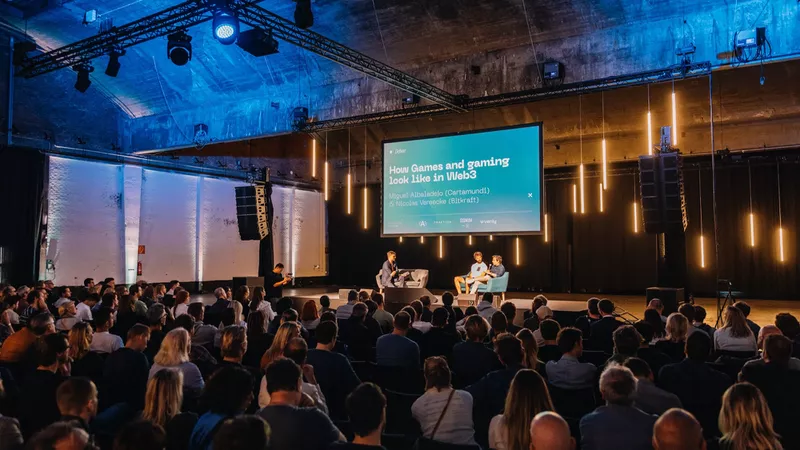
In 2022, the event welcomed just under 400 visitors to the Waagnatie in Antwerp. “It was clear that there is a great need for clear information, concrete cases and the exchange of experiences,” says Claes. After last year’s great interest, there will be a second edition of WEB32 on September 27, 2023.
“The last event was in June, which in hindsight may not have been the best time as many young people were taking exams then. This year we are aiming for autumn because we consciously want to involve the young generation as well. After all, we believe in their potential to make a contribution, and we notice that they are open to the new possibilities that web3 offers and that they feel like immersing themselves in it”, says Claes.
Empower visitors
What can visitors expect from WEB32? Just like last year, you can attend an inspiring mix of talks and panel discussions with leading companies, creatives and other visionary thinkers. You get the chance to fully connect with the community and discover what web3 and the metaverse can offer you and your company.
In addition to technology, a lot of attention is paid to creativity. “We also organize ‘meet the expert’ sessions where you have a one-on-one conversation for half an hour with people who are active in the web3 world in various fields. Our focus is on ‘local heroes’, because there are already so many great projects in our own country and we should be proud of them. Networking and making the network work: that’s what we want to achieve with WEB32,” says Claes.
“We all realize the value of the technology, but we especially want to look beyond the hype to concrete use cases. But also what it can mean for entrepreneurs, creatives and companies looking for a solution, or just for inspiration,” says Lambert. “We target both people and companies who are already involved in the whole web3 thing and those who want to get started and need a little extra push and accessible information. In this way we want to empower visitors so that they can get to work and make an impact.
The organizers emphasize that they do not want to push anyone in a certain direction. Both supporters and opponents are welcome on WEB32 to learn, experiment and inspire. “We realize that there are still pain points with the technology, it is certainly not all ready yet.”
“This is how we push each other forward and that ensures that we were able to grow in such a short time. While in the beginning we had to pull the cart everywhere ourselves, people and companies are already coming to us with ideas and proposals to work together for WEB. It is nice to experience how everything is growing organically.”
We hope that we can once again welcome many enthusiastic visitors on September 27!
“What I especially like is that none of our team knew each other before. This entire project really stems from our shared passion. We all do this in addition to our main job, so that proves our drive and mindset to go for it. We do not have a major economic goal, we just want this technology to be used as much as possible because we believe 100% in the impact it can make.”
“WEB32 was the very first web3 event in Flanders, and also the largest in Belgium. That makes us forever unique. This is really from the community and for the community. We hope that we can once again welcome many enthusiastic visitors on September 27!” conclude the organizers.
Subscribe HERE to the WEB32 newsletter to be the first to know about the next edition.
September 20, 2023
Interview Fashion United: More legislation is required in order to change the industry
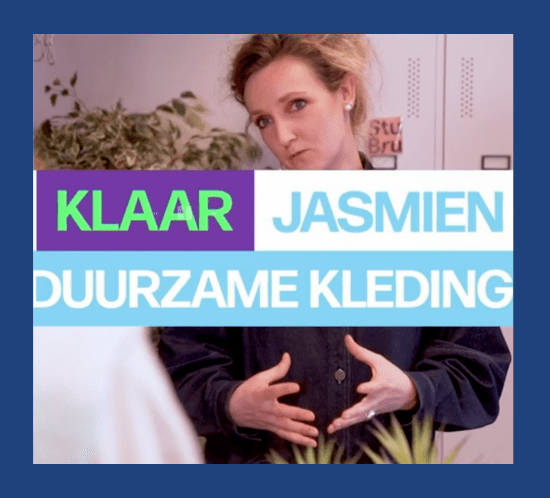
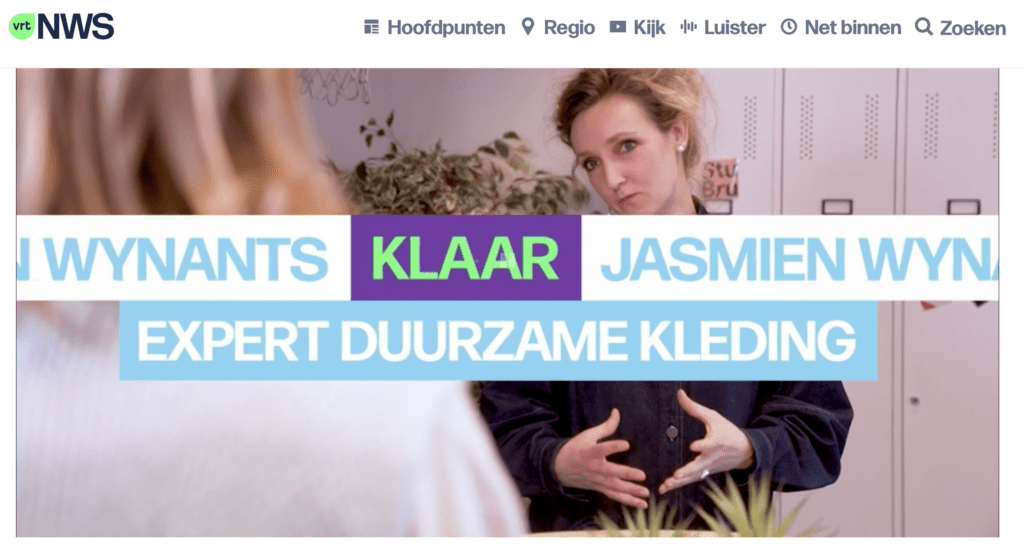
Interview with Jasmien in Fashion United about European policy and her Master’s thesis on the subject, written by Natasja Admiraal
Isn’t it a crying shame that an industry responsible for producing so many beautiful products, simultaneously has such an incredible impact on both people and the planet? Anyone who decides to take a somewhat more detailed look into the ‘ugly’ side of the fashion industry will not be able to help but lose sleep over this, according to Jasmien Wynants. She has spent the last seven years conducting research into sustainable entrepreneurship and the circular economy at Flanders DC (the umbrella organisation for creative individuals in Flanders), with one single goal in mind: to improve the fashion industry.
It was starting to become abundantly clear to her that changes in both the industry and consumer choices simply wouldn’t be enough. “Legislation and policies are essential for removing a number of barriers and accelerating the transition to a circular economy”, Wynants states. She recently completed her Master’s in Environmental Science at the University of Antwerp and wrote her master thesis on textiles and European policy. FashionUnited spoke to her about this research and about the recommendations which resulted from this.
How did your interest in sustainable fashion first come about?
I was given the opportunity to inform and guide Flemish fashion companies towards a better way of working during my time at Flanders DC, via the Close The Loop programme. I spoke to numerous inspiring entrepreneurs and innovative start-ups and came to the conclusion that we were dealing with a sustainability revolution. Only a few players were involved with this in the past, now virtually everyone is losing sleep over this subject.
An increasing number of companies, from small to large, are now looking for ways to change their business model and work with respect for both people and the environment. However, I’ve also noticed that companies are all faced with the exact same hurdles. There is a growing interest in sustainable fashion among consumers too, but many people find making the right choices anything but easy. And that’s simply because the system behind it isn’t right.
Do explain...
The fast fashion model, which once stood for positive development, i.e. the democratisation of fashion, has been completely derailed over the last 15 years. An item of clothing’s life cycle has become shorter and shorter. The fashion industry is largely based on rapidly changing trends with overconsumption at the root of the issue. This has major consequences for both people and the planet.
Enormous volumes of non-renewable resources are used to produce clothing that is only worn for a very short period of time, only to then be dumped or incinerated. A huge amount of water is used during this process and a fair amount of pollution is involved too. The complex production chains are well known for their exploitation in the producing countries.
What is needed to change this system?
This is almost impossible for a company. Policies and legislation are needed for this. If a change to a system is required, a government can take on a guiding role in order to accelerate this process. This can be done both by imposing obligations and by providing positive incentives, for example, by rewarding companies with tax benefits if they introduce sustainable measures.
Are you more in favour of negative or positive incentives?
I tend to choose the latter from a consumer perspective. You can compare it to the food industry. You’re not going to make anyone happy by telling them they can’t eat meat anymore. People will feel attacked and this can lead to defensive behaviour. You would be much better off trying to convince people with inspiring vegetarian recipes. So a positive incentive will certainly prove useful if you’re trying to convince companies to opt for sustainable materials.
You can make it economically interesting for them to make responsible choices by making sure they can maintain their margins and that their product remains profitable. Whilst at the same time, it’s certainly also a good idea to impose a number of obligations on the industry. This could include, for example, a ban on harmful chemicals or a minimum quality for textiles. It will therefore always be about a combination of those two methods. The art and the difficulty is in finding the right mix in policymaking.
You have certainly timed your master thesis very well: the research perfectly fits within the European Commission’s Green Deal context.
That’s right, the European Commission launched a new action plan for the circular economy in March 2020. It will become one of the most important building blocks of the new European Green Deal, the plan with which the EU wants to make the economy sustainable, with the main objective being to realise a climate-neutral union by 2050. Extra attention will be devoted to certain sectors as a result of their impact on the environment or the circular opportunities and one of these sectors is… textiles!
What is going to be addressed in this action plan?
It contains measures aimed at the entire life cycle of products. Specific actions are being worked out for textiles and a comprehensive European strategy with measures will be drawn up. The focus will be on creating a framework for sustainable products, but also on improving the business and regulatory climate for sustainable textiles.
Even though your master thesis is based on a Flemish perspective, your recommendations definitely look at things from within a broader Belgian and European context. Why is that important?
Demarcation is crucial, you’ve got to start somewhere. Eventually, everything is connected. For example, we are currently looking into how a reduction in VAT on certain products or services could play a role in convincing and stimulating consumers and companies to buy sustainably. A measure that is anchored in national legislation, but for which the European VAT Directive will first need to be revised. Flanders, therefore, formed the starting point for my research, but you can naturally repeat this exercise for other countries or parts of other countries too.
What was the biggest challenge you came across during your research?
The complexity of policies and legislation. As I said, it’s a huge tangle of connected little radars in a big hole. Laws, regulations, guidelines… it’s so important for these matters to be effectively established and written up, with input provided by the sector. But not every company is going to have time to provide input, let alone actually get immersed in the complexity of the material.
You managed to bring those two worlds of policy and industry together through round table discussions.
Yes and I’m very pleased with the excellent industry stakeholders’ attendance during these round table discussions. Once again proof that the sector itself wants to move forward. One of the aspects which came to the surface during the discussions with policymakers is that it’s quite exceptional for a sector to ask for more legislation.
What are the most important recommendations in your master thesis?
Firstly, there’s a need for clarity and demarcations. One of the things which emerged from the round table discussions is that there is no clear definition for circular textiles. And this is absolutely crucial to be able to prepare an effective policy. It starts with all of us measuring with the exact same measurements. After all, everyone uses different criteria where sustainability is concerned and there’s a proliferation of quality marks and certificates.
Another recommendation is the importance of quality. There are always plenty of discussions about animal welfare, lower CO² emissions and less water consumption, but the products’ lifespan is definitely essential too. We must encourage companies to produce products that will last a long time and are recyclable, in order to do something about the growing mountain of waste, full of non-recyclable textiles. And to avoid low-grade qualities.
Uniformity is once again important here, in order for us to realise a minimum quality standard: you can’t draw up a policy and subsequently enforce it too until everyone is speaking the exact same language.
And finally, you state that subsidies are important, providing there’s a sales market for them too.
It’s obviously fantastic that governments are investing in innovation, but in practice there often isn’t enough insight into where that money goes. Four comparable projects were recently approved instead of centralising these and stimulating collaborations. More coherence, that’s what it should start with. Not just turning on the money tap, but instead streamlining and coordinating the subsidies more effectively. And then specifically focusing on creating a sales market for the innovations which will arise from this.
The course awarded your master thesis with a mark of ‘great distinction’. Does this encourage you to continue with academic research?
There’s certainly plenty of potential for further research. Even though I have now actually headed off in a different direction. I now work as a Sustainability Coordinator at Xandres two days a week, a Belgian fashion house with a long history and where quality has always been a central focus point. The company was looking for someone who could turn the sustainability objectives, a long-term strategy, into concrete short-term actions.
And I work at Flanders DC three days a week too. A fantastic combination, as any issues we’re faced with at Xandres, and undoubtedly other fashion companies too, can subsequently be tackled at Flanders DC. This can definitely work the other way round too, as I certainly come across organisations at Flanders DC which could potentially be of interest to Xandres. I truly believe working together is the only way for us to realise real progress.
This article was previously published in Dutch.
September 20, 2023
Fashion United on Xandres’ change management, led by Jasmien: Sustainable business? It’s all about employee engagement
Fashion United, Natasja Admiraal
Interview with Jasmien Wynants and Veerle Spaepen (Thomas More University of Applied Science) in Fashion United, written by Natasja Admiraal.
Do you, as a fashion company, want to do sustainable business and realize circular ambitions? Then it is essential to focus on employee engagement, research shows. This is an opportunity that often remains unused in practice. The project ‘In Fashion’ wants to accelerate the circular transition in the fashion industry by focusing on (re)education of current and future professionals. FashionUnited spoke to two driving forces behind this project: sustainability expert Jasmien Wynants and Veerle Spaepen, researcher at Thomas More University College, about the importance of employee engagement and change management.
Time, space, and budget alone are not enough
Many companies would like to make the switch to more sustainable business operations. In doing so, a number of factors determine the chances of success. “Motivated leadership is crucial to making the switch to a sustainable policy,” says Wynants.
“After all, time, space and budget must be made available for this. But, that alone is not enough. Enthusiastic involvement of all employees is the key to success.”
“Implementing CSR (Corporate Social Responsibility) within a company requires a lot of adjustments in the business operations. To ensure that employees have the right knowledge and skills, retraining or additional training is often necessary. It is also important to convince employees of the importance of sustainable business practices.”
Small changes, with a bigger goal
The ‘In Fashion’ project offers companies tools to properly tackle the transition to a sustainable policy. “In doing so, we work according to a step-by-step plan,” Spaepen explains. “That starts with defining the change goals. Suppose a company has the goal of incorporating twenty percent more eco-fabrics into its collection. We then link a change goal to this. Because in order to achieve this, the purchasing team may first need more knowledge of sustainable materials. The next step is to map out the preconditions needed to achieve that learning goal. Think: time to study eco-substances, visiting trade fairs and negotiating with suppliers. In this way, we implement small changes per department to ultimately reach a larger goal.”
From scientific research to concrete tools
A great deal of research has been done in recent years on change management, or in other words: a structured approach to implementing change within an organization. The ‘In Fashion’ project therefore started with scientific research. Spaepen: “Based on this literature study, we developed a methodology that we are currently testing in practice. We are doing this at two different companies.” Wynants adds: “These consulting processes help to translate the step-by-step plan into a method that the entire industry can use. It should eventually become an additional module of Flanders DC’s Close The Loop program on circular fashion. The goal is to motivate companies to get started with this themselves.”
Employee engagement: a win-win situation
Involving employees in the sustainability transition is a strategic move. It increases the chances of success and, conversely, it also has a positive effect on the employees themselves. Spaepen: “It results in greater involvement among employees, relationships improve and this ultimately leads to less staff turnover. It also motivates employees to take action themselves and to support the actions of your company.” In addition, employees are increasingly looking for meaning. A sustainable policy can provide an answer to the demand for meaningful work. “More and more people prefer to work for organizations with a social message. This can be important to retain your current employees, but can also be important in new job applications.”
Sharing numbers and success stories helps
Communication also plays an important role in this story. “Sharing numbers and success stories is a great way to keep employees’ passion and inspiration warm,” Wynants states. “Whether that’s an increase in sales of sustainable products, a decrease in energy consumption, a new technology developed or a sustainable partner recruited. Rewarding behavioral change positively can also give people a boost. As a manager, you can be a good example for the rest of the team in this regard.” So making visible the sustainability efforts you take as a company certainly makes sense. It is tangible evidence that provides positive confirmation that you are on the right track as a company.
Indirectly, employee engagement also creates more satisfied customers. After all, engaged employees have a positive influence on customers and their opinion of the company. Spaepen: “A simple example: imagine that a sales employee in the store has no idea which sustainable steps you are taking as a brand. Then that person won’t be able to answer any questions from customers about it either. A missed opportunity. Good external communication can therefore be crucial in the customer’s perception of your company’s values. Store employees do not work at the head office, but they are in close contact with the end customer and know what they are looking for. They can therefore provide good feedback, for example what effect sustainable efforts have on buying behavior. That, too, strengthens commitment.”
Good communication about sustainability is an art
Sustainability and climate change are not intrinsic drivers for many consumers to make a purchase. “Translate this, however, into convenience, luxury and life extension of products, and it is suddenly an appealing story. Behavior change should be fun and have a positive outcome,” Spaepen says. “At Thomas More, separate from this project, we also do research on sustainability communication. Marketing and sales departments are used to focusing on sales and conversion. But how does the sustainability story get a place? Which concepts are important, and how can you tailor the communication to the target group and ensure that the message is effective? All of this listens very closely, it really is an art to do it well – and for that very reason worth investigating.”
September 20, 2023
Ann new member for Board of Directors at CRG group (JBC, Mayerline, CKS)
Retail Detail, October 7th, 2022
Complementary knowledge
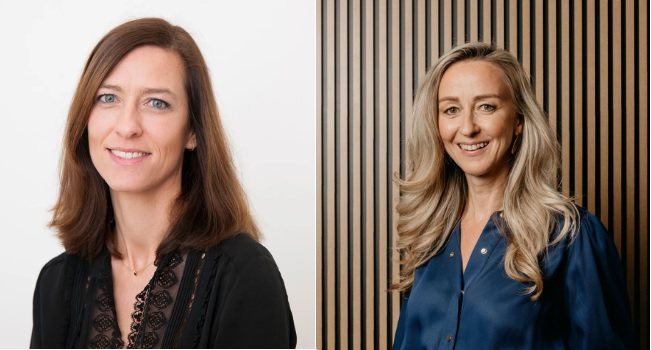
Ann Claes, not to be confused with the eponymous co-owner of JBC, is co-founder of digital fashion agency MUTANI and project manager at Flanders DC. Lieve Pattyn is marketing director at EG, the so-called ‘white products’ of the Belgian pharmaceutical sector.
“The expertise of Ann Claes and Lieve Pattyn in the field of creativity, marketing, consumer behavior and digitization is complementary to the knowledge already known to the CRG board of directors,” says Bart Claes, CEO of Claes Retail Group. Claes is also proud of gender equality in the company and now also the board. “With JBC, we were even awarded the X² Award for it, as the most progressive company in the field of gender-equal entrepreneurship.”
In addition to Ann Claes and Lieve Pattyn, co-owners Ann and Bart Claes, Ter Beke CEO Dirk Goeminne, Concentra CEO Patrick Hermans and Veepee COO Peter Grypdonck sit on the board of directors.
September 19, 2023
Column by Ann for De Tijd : Blockchain makes business models more sustainable
A myriad of individuals converge at blockchain events, an occurrence not limited to Belgium. This technology finds application across domains, fostering sustainable practices in sectors like fashion while elevating creator recognition.
March 30, 2023 – De Tijd
My recent and forthcoming weeks orbit around the world of blockchain once more. A stint in Paris marked my presence at the Paris Blockchain Week, where I addressed the audience at an event spotlighting Metaverse Fashion Week (unveil more details through #MVFW23). Presently, I hold a slot among 35 speakers at the inauguration of Blockchain4Belgium, elucidating the profound impact of blockchain on diverse business paradigms
What consistently astonishes me is the sheer scale of these events. Paris once again beckoned 10,000 enthusiasts (merely three weeks post the NFT Paris event, which drew 18,000 attendees). Belgium, too, has embraced blockchain with fervor, boasting a professional cohort of about a thousand aficionados.
Thursday heralds a physical rendezvous, with 300 attendees assembling at Blockchain4Belgium, an initiative spearheaded by Mathieu Michel, the Federal Secretary of State for Digitization. Here, insights and requirements will be exchanged, paving the way for policy recommendations. The purview encompasses regulations, along with educational and sectoral support.
Blockchain, inherently a versatile technology, encompasses multifaceted applications. Notably, non-fungible tokens (NFTs) serve as ownership certificates within the blockchain realm. Naturally, cryptocurrencies like Bitcoin and Ethereum also have their role. My primary focus, however, pivots away from cryptocurrencies. I even believe it should be nearly invisible, a facet pivotal to seamless integration of blockchain technology into widespread business models. Increasingly, platforms offer dual payment options – cryptocurrencies and traditional fiat (euros, dollars, etc.).
Phygital. Blending the Physical and Digital Realms.
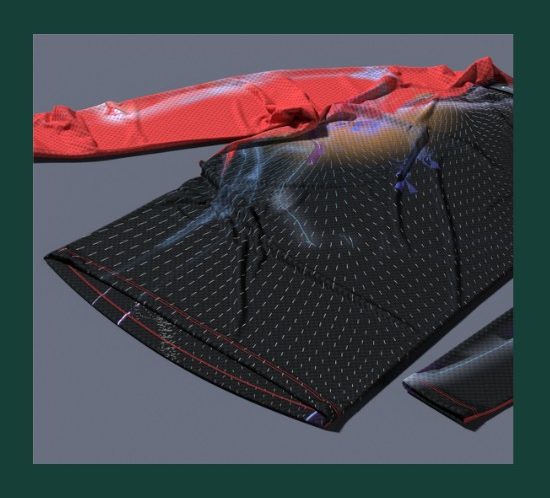
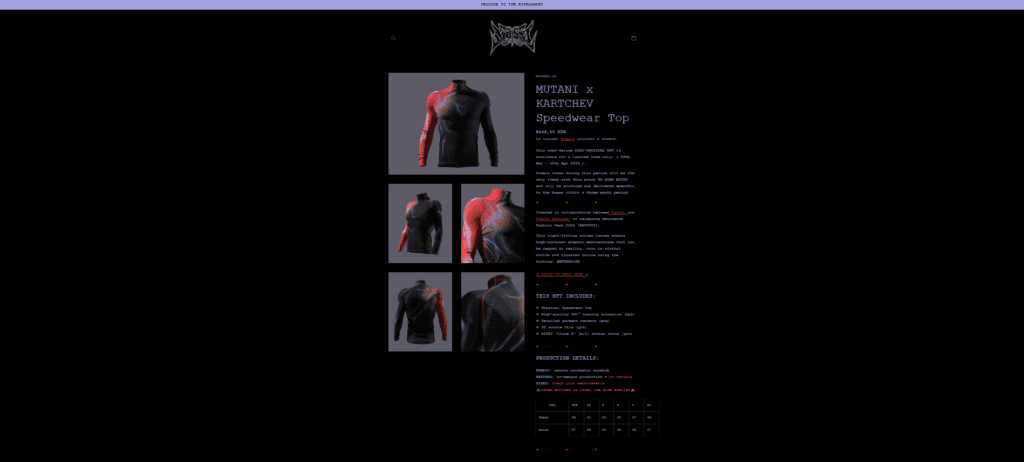
For Metaverse Fashion Week we are launching a phygital with Mutani.This entails the simultaneous purchase of physical and digital assets, intertwined through a chip. This unique offering graces an ordinary e-commerce venue hosted on the Shopify platform. Thanks to our partnership with Belgian Venly, NFTs are available in our webshop, including a design cycling jersey, attainable in both physical and digital formats.
The buyer pays in fiat and does not have to go through complicated procedures. Immediately upon purchase, the buyer receives the NFT and its digital iteration, accompanied by a blockchain-linked certificate of ownership for the physical jersey. All of this is bundled into a digital wallet, generated for the customer and delivered straight to their email inbox, streamlining the entire process.
For our designers, this marks an evolution in crowdfunding, an advanced realm where digital prototypes carry no carbon footprint, circumventing overproduction. The certificate of ownership establishes a precious rapport between the consumer and their acquisition, transforming it from a disposable item into a cherished possession. Furthermore, this certificate enables future resale, with designers garnering royalties. As the second-hand market gains traction, smart contracts ensure the original creator’s enduring involvement.
My curiosity is piqued regarding the cycling jersey buyers and their perception of the digital variant and accompanying NFT. As with any technological stride, adaptation to customer and corporate needs remains paramount. Government’s role, too, is pivotal, albeit a work in progress.
August 31, 2023
Column by Ann for De Tijd : Handbag with a passport
The fashion industry grapples with numerous challenges, but technology offers a pathway to addressing these issues.
May 12, 2023, De Tijd
For many, fashion stands as a cornerstone of their identity. Ever-evolving trends serve as mirrors reflecting societal changes, nurturing the dreams of many. Within its realm thrives a community brimming with passionate individuals, wielding creativity and beauty as their tools.
Regrettably, a darker underbelly exists – rampant overconsumption, hazardous materials, and exploitative production practices. This somber reality has propelled the industry toward a sustainability crusade spanning several years. Urgent recalibration is imperative, as underscored by the words of British fashion luminary, Vivienne Westwood: “Buy less, choose well, make it last.”
Despite its seasonal innovation, the fashion domain clings to conservatism. In tandem with calls for transparency and behavioral shifts, technology emerges as a potent ally in accelerating sustainability.
Data analysis empowers smarter procurement and production decisions. Innovative tools like Shavatar, ContourLab, and Zalando’s virtual fitting room aid online shoppers in accurately assessing sizes and body types. This not only slashes return rates but also augments customer satisfaction.
Renowned sustainable fashion expert Jasmien Wynants laments in the book ‘Groeien Broeken aan Bomen?’ that every passing second globally witnesses a voluminous dump of textiles, incinerated or discarded onto wastelands. These precious resources merit reincarnation.
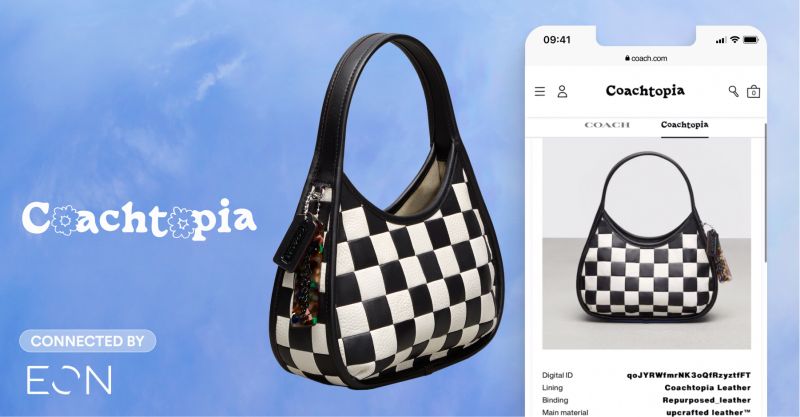
Coachtopia, an offshoot of fashion powerhouse Coach, morphs this cycle into an engaging escapade. With a TikTok frenzy and an enthusiastic Gen Z community, discarded materials and excesses are transformed into novel products, primed for recycling.
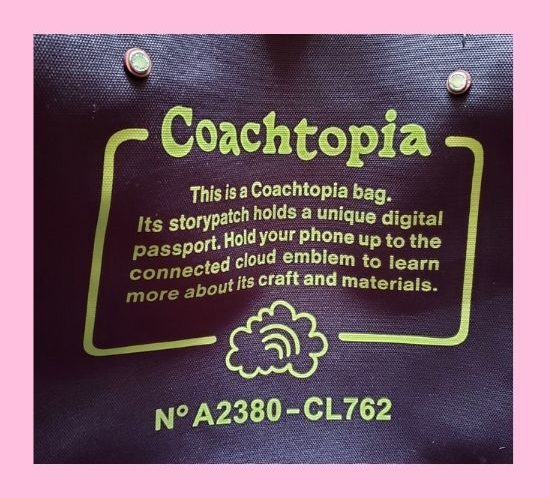
Each item bears an NFC chip that, upon a phone’s touch, unveils a digital dossier – divulging insights into materials, design, and ecological footprint. This passport also charts the product’s journey, whether it undergoes repair, reuse, or reinvention.
The startup EON champions these digital product passports, leveraging blockchain for transparent verification and monitoring. Teaming up with esteemed French luxury brand Chloé, EON streamlines the process of sharing product information on second-hand platforms. This democratizes the process of buying and selling high-end items.
Buoyed by the new EU textile strategy, the eventual incorporation of digital product passports into legislation looms. This development holds immense promise. Let’s infuse these passports with ingenious concepts, aspirations, and narratives. Alternatively, envision embracing virtual fashion, an innovation with minimal ecological repercussions. This avenue might wield the most resounding influence. While I wholeheartedly embrace every stride toward a cleaner fashion industry through innovation, technology undoubtedly remains its linchpin, propelling it toward a pristine future.
August 31, 2023
Interview for De Tijd on MUTANI : Antwerp fashion rebels embrace metaverse and blockchain
De Tijd, Roland Legrand December 2, 2021
The Antwerp start-up MUTANI helps creative fashion makers conquer digital worlds. A first collection will be launched on a digital marketplace on Friday
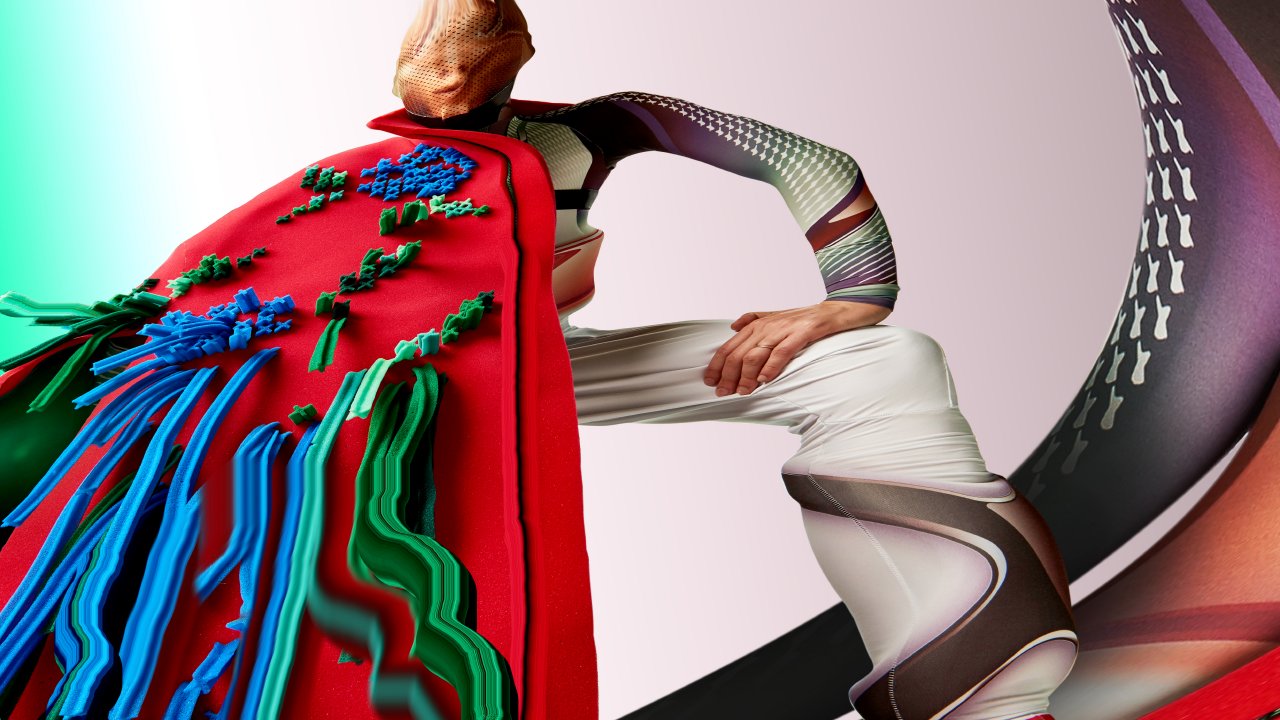
MUTANI bringing the most far out fashion to the cyberscene
The Australian Shayli Harrison moved to Antwerp in 2013 to study at the famous Fashion Academy. She graduated in 2018 and in the meantime she had started working with 3D printing, 3D scanning and virtual reality (VR). She participated in the exhibition Dissidence in the Hasselt House for Contemporary Art, Design & Architecture Z33. This dissidence is also of great importance to her start-up Mutani (pronounced like ‘mutiny’, rebellion) that was founded in February.
Co-founder is Ann Claes, who is senior project manager Fashion at the non-profit organization for the creative sector Flanders DC. ‘The fashion sector is known for rapid innovations in content, but there have been hardly any changes in the way of working over the past sixty or seventy years,’ Claes notes.
The essence
The Antwerp start-up MUTANI wants to offer fashion designers an alternative to earn money with their creativity, in addition to the established channels. MUTANI digitizes the designers’ work and puts it on the blockchain in the form of NFTs. This allows gamers and other users of the metaverse’s digital environments to actually own those digital objects.
A first NFT launch will take place on Friday, with work by an alumnus of the Antwerp Fashion Academy.
That has to change. On it’s site, MUTANI says it is waging a “rebellion against the oppressive and exploitative nature of the fashion industry.” In the metaverse, roughly the entirety of virtual environments, a fashion designer can be unfettered in his creativity. Blockchain technology enables new business models. Young designers are given an alternative to a poorly paid seven-day-a-week job at a major fashion house.
Mutani works with non-fungible tokens (NFTs), registrations on a blockchain that refer to digital or physical objects that can be traded. “Now you can really take ownership of 3D digital objects and use them in different digital spaces,” explains Harrison. She refers to large gaming companies such as Epic Games and Electronic Arts, which are open to blockchain integration. ‘The player gets more autonomy.’
Harrison notes that gamers “work” quite hard to acquire certain objects in the game environment. Now they can finally own it too. ‘Ultimately it’s about self-expression, which is also the case with clothes in the physical world,’ adds Claes.
And fashion designers can attract new audiences with their creativity. Mutani helps them by digitizing their work and making it ready for the digital marketplaces.
Digital activewear
On Friday at 7 p.m., Mutani will unpack with a first NFT launch, also called ‘drop’. These are fashion pieces by Stefan Kartchev, who graduated from the Fashion Academy in 2018. He has worked for the fashion designer Walter van Beirendonck, for the vegan footwear manufacturer Rombaut and for Bioracer, which designs and makes cycling clothing. Kartchev searches for new ways to interpret activewear and explore the limits of the human body.
For sale on digital fashion platform The Dematerialised
Sales are made via the online sales platform The Dematerialised. That platform promises to guarantee transparency and authenticity through LUKSO blockchain technology.
The prices are 150 euros and 250 euros. There is also an exclusive NFT phygital (portmanteau of physical and digital) that the buyer can wear offline. The price for the phygital is 2,000 euros. In addition to payments in crypto coins, The Dematerialized also allows regular money.
‘We bring a wave of creativity that has no equal in digital fashion,’ emphasizes Claes. Although major brands launch digital versions of their products in the virtual worlds of Roblox and Fortnite, Harrison says that these are digital copies of the physical products. They don’t necessarily fit into those virtual worlds. It is her intention that fashion designers can respond with unfettered creativity to the possibilities of the metaverse and the numerous subcultures that reside there.
With the support of the City of Antwerp, Mutani is working on a new project involving six designers. Everything is made with the Unreal Engine, software that allows you to create high-quality digital objects.
Even though Mutani is very critical of the fashion sector, brands have shown interest in their services. Harrison does not reject that. “It can help us do more for independent fashion designers,” she says.

Mutani wants to ‘unburden’ the fashion designers of technical problems. The start-up takes care of digitization with freelance developers spread all over the planet in exchange for a share of the proceeds. “It is crucial that the digital developers are inspired by our creative vision,” says Harrison.
The founders of Mutani do not believe that the fashion designer should become a digital designer. ‘It is important for fashion designers to know what the
opportunities and that there is an additional business model,’ says Claes. ‘A fashion designer traditionally needs pattern makers, sewing studio and textile experts. Now it’s about developers.’ Mutani bridges the gap between both worlds.
At the Antwerp Fashion Academy, Harrison notices interest from students and a number of teachers. She sees potential in a collaboration with the internationally renowned game design and development department of Kortrijk Howest.
August 31, 2022
The world of web3 in 8 keywords by Ann for Flanders DC
You’ve probably heard of web3 by now. Web3 heralds a new evolution of the internet, in which the end user plays a crucial role. What exactly does that mean and can it be useful for entrepreneurs in the creative sector? And what exactly do terms such as blockchain, wallet and metaverse mean? An article written for the online magazine of Flanders DC
1. Web3
What exactly is web3? To understand this properly, let’s go back to the beginnings of the world wide web. Initially, the internet was intended to provide information in an easy and global way. Web pages made content available to anyone whose computer had an Internet connection. That was web1.
Over time, this static content became increasingly dynamic and interactive. Responding became possible, even sharing content was possible, photos and videos took their place on the internet and social media also saw the light of day. That is web2, the internet as we know and use it today and where major players (Google, Amazon, Meta,…) are in control and especially our data. These large companies use our data (content, reactions, play time, insights,…) to earn money, so that the user immediately becomes the product of these services.
Web3 takes a different approach and wants to return the power of data to its owner in order to create a more democratic internet. You therefore remain the owner of your information, your ‘work’,… and can decide for yourself what happens to it. And that is just now possible by means of a new technology. Instead of storing this data centrally at the major players, it ends up in a network of different computers and servers. This system is called a blockchain.

2. Blockchain
Simply put: each blockchain consists of several computers and servers that contain part of the data (or copies of it) as links. Together, these links form a chain of data called a blockchain. Because these different computers and servers always compare the stored data with each other, it immediately becomes impossible to modify or falsify and the dependence on one external party for data storage is therefore also superfluous. The data is encrypted, making the blockchain decentralized, traceable and secure.
There are different blockchains, each with their own uniqueness, such as Bitcoin, Ethereum, Solana, Lukso, Algorand, Tezos, Cardano, …
Be sure to check out this video in which expert Jef Cavens explains blockchain with references to the fashion world.
3. NFT
We often hear the word NFT in the news these days, but what exactly is an NFT? NFT stands for ‘non-fungible token’ (translated: non-fungible or unique token) and works on the basis of the technology that creates a digital ownership certificate with which you can prove that you are the owner of the digital content. An NFT is therefore not the item in itself. The information about this certificate, with a timestamp, is stored on a blockchain, making it unique and traceable. Storing this information on a blockchain is what we call “minting”.
Discover together with Ryan Gill from Crucible & Ann Claes in this Flanders DC webinar what exactly NFTs can mean for creative entrepreneurs.
4. Smart contracts
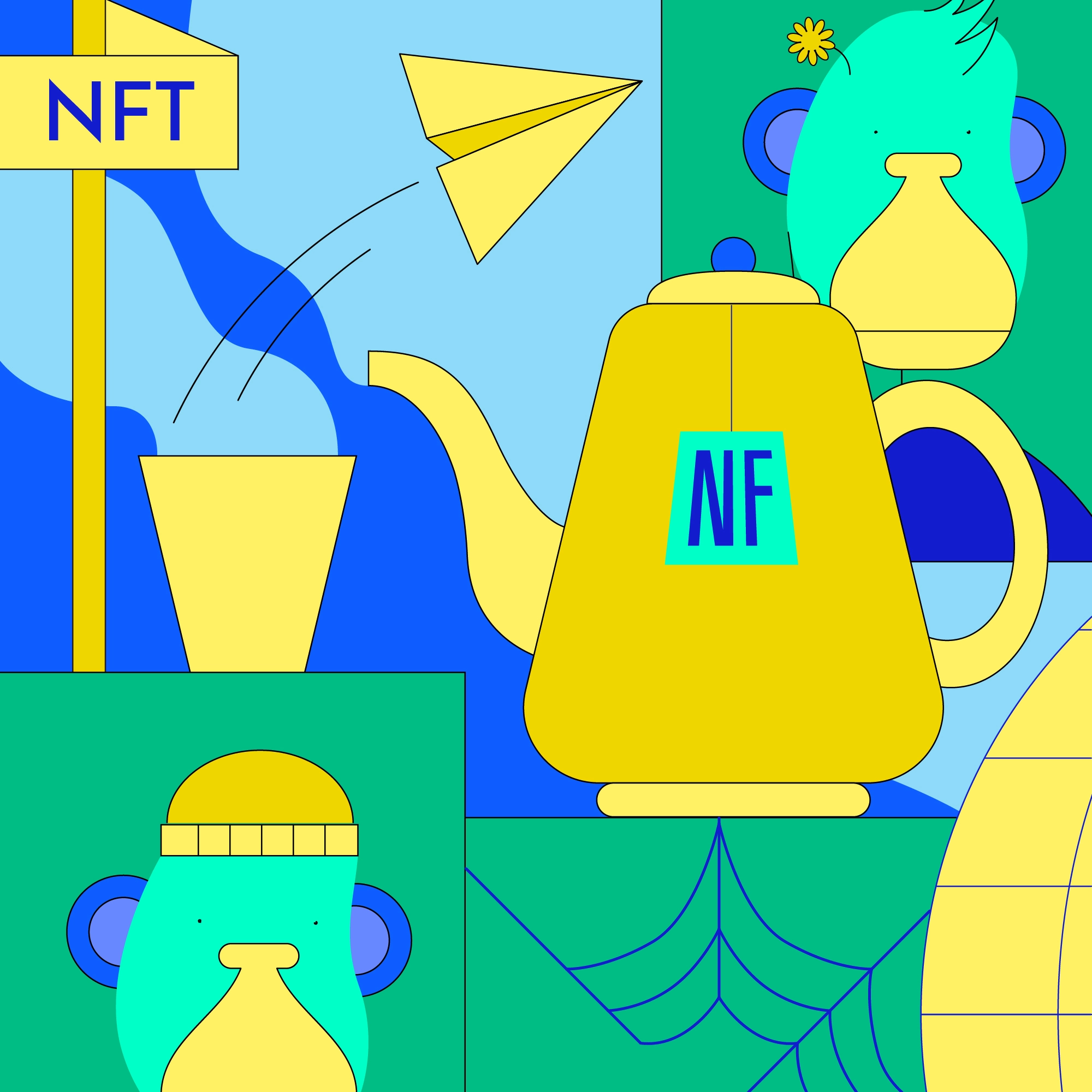
When you place an NFT on a blockchain, you also create a smart contract. This smart contract describes what the NFT entails, which rights have been sold exactly (copyrights, commercial rights,…), but also whether or not royalties flow back to the original author in case of resale. That makes it interesting to be able to follow every transaction in the future and, if it continues to increase in value over time, to even earn money from it.
5. Cryptocurrency
Cryptocurrency is a form of digital money that does not require the intervention of banks or other financial institutions to register transactions. All transactions are tracked on a blockchain. Bitcoin is by far the best known digital currency, but there are hundreds of other digital coins including Ether, Tezos, Polkadot, Dogecoin and Ripple.
6. Wallet
A wallet is literally a digital wallet where you can store your belongings. This contains the items you own on the blockchain(s). These can include NFTs and crypto coins. The wallet is anonymous and publicly accessible. Anyone can view your wallet and add something to your wallet. If someone else puts something in your wallet, it’s called an airdrop.
To move items in a wallet, you need the security codes. If you have lost these codes, you can recover your wallet by using a unique code of 12 words, also known as a ‘seed phrase’. Popular systems for a wallet are, for example, Metamask and Trust wallet, but there are also external, cold wallets such as Ngrave and Ledger. Please note, if you have lost access to your wallet, there is no one who can help you further. There is no help desk or customer service. You are therefore responsible for this yourself.
Wallets are regarded as an important part of your digital identity and, in addition to the functional aspect, also have a showroom effect. For example, Twitter, Instagram and Spotify make connections with your wallet so that you can ‘flex’ or display your valuable assets on other existing platforms.
7. Metaverse
The term metaverse is currently used in a variety of ways. The term is often used for an immersive virtual world where people — usually on the basis of an avatar — can meet each other, work together, learn, play, etc. This 3D world can be supplemented with Virtual or Augmented Reality experiences to offer a more immersive experience.
Metaverse and web3 are often linked as the metaverse can also be seen as a third and immersive version of the internet, as a digital version of normal life where you can work, shop, relax, earn,…
However, the web3 philosophy does apply to the metaverse. Just think of buying and owning digital clothes for an avatar in a decentralized way. These title deeds can be stored with blockchain technology. Emerging platforms such as The Sandbox and Decentraland are built on this concept.
8. Digital identity
We spend more and more time online. The digital world will become increasingly important in the future, especially among the younger generations. Just like in the real world, the will for an own identity is very strong. In daily life, the choices about our clothing, haircut, possessions, who our idols are, which parties we attend, … make us who we are and how we present ourselves to others. This need also exists in the digital world. Consider, for example, the use of filters, the number of likes, the type of contacts, …
Creating a digital personality (or even several) will go hand in hand with the items you own. Here, too, uniqueness and scarcity are important, which is where NFT technology comes in handy. For example, you will be able to unpack or even trade a limited edition digital sneaker, just like in the real world today.
Do you want to know more? Then listen to this podcast episode of Vers van de Metapers (also available via Spotify).
August 31, 2022
Article on NFT Evening: Web32 : What You Missed At Belgium’s Hottest NFT Event

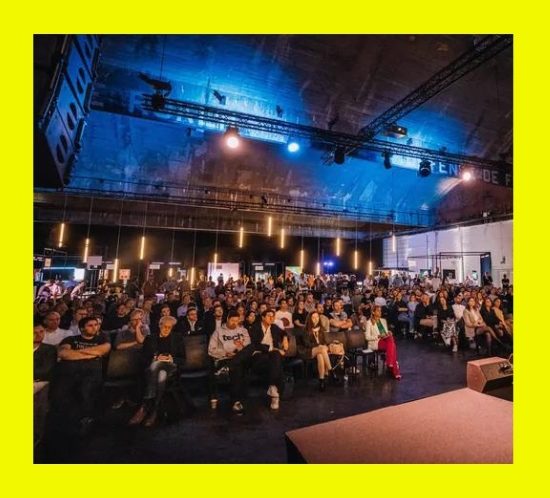
This year’s edition of Web32, a web3 conference in Antwerp, Belgium, took place back on June 9th. The major one-day event brought together a community of builders, designers, creators, and more. There was a lot going on so let’s run down some of the highlights of Belgium’s major web3 event. The Web32 conference brought together Belgium’s web3 community on June 9th 2022.
NFT Evening, July 5, 2022
What is Web32?
Overall, the goal of Web32 was to help web3 professionals discover the potential of the blockchain. As such, the event included a tech expo, as well as a number of great talks and pitches from web3 projects. And of course, it was a major networking opportunity for the web3 community in Belgium and beyond.
The biggest artists at Web32
Jeroom Snelders x Venly x Catawiki
One of the biggest names at Web32 is none other than the legendary Flemish comic artist, Jeroom Snelders. The conference highlighted an ongoing auction for 40 pieces of Snelders’ artwork, including some of his best work for the Belgian weekly Humo and Reddit. To clarify, the auction ran from May 31 to June 12. In addition to a physical print, buyers will also receive an NFT of the cartoon in a Venly wallet.
Snelders launched the auction with the help of Belgium-based blockchain tech provider and Web32 sponsor, Venly, and online auction marketplace, Catawiki.
Musketon & Dirty Belgium
Web32 also saw a special collaboration between the artists Musketon and Dirty Belgium. There the two artists co-created a handmade piece of art live at the event! Furthermore, the artwork was digitized and minted as an NFT after the conference. Amazingly, each visitor got the NFT in their wallet.
Web32 also featured major speakers and more
Shayli Harrison of Mutani
For those who don’t know, Mutani is a digital fashion unitive based in Belgium. Shayli Harrison from Mutani joined Evelyn Mora of Digital Village on stage for a talk about “Web3 Fashion, creativity, and sustainability”.
NFT Vending Machine
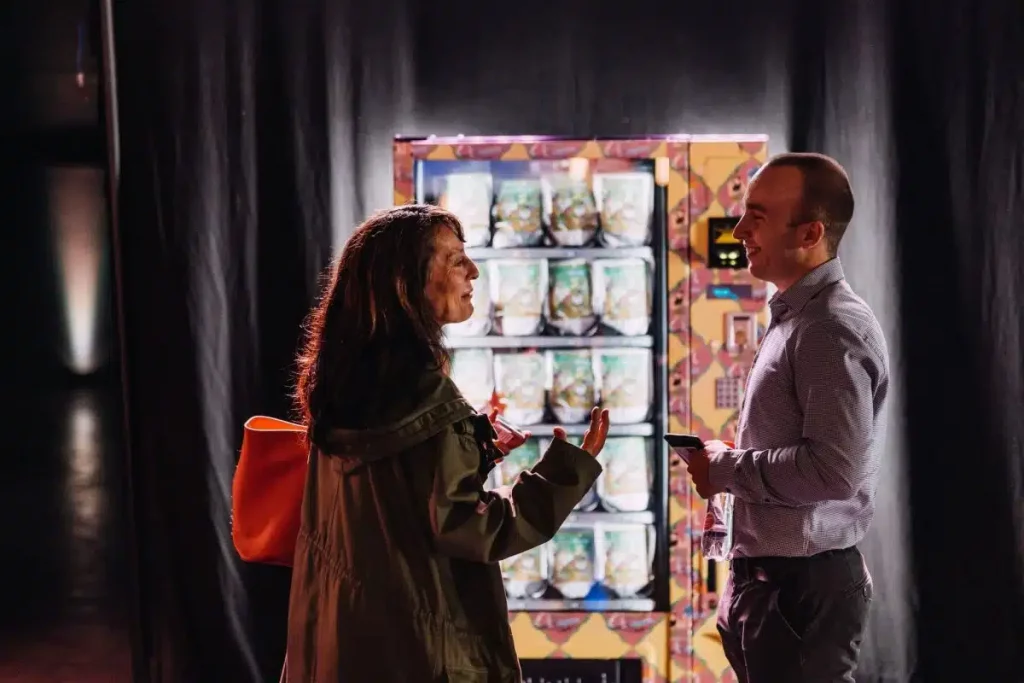
What is a good web3 conference these days without an NFT vending machine? Web32 delivered on that with some exciting NFTs that attendees could “physically” collect. These awesome collectibles featured the work of Belgian artist Brecht Vandenbroucke.
Overall, it’s fair to say that Web32 was a major success! It’s great to see IRL events expanding across the globe, bringing the web3 community together and laying the groundwork for the future of the space.
Loading new posts...
No more posts