
December 28, 2023
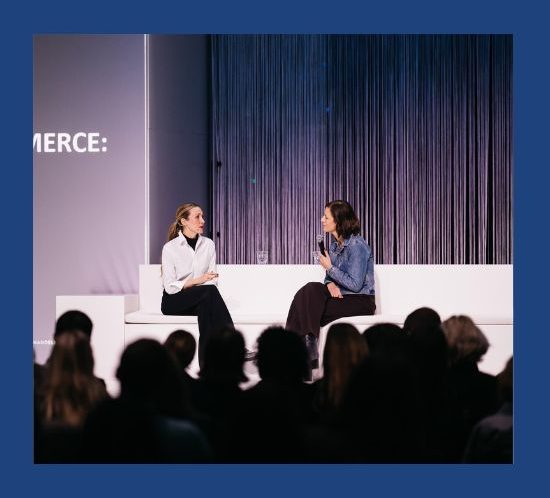
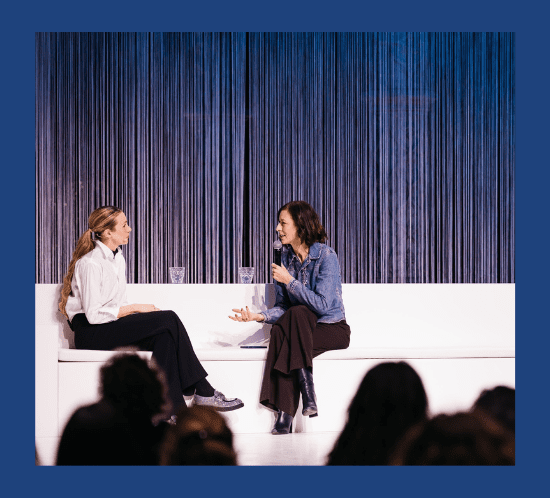
On stage interview by Ann at Fashion Talks Antwerp
Fashion Talks is the most relevant conference about the fashion industry and how it really works and evolves. It gives you a view behind the scenes of one of the most inspiring industries. This biannual conference (hosted by Flanders DC) welcomes about 800 fashion professionals in Antwerp every 2 years. In 2019 they invited Jasmien on the main stage for a keynote speech, for the 2023 edition Ann hosted an interview with Lena-Sophie Röper, Design Director of Zalando.
The shift in consumer expectations
In this interview, Ann discusses the changes of expectations and demands of the online customers today. We see a shift from a focus on transaction – making it fast, easy and thrust worthy – to engagement – creating value and experiences towards the e-commerce users. This shift is translated strategically to a clear focus on elaborating the designer offering. Of course Ann was also highlighting the technological projects Zalando is piloting, such as the Virtual fitting room with personalised avatars and the Fashion Assistant, a chatbot powered by Chat GPT. Lena-Sophie told the audience of Fashion Talks more on Stories by Zalando, a curated inspirational content section they develop in close collaboration with their Highsnobiety team.

December 23, 2023
Interview Scandinavian MIND: Fashion Talks in Antwerp
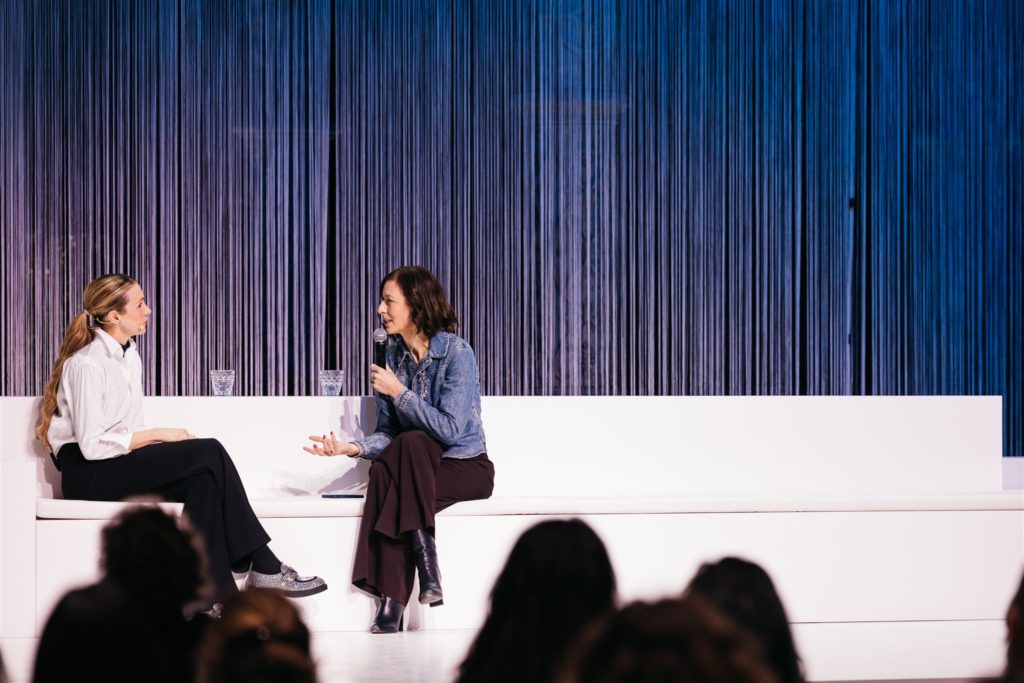
Scandinavian MIND broke down what happened at the Fashion Talks in Antwerp; where leading industry voices came together to discuss how tech enables transformation. Industry visionaries at McKinsey & Co, Ellen MacArthur Foundation, and Masjien lay out the roadmap for the forthcoming changes happening in fashion, leading towards growth and circularity.
Representing Masjien: Ann Claes
Scandinavian MIND is the magazine covering the intersection of lifestyle and technology. They believe that convergence of different fields is the way forward for technology, fashion, design, entertainment, gaming & other industries.
December 12, 2023
Interview Knack Weekend: Changemakers
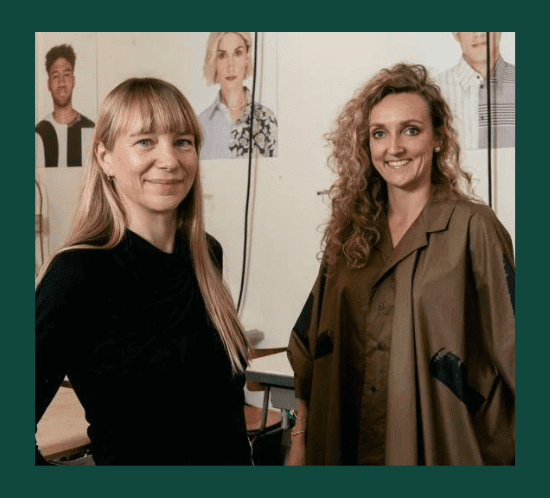
What an absolute honour to be featured as one of Knack Weekend’s ‘Changemakers’.
For this article, Jasmien had the pleasure to converse with Ruth Goossens, Editor-in-Chief of Weekend Knack & the driving force of REAntwerp, the amazing studio she started with Tim Van Steenbergen.
During the pandemic, there were calls to produce less, calls for a reset of the fashion industry. Little of that seems to be left now?
“How do you turn that ship around? We don’t think it can be done without strict legislation that streamlines everything. You already have to be a very profitable company to voluntarily decide to produce less today, while your competitors keep going. That’s signing up for bankruptcy in the current circumstances. It will be quite a transition for our economy and for consumers, but it can be done.
We remember when, between your main course and dessert at the table you could smoke a cigarette. It’s hard to imagine that now. So a major social turnaround is possible but you need ballsy leaders to take the right measures. And preferably at global level, because we find the fact that a brand like Shein could grow so much in recent years hallucinatory. The generation that demands a different kind of world, is also the generation that spends its money there.”
What do you think of the discourse that sustainable fashion is too expensive?
“Quality costs more money, that’s just the way it is. And I’m not talking about ‘sustainability’, but simply not buying junk. Clothes have proportionally not become more expensive than before, but we do spend more money on them. For us, the answer to this question is therefore twofold: first, what is the cost per wear of a piece. The more often you
wear something, the cheaper it becomes per wear. And second, the people who can’t afford it, who only have pennies for one T-shirt from Zara or Primark every season, are not the problem. It’s the people who buy five shopping bags one week and show up the again the next week, who need to change. They are wealthy enough to make different choices, but they simply don’t.”
Where do you hope the industry will be in 10 years’ time?
“I hope that by then there’s no work left for me. (laughs) I would love it if we get rid of ultra fast fashion. I know it’s ambitious to expect that in ten years, but I hope to see at least to see a slowdown. Sometimes they tell me I’m naive, but I’ve learned to see that it’s not an insult. You need some naive optimism to keep believing things can be different. Great strides have already been made in a decade. And there will still come, because I see around me many warriors pulling the cart and fighting for a greener world. That gives me hope.”
December 5, 2023
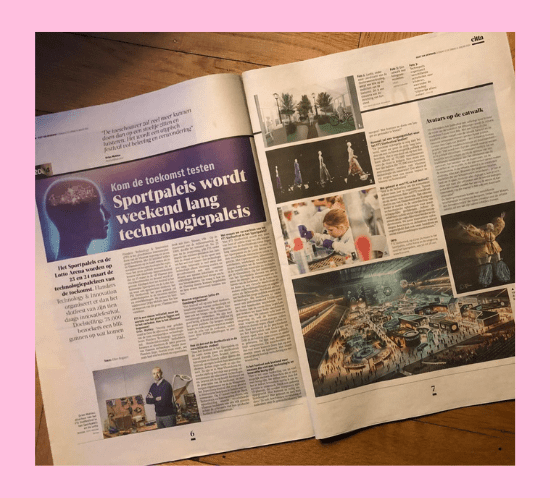
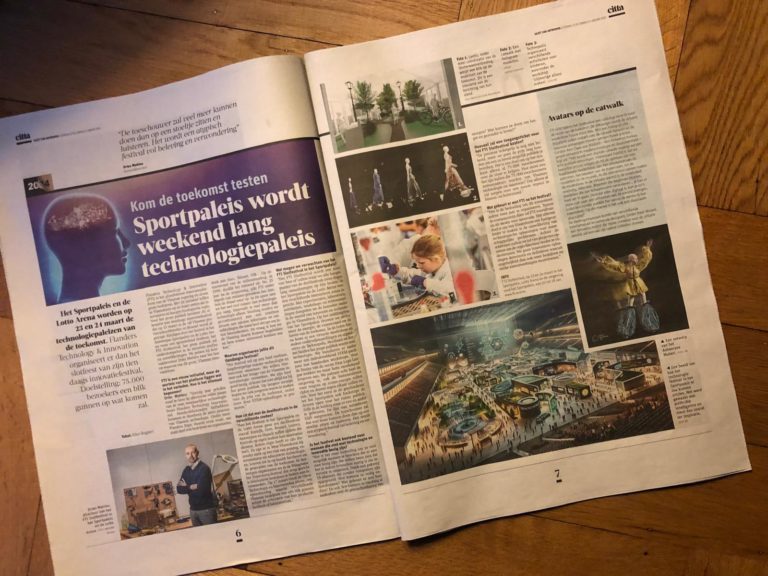
Column by Ann for De Tijd: Will conversing with AI friends become the norm?
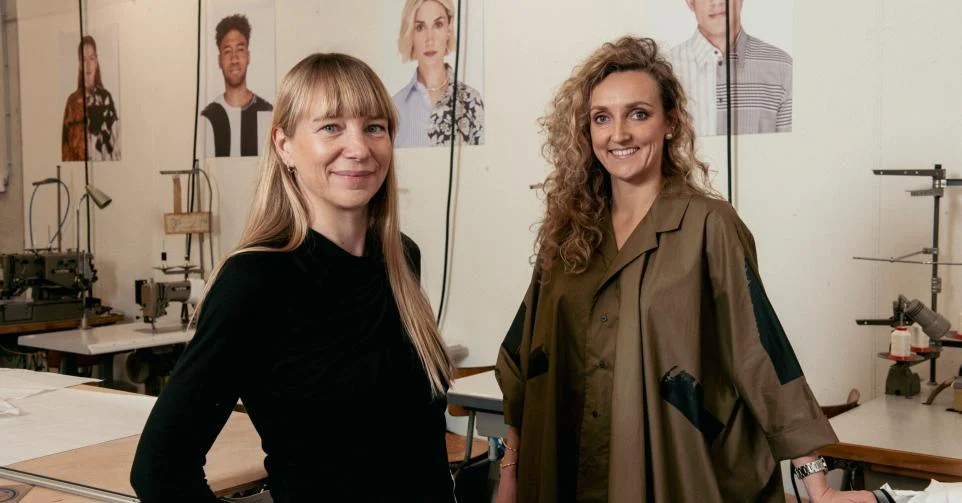
A monthly view on technology, shared by Ann Claes for Belgian newspaper De Tijd.
Avatars are more than toys for children. They are increasingly being developed into powerful digital tools.
November 2, 2023, De Tijd
What first comes to mind when you hear the word “avatar”? The blue creatures from James Cameron’s science fiction films? Or maybe you think of Aang, the bald character from the Nickelodeon series “Avatar. Or do you think of avatar lookalikes on Instagram for your stories? Or rather game characters?
As recently as 38 years ago, ‘avatar’ had only a spiritual meaning. The Sanskrit word “avatar” literally means “the descending one,” referring to incarnations of divine beings in human or animal form who bring peace and balance. That changed in 1985 with the computer game “Ultima IV: Quest of the Avatar” or with Neal Stephenson’s cyberpunk novel “Snow Crash. The creations in the game and the novel already exude a little less calm and balance.
This year, 16,800 research articles were published already on avatars. These studies range from the best technological evolutions to the impact and psychology behind them. Technological evolution is moving fast, our society and regulations are still lagging behind.
A new era where adopting multiple identities and conversing with AI friends may become the norm.
Avatars are evolving into powerful digital tools, customizable and versatile, present in online worlds and marketing strategies. Some of the best-known avatars are virtual influencers such as Lil Miquela and Imma, the product of marketing teams. Consider also rapper Travis Scott, whose virtual concert in the online game “Fortnite” reached more than 27 million visitors and generated millions in digital merchandise.
A shift is underway from role-playing games coordinated by filmmakers and game developers to applications in the metaverse where users take much more initiative. Users are creating impact themselves, and that can have both positive and negative consequences. We are at the dawn of a new era where adopting multiple identities and conversing with AI friends may become the norm. “Creating an avatar should be as important a step as the birth of a child and should not be reduced to clicking a few buttons,” writes researcher Heera Shin. Awareness already seems urgent to me.
Artificial Intelligence and the development of avatars
At the same time, there are everyday applications that give me aha experiences. Consider the use of avatars to optimize e-commerce, such as the start-up Lalaland. Which allows clothing models to be created with AI, acting very inclusively through numerous body types. Better visualization can lead to better choices, more sales and fewer returns.
Artificial intelligence is accelerating the development of avatars today. The movie “Her,” which received an Oscar in 2013 with a story about a man who develops feelings for his virtual assistant with a female voice, seemed to show a distant future a decade ago. ‘Be Right Back,’ the best episode of the ‘Black Mirror’ series, depicts the next variation of an avatar: a deceased person brought back to life virtually. The “digital descendant” is ready for a new chapter with his digital identity. With this, I like to tip off possible new references for the word “avatar,” beyond blue mythical creatures.
November 20, 2023
Article by Jasmien for Fashion United: Why everyone is talking about circular economy as the solution?
On ‘Sustainability Clarified’ – a series of Jasmien Wynants for Fashion United.
In this series, we take you into the wonderful world of environmental science. Each article clarifies a key topic related to ‘sustainability’. We zoom out to the bigger picture and then look in more detail at how these complex concepts are linked to the fashion industry.
This time, we talk about… the circular economy.
April 14, 2023, Fashion United
A system under pressure: are there limits to growth?
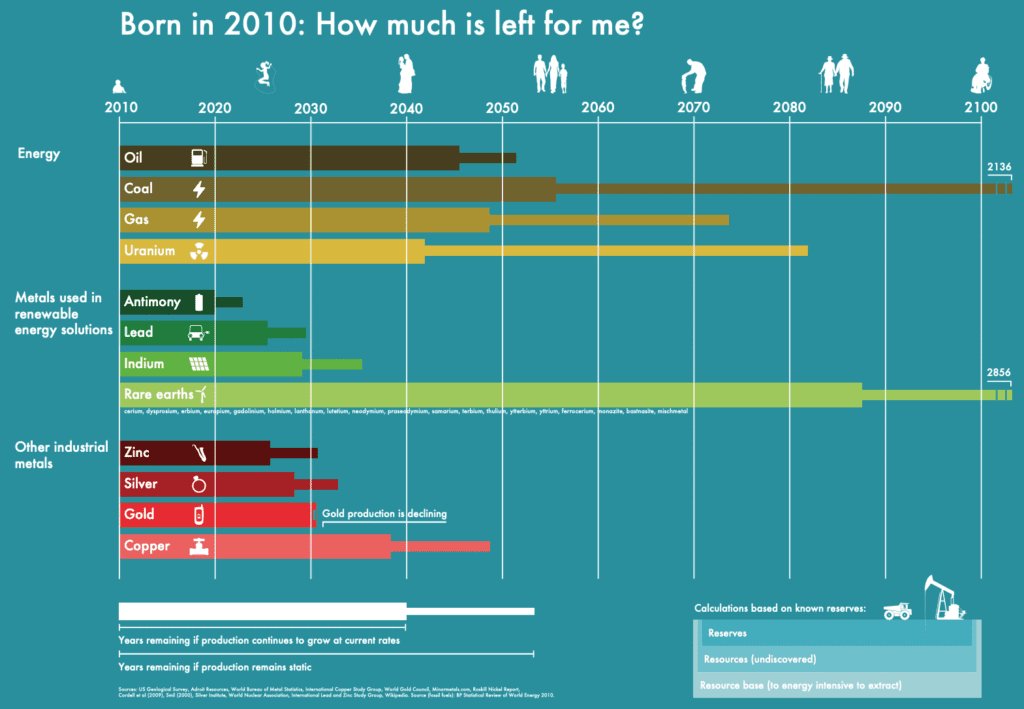
We don’t really dwell on it, but we live within an economic system every day. A system that changed over the years. Our thinking and actions, here in industrialised countries, are founded on an idea of ‘unlimited economic growth’. Since the end of World War II, consumption has been increasing. We strive for annual economic growth in the form of ever-increasing wealth. But is such perpetual growth realistic?
In nature, nothing grows forever. The means and resources needed to do so are simply not endless. The smallest bacteria to the largest trees have a certain maximum size and at some point reach a ceiling in their growth. That we often assume infinite growth in our economy, with businesses and economies striving for continuous increases in profits and productivity, is contrary to the limitations of our planet. We already see many consequences linked to this today: resource depletion and environmental damage.
From linear to circular
So a sustainable economy should strive to balance economic growth with preserving the natural systems and resources needed for our prosperity. Hello, circular economy!
We often think of ‘circular economy’ as recycling, but it is much more than that.
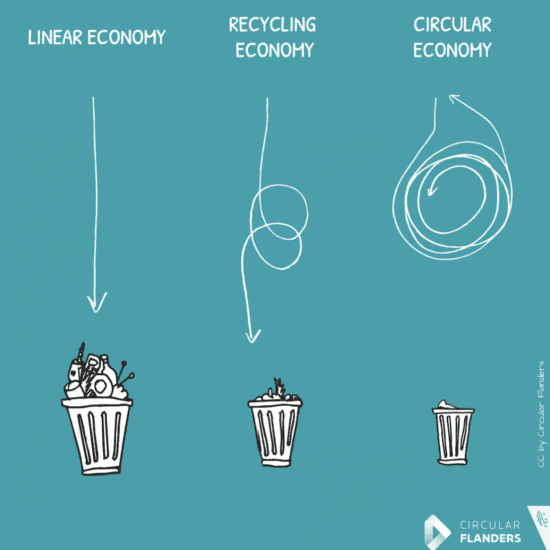
The simplest way to explain circular economy is to compare it to the system we know today: the linear economy. That system is based on the ‘take – make – waste’ principle. We take new raw materials (like cotton), we use them to make a garment (like a T-shirt), we sell it to the consumer, who wears it and throws it away again.
The circular economy goes against this and focuses on longevity of products in the first place. The central question here is: how can we use as few new raw materials as possible, use them as efficiently as possible and keep them in the loop for as long as possible? So how do we ensure that we don’t actually create any waste at all?
Goodbye ‘planned obsolescence’, welcome ‘right to repair’
Just a step back in history. The concept of ‘planned obsolescence’ emerged in the 1920s. Manufacturers were experimenting with ways to limit the lifespan of products to stimulate demand for new products.
One of the first examples was a cartel of lamp manufacturers formed in 1924 to agree on the production and sale of light bulbs with a limited lifespan. Later, this strategy was also applied to electronics, household appliances, cars, smartphones and also clothing.
Although this concept has been around for many decades, in recent years there has been an increasing focus on its negative impact on the environment and society. There is therefore a growing demand for sustainable and circular products, which are designed to last and are easy to repair and recycle.
The call is also growing stronger from Europe. There, we are looking at a ‘right to repair’ – the right we have as consumers to buy quality items that we can repair. Moreover, the Union’s strategy for sustainable and circular textiles has an important goal in favour of the circular economy: ‘make fast fashion out of fashion’. It even launched an entire RESet the Trend campaign around that.
So what about a circular fashion system?
As you can guess, it’s not easy. To change an entire system requires a transition from one system to another. It is complex but undoubtedly requires efforts from various actors.
Fashion companies must dare to question the current business model. This can be done, for instance, by setting up rental or partial systems or designing quality pieces across seasons (slow fashion). It also looks at closing cycles: can clothes be collected and reused? How can clothes be made to last and be easily recycled in the end? And that without harmful effects on people and the environment?
Consumers also have a role to play because while something may be made to last, shoppers should of course take care of it and not get tired of it too quickly. Between 2000 and 2014, global clothing production doubled (MckKinsey). We are buying more clothes than ever and also throwing them away at an ever-increasing rate. This problem of overproduction and overconsumption is not sustainable. Therefore, it is important to think carefully with every purchase whether you need it and will wear it long enough.
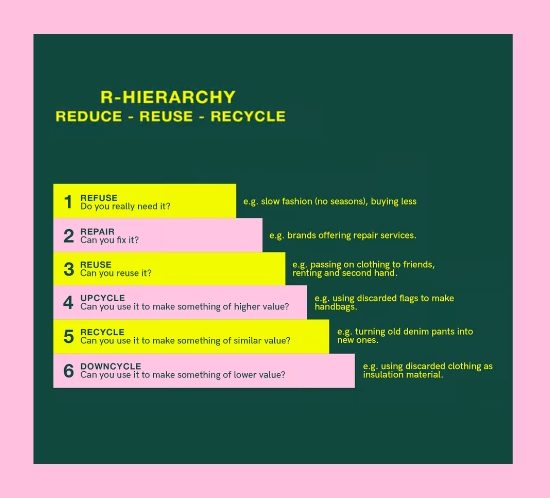
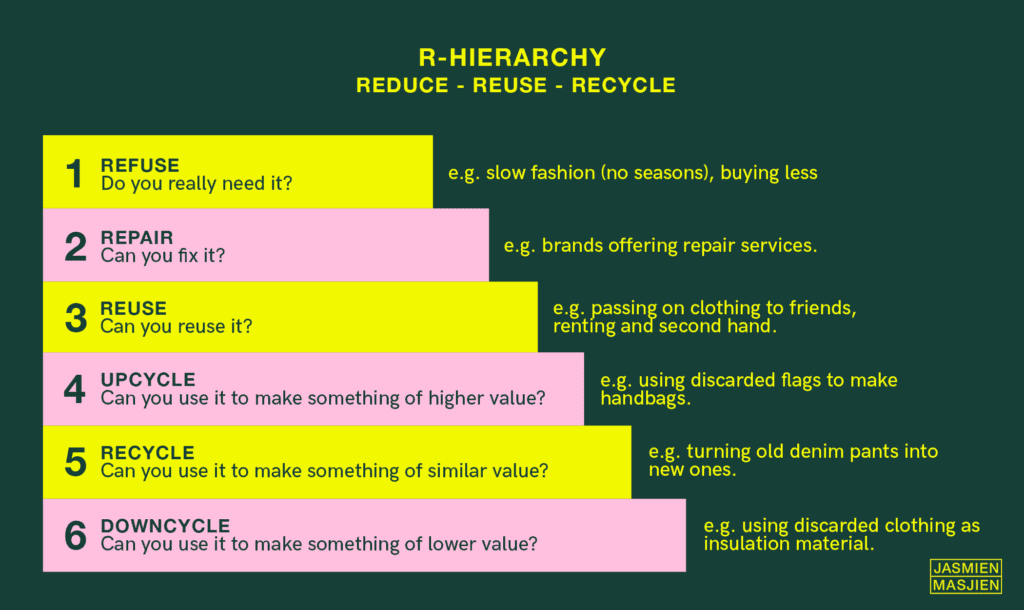
One of the best reminders both for businesses and consumers is the ‘R hierarchy’ that can guide you in making decisions.
And then, of course, the key question arises: will all the world’s problems then be solved?
A transition of an entire system does not happen overnight. We sense a system that is faltering and see increasing pressure also from Europe and upcoming legislation gives hope.
However, the fashion industry plays in a global and complex chain with all its challenges. We export and dump a mountain of textiles in Africa and Asia every year. According to EEA. the amount of used textiles we export from the EU tripled in the past 20 years.
In addition, we have also seen great economic success in recent decades with large (ultra) fast fashion players conquering the internet with clothes sold at dumping prices, at unseen speeds and in huge quantities. The most vulnerable in the chain: garment workers in the Far East and low-wage countries still pay the price here.
A circular system is complex but conceivable. It can be part of the solution, as long as we do not lose sight of the international character, the social aspect and the focus on ‘degrowth’ (aiming for a stable level of production and consumption in balance with the planet’s limits).
We asked the scientist… Veerle Vermeyen, PHD candidate circular economy for clothing at KU leuven
“In the previous articles in this series, it has already been mentioned several times that bringing less new clothing to market is one of the most impactful actions to achieve a sustainable fashion system. Doing more with less is central to the circular economy. This can be done by using clothing that is already in circulation as intensively as possible. After all, we then avoid spending unnecessary resources on the production of new clothing and the processing of discarded clothing. So don’t be too easily seduced by messages from companies encouraging more consumption under the slogan of ‘sustainable production’.”
“The benefit of more intensive use may become clearer by thinking about the ‘impact per use’: the more often a garment is worn, the smaller the relative impact of production, transport and waste disposal become in the total life cycle of the garment. For example, the total impact of production and waste disposal of 15 T-shirts worn twice each is much greater than the impact of one T-shirt worn 30 times. More intensive use can be achieved on the one hand by a shift towards ‘slow fashion’, where consumers consciously choose quality and timeless clothing with the intention of wearing it for a long time. On the other hand, there is still room for the necessary variation in outfits through greater use of rental clothing or second-hand channels, where different users together ensure that a garment is actively worn.”
“However, clothing will always age through use and thus be discarded, so new clothing will also always be needed. Here, it is important to think about the use and discard phase already during the design phase, as this will greatly determine the extent to which repair and recycling are possible. For instance, garment-to-garment recycling (a cycle where the materials in discarded garments serve as input for new garments) is currently practically impossible due to the complex mix of materials and chemicals used. Europe wants to address this in the coming years by using new regulations to break down the current barriers to garment-to-garment recycling and thus start closing the cycle.”
November 8, 2023
Interview for So Soir: Mode & Techno
So Soir, October 21st, 2023
THE FUTURE OF FASHION, IT IS NOW !
An expert in the intersection of fashion and technology, Belgian innovator Ann Claes underscores the pivotal role science can play in advancing sustainability throughout the entire lifecycle of a product. To achieve this, industry stakeholders need to embrace these cutting-edge technologies with an open mindset. For instance, adopting waste-free patterns, eschewing water-based dyes, and utilizing soluble threads can significantly enhance recyclability during the design and production stages.
Furthermore, the integration of blockchain-type databases introduces a new era of transparency, enabling a comprehensive view internally and among brand partners. This transparency proves crucial in the sales and communication phases, empowering consumers with detailed insights, fostering confidence in their shopping decisions, and allowing them to appreciate the sustainable strides taken by each company.
In the realm of online shopping, tools such as pruning, adjustment features, virtual trials, and robust visualization tools simplify the process. Personalization not only enhances customer engagement but also forges a unique connection and emotional value, showcasing a commitment to a more sustainable and personalized future.
Ann Claes also welcomes the arrival of gaming in the world of fashion: immersive experiences allow you to create a real connection with a brand. Also sustainable consumption can be improved: I am thinking in particular of care labels, smart devices, that can be connected to your washing machine or even resale applications and platforms.
For luxury brands, tech is already a daily reality: from Patou, who uses AI to track down counterfeit products, to Zegna which attempts to improve the purchasing experience in this way, including Valentino and Prada which, for their campaigns, mix real images and machine intervention.
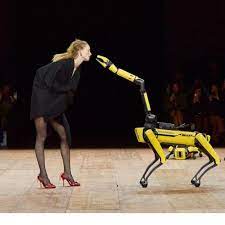
AND TOMORROW ?
When asked about the future of fashion, Ann Claes is very positive. For her, the technology is not about to replace the human, quite the opposite. Each technology requires a starting point, whether it is a handmade sketch or choice of pattern. If, at otherwise, we continue to repeat data existing or to create copies of copies, the creativity could, it is obvious, disappear, she warns.
It is also impossible to talk about AI without mentioning the range of new talents that these advances make essential. In the Tian Su team, in charge of personalization concepts for consumers at Zalando, the human brain indeed remains central: Technological progress in the fashion industries are the result of combined efforts of numerous collaborators from varied areas of expertise. In the team of Stacia Carr, this collaboration takes the form of heads of product, UX/UI designers, product analysts, data, engineers, scientists, project leads and fashion experts. To this are added technical groups, business units, studios, distribution centers, etc. The synergy resulting from skills and unique perspectives from these diverse teams stimulates a global approach to innovation.
In the near future, Ann Claes looks forward to more systematic use of the passport digital (a sort of identity card of the clothing), already implemented by some brands. And if you, as a fashion consumer, are in a fun, ecological (and innovative) mood, the expert suggests that you buy, why not, a pair of virtual earrings for your next Zoom meeting.
September 21, 2023
Article by Jasmien for Fashion United: What do biodiversity and ecosystems have to do with fashion?
On ‘Sustainability Clarified’ – a series of Jasmien Wynants for Fashion United.
In this series, we take you into the wonderful world of environmental science. Each article clarifies a key topic related to ‘sustainability’. We zoom out to the bigger picture and then look in more detail at how these complex concepts are linked to the fashion industry.
This time, we talk about… biodiversity and ecosystems.
November 15, 2022, Fashion United
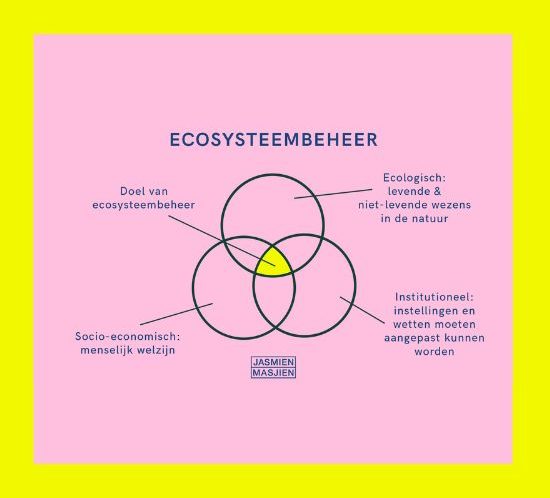
Ecosystems and ecosystem management
An ecosystem is a system that comprises all organisms within a given area, their interaction with each other and their interaction with the environment. Plants, animals and micro-organisms influence each other and together form a living community. It involves both ‘nature’ (forests, rivers, grasslands) and ‘culture’ (fields, plantations).
The latter systems are ‘managed’ by humans to optimise yields (food, fodder, timber). However, nature can also be managed, often with the overall aim of preserving (or restoring) biodiversity.
Is it about ‘nature management’ then?
There is an important difference between ‘nature management’ and ‘ecosystem management’. The latter explicitly looks at human benefit. After all, ecosystems perform a number of functions that are valuable, such as pollinating crops, absorbing CO2 from the atmosphere, etc. These are called ecosystem services.
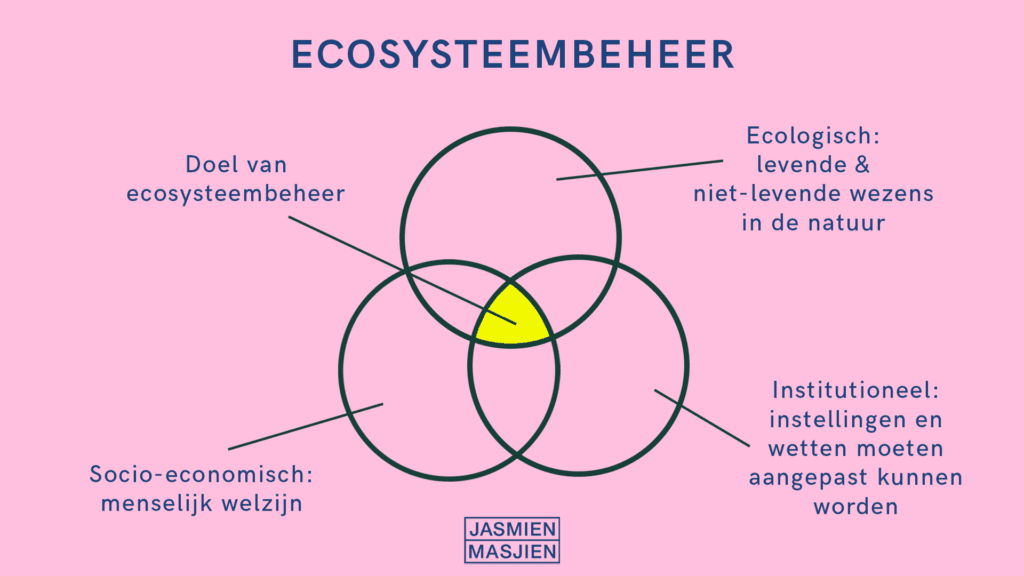
Globally, we are seeing a decline in these ‘ecosystem services’. This has not only ecological consequences, but also an economic impact. To give an example: many tropical coastal areas (think of exotic destinations like Fiji, Aruba or Indonesia) are home to mangroves. These are coastal forests whose large, thick roots can often be seen protruding above the water. Mangroves are very important for biodiversity and carbon sequestration, but are highly threatened worldwide. If mangroves disappear around coastal areas, not only is it detrimental to biodiversity, but also the protection of that coast (and the people who live there) is threatened, as well as the income from tourism linked to these sights. There is a correlation between ecology, economy and human carrying capacity that we often give too little thought to.
Biodiversity loss
Biodiversity is the variety of life, in all forms on Earth. It is not just about the number of species, but also their genetic variation and the interactions these species have within complex ecosystems.
Earth’s biodiversity is declining. This is partly due to an ever-increasing ‘extinction rate’. Normally about 1 to 5 species die out per year, but scientists estimate that this rate is already 100 to 10,000 times higher. Beyond that, ‘biodiversity loss’ is more than mere species extinction, but also involves the decline of populations. This is largely due to human development. The huge growth in population has far-reaching and complex consequences (as you can also read in the piece on global warming), including impacts on freshwater, pressure on agriculture, flood risk, more diseases, more deaths from heat and climate refugees.
And why should we care?
The decline in biodiversity has a bigger impact than we sometimes think. A species lives in an ecosystem and affects it. Protecting tigers goes – to put it bluntly – far beyond ‘saving those beautiful critters’. Predators keep ‘prey animal’ populations down. If the predators disappear, herbivores are given free rein, and that too can have major consequences for an entire ecosystem.
Another example is deforestation. This not only leads to the disappearance of the panda and orang-utan, but has major consequences for nature and humans. The more trees we cut down, the more CO2 is released (especially from the forest floor) and the faster the earth warms up. The more natural areas are affected, the greater the risk of (new) viruses jumping from wild animals to humans. By reducing forests, humans and animals live closer together. In addition, we also come into contact with potential pathogens during logging, which would normally remain in a contained ecosystem.
The European Commission indicates that more than a football field of forest disappeared every second in 2017. Deforestation is most concentrated in tropical rainforests. These disappear at a rate of 13 million hectares a year. Or also: about the size of Greece.
Biodiversity loss thus plays a crucial role in all kinds of processes, including climate change, and is linked to many changes. Humans are the main cause of the rapid decline in biodiversity, but can therefore take action to change this.
Man inside or above an ecosystem?
When we talk about climate change, we are quick to say ‘we are doing it for the planet and nature’ or ‘we want to save the earth’. Understandable, as scientists estimate that 99.9 per cent of all species are already extinct (on a timescale of 3.5 billion years). However, what we often forget is that we humans are also just one species. Earth has existed for about 4.5 billion years. Humanity about 200,000.
Man’s impact on the environment and nature has increased exponentially over the past few decades. So curbing its impact, we are certainly not only doing it ‘for the planet’, but also (and maybe even mainly) for ourselves and those who come after us.
And can we talk about fashion now?
Unfortunately, the fashion industry also contributes to biodiversity loss.
Cotton is used in about 25 per cent of our clothes. We consume clothes like hotcakes. To maintain this rate, a huge area of land is needed to grow cotton. On top of that, cotton grows best in warm countries like China, India, the US and Brazil. Since cotton is a very thirsty crop, it often strains rivers and groundwater in those regions, leading to soil depletion and water shortages. One of the most famous examples is the parched Aral Sea on the border of Uzbekistan and Kazakhstan. The lake used to be one and a half times the size of the Netherlands. Today, all that remains is one big sandpit.
And to add to that, growing cotton requires a lot of chemicals that not only damage the soil, but also cause a lot of insects, birds, trees – entire ecosystems – to disappear or wither away.
There is one material that is used even more than cotton: polyester (62 per cent of our clothes contain polyester or some other similar oil-based material). When polyester clothes are washed, tiny micro-plastics are released every time. Those tiny particles flow with the water from our washing machine, through the sewage system and along rivers and lakes to the sea. Not surprisingly, this has a major effect on marine ecosystems.
Also during the production process (mostly during dyeing, bleaching, coating, post-treatment), very harmful substances often end up in the water streams around the production facilities. In the factories where our clothes are produced, wastewater is far from always properly treated before it is discharged. This will be discussed in more detail during the next contribution.
Perhaps a positive note?
The fashion industry is looking for ways to do better. Some of the initiatives that can have a positive impact on biodiversity include:
- Using regenerative farming techniques for natural materials.
- Sustainable forest management for fabrics such as viscose, bamboo and other fibres that use trees, grasses or plants (you may also recognise the most well-known label from paper bags: FSC)
- The search for systems to filter out microplastics when washing our clothes
- Initiatives that encourage us to buy less and wear our clothes longer so that there is less need for new raw materials.
.
We asked the scientist… Hans De Boeck, Global Change Ecologist at the University of Antwerp
“Biodiversity loss is closely linked to other ‘global changes’. Each of these global changes has negative impacts on biodiversity, either directly (think deforestation and overexploitation) or indirectly (through climate change, pollution, the encroachment of invasive species, etc.). Thus, when we address these global changes, we also ensure that biodiversity loss is reduced. So many of the measures the fashion industry can take to reduce its climate footprint, for instance through more sustainable use of materials, are also important for reducing pressure on diversity. In addition, work can be done to minimise harmful techniques and processes throughout the chain, from raw material (e.g. pesticides, water use) to end product (e.g. during dyeing and bleaching, transport) and afterwards (e.g. washing, recycling).
The biggest challenge, however, is ever-increasing clothing consumption. If the benefits of better production techniques, recycling, etc. are outweighed by simply producing more and more clothing, then obviously there is no progress. The danger here too (just as was noted in the article on climate change) is ‘greenwashing’ by (parts of) the fashion industry: taking marginal green steps to ease the conscience of consumers and thus sell more and more. The most ‘green’ clothing is still the one that should not be produced.”
Future Fabrics, what?
September 20, 2023
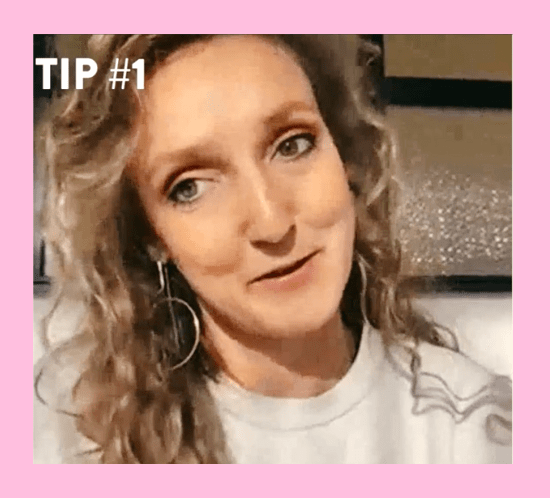
YouTube Episode for Radio NRJ (Belgian radio station): how to make your closet more sustainable?
When a T-shirt costs only €3, you have to wonder about that. But what can you do yourself to make your closet more sustainable? Larissa, Louise & Ranaa check it out in this new episode of Grab A Coffee, with tips from Jasmien!
September 20, 2023
Interview for Feeling : How artificial intelligence is conquering the fashion world
Feeling, August 10th, 2023
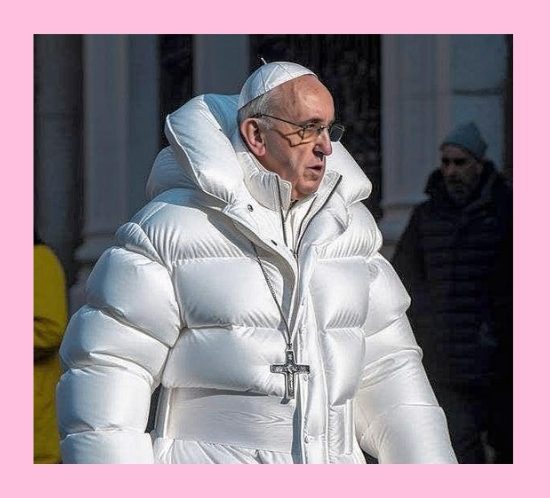
The pope in a puffer jacket? How artificial intelligence is conquering the fashion world
Chatbots that do your homework, deepfake interviews and computer-generated pop songs: AI is everywhere. And the fashion world is also eagerly jumping on the fully automatic bandwagon. Will artificial intelligence soon make designers and models of flesh and blood superfluous, or can man, machine and fashion exist in harmony?
In the fashion world, people are rarely surprised by an unusual look. Actor Jared Leto in a photorealistic cat suit? Yawn. Beyoncé in a UV-reactive stage outfit that changes color? Been there, done that. And yet some strange faces have made us stare at our screen in amazement over the past few months. Was that the pope as a hypebeast in an oversized puffer jacket? Will the entire Harry Potter cast, including Voldemort, star in the new Balenciaga campaign? Before you question the power of your Tom Ford glasses: the images described above are not real, but the work of generative AI, or artificial intelligence.
In 2023, fashion seems to be largely about generating memes and moments with cultural impact. Well, to put it in internet jargon: AI is the moment. After NFTs and the Metaverse, “artificial intelligence” is the latest buzzword in the world of technology and beyond. However, for every fashion house that comes up with an AI campaign, there is an artist or designer who sues for virtual plagiarism. Artificial intelligence is based on machine learning (see AI for dummies) and learns to recognize and predict patterns based on previous data. Show an AI application 100 dresses and your computer will spit out what looks like a dress. Show that same AI application a thousand or even ten thousand dresses and your frankenstein design – a new creation that builds on pre-existing images – can rival the work of a real, maybe not very original, designer.
Old technology in a new (puffer) jacket
That may sound futuristic, but AI is not new. The technology has been around since the 1950s and chances are you use it every day. Virtual assistants such as Siri and Alexa, smart cars and smart vacuum cleaners, the recommendations you get from Spotify and Netflix, are all based on AI. What is new is the speed with which everything evolves. For example, the internet is flooded with uncanny images, created with AI applications such as DALL-E and Midjourney. Those image generators convert a textual description, or prompt, into an image. The more detailed the prompt, the more realistic the end result, with the result that real and fake are increasingly difficult to distinguish.
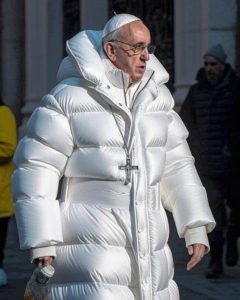
For example, US celeb Chrissy Teigen tweeted: “I thought the pope’s puffer coat was real and didn’t think twice about it. No way that I will survive the future of technology.” Teigen isn’t alone in her concerns. Computer scientist and AI pioneer Geoffrey Hinton himself recently sounded the alarm about the rapid and unbridled advance of technology. Within the fashion world, as in other creative sectors, people seem to be mainly afraid of job losses and the risk of plagiarism. While those concerns are legitimate, they are not holding back progress. Online trade magazine The Business of Fashion makes the analogy with the Luddites, who destroyed weaving machines in nineteenth-century England as a protest against the industrial revolution: “The Luddites didn’t get very far by destroying machines. In any case, the fashion world will have to start thinking about how to incorporate those tools in ways that take into account the new reality, without leaving workers out in the cold.”
The Emperor’s Clothes
That AI, in addition to dangers, also offers many opportunities within the fashion world, confirms fashion and technology expert Ann Claes: “AI can speed up or improve certain things. You can have a business plan or press text written out by ChatGPT and mood boards can be created faster in Midjourney. I mainly see AI as a tool to improve and optimize your work.” Sketching, pattern drawing, copywriting, grading; the applications are endless.”
Currently, large fashion companies invest the most in artificial intelligence. Claes: “Larger players can switch gears more quickly. For example, Zalando recently launched a ChatGPT application.” This application takes the form of a fashion assistant that guides you through the webshop’s offerings. For example, if you ask ‘What should I wear to a wedding in Santorini?’, the chatbot will know that it is a formal event in a warm climate and will link to relevant items.
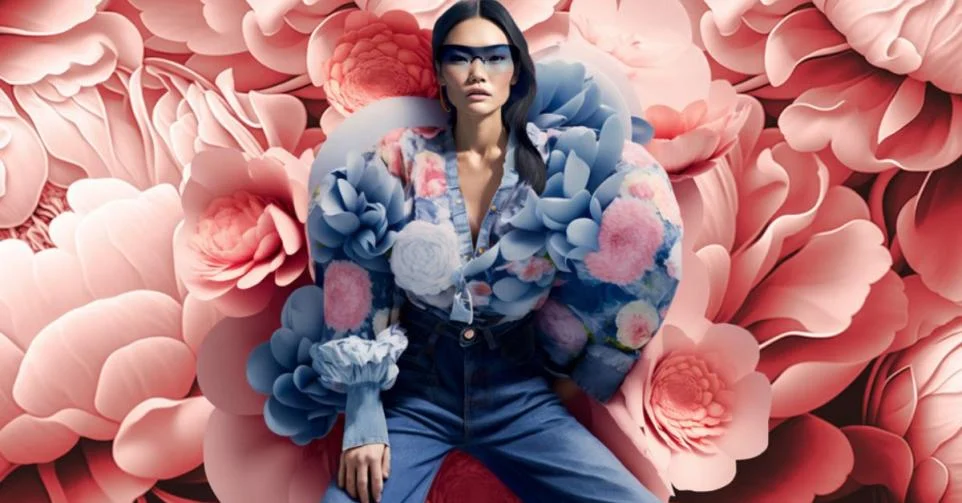
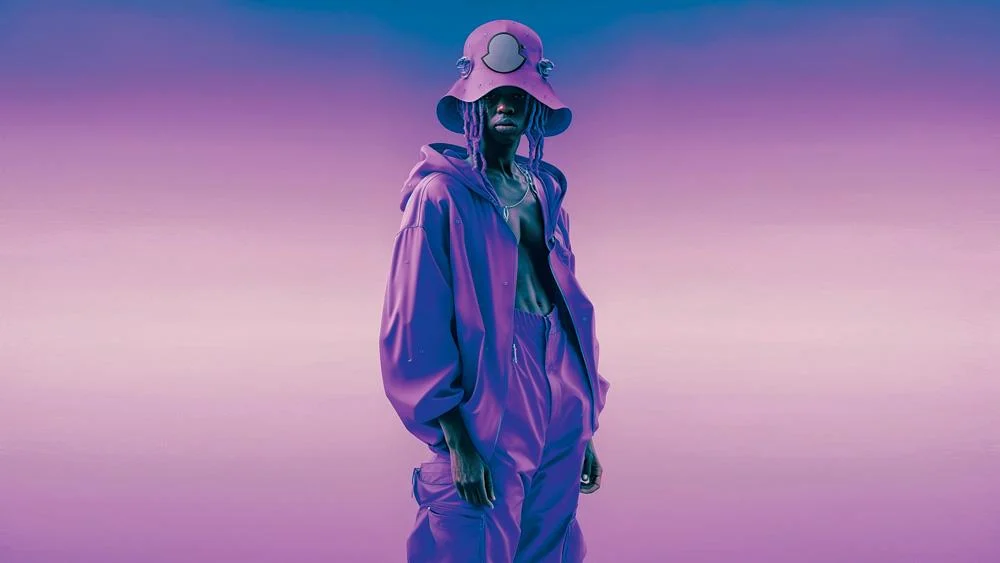
Fashion brands use AI not only as a personal shopper, but also as a creative director. The Spanish Stradivarius, sister of Zara, put its spring collection through the AI mangle and created dreamlike images in which virtual models wear floral blouses that don’t really exist. According to the brand, it is “an exaggeration of the collection that reflects what fashion could be if reality did not limit us”. Creative freedom or consumer fraud? Online shoppers can, of course, view the existing collection before pulling out their credit card. This way you avoid buying an artificial cat in a bag. In the luxury segment, virtual campaign image and real garment are closer together. For example, M3GAN, the AI killing machine from the horror film of the same name, wears an almost sold-out hoodie by Heaven by Marc Jacobs and the creations from Moncler Genius’ AI campaign in collaboration with Adidas and Alicia Keys walked the catwalk during London Fashion Week at the end of February. The emperor’s new clothes are now on sale.
Metamodels
Leaving aside the Moncler show, AI fashion is often worn by AI models. They populate digital parades and are increasingly popping up in the world of e-commerce. Levi’s recently announced that it would be teaming up with Lalaland, a Dutch tech company that develops software that brings virtual, but extremely realistic-looking models to life. Founder and CEO Michael Musandu, born in Zimbabwe and based in Amsterdam, started his company from a personal loss: “I never felt represented as a person of color when shopping online. Like any good technology enthusiast, I decided not to wait for the future, but to create it myself through artificial intelligence. With Lalaland we want to make webshops as diverse as the market they serve. We do that by supplementing traditional photography with AI-generated models.”
Major brands such as Levi’s and smaller labels such as the Dutch Ophilia use Lalaland’s software to create models in every possible size and skin color. That seems inclusive, but critics argue that real models with a diverse look are losing jobs because of this revolutionary cost-cutting campaign. The phenomenon is called ‘digital blackface’: the online appropriation of black images by non-black people. Musandu contradicts that: “Brands that take inclusion seriously will continue to hire diverse models, but it is impossible for them to shoot every look on nine different types. Thanks to our software, this is possible and you get an even better representation. In addition, we have created a completely new earnings structure for minority groups. They can license their data – say, images of their hair or hands – as one-off training material for our AI application. There will always be a need for real models to make an interpersonal connection with consumers and drive traffic to a webshop. An AI model can never compete with that.”
Anyone designer?
While international retailers are investing massively in the new technology, things are not going that fast in our country yet, according to Claes. “If I ask a hundred designers if they work with AI, a dozen may say they have already experimented with it and only a handful actually use it in their creation process.” AI is more popular among young Belgian creatives. After all, thanks to programs such as Midjourney, even people without a fashion background can conjure up amazing designs from their hats – with some IT knowledge or self-study.
“The available AI tools are more user-friendly than ever, so more and more people are using them.” Jerry Galle, artist and researcher affiliated with the AI lab of the School of Arts in Ghent, also sees this democratization: “AI offers incredible possibilities for a starting designer or artist. It is a kind of mirror for everything that floats around on the internet and a search engine within our culture. I think Andy Warhol would have found these developments very interesting.”
In the future, according to Warhol, everyone would be famous for fifteen minutes, but will everyone with a computer and internet connection be allowed to call themselves a designer in the same future? According to Shayli Harrison, the answer is twofold. The Australian graduated from the Antwerp fashion academy in 2018 and makes digital couture, or 3D assets, that your avatar can wear in games and the Metaverse. “If you’ve designed something in DALL-E and you want to call yourself a designer, go ahead, but fashion is more than pretty pictures. Being a designer also means having a critical eye and developing your own aesthetic. In addition, fashion is an applied art; you still have to apply them.” Claes also agrees: “There is a big difference between creating a beautiful image for your Instagram and actually creating physical production. This requires a lot of other skills that AI does not have.”
Fashion vs. machine
Even according to its biggest supporters, AI can never completely replace a human being made of flesh and blood, but we should not dismiss the technology as a gimmick. Harrison sees it as a way of thinking outside the box: “It leads to combinations and thoughts that you wouldn’t come up with yourself. I know several designers at major fashion houses who feed AI with existing designs from the brand as input and then see what comes out.” Galle also sees this working method as an interesting avenue for the designers of today and tomorrow: “AI provides visual links that you would not easily make yourself. The only drawback when working with existing datasets is that it sometimes seems pre-made, like a mash-up of existing images. That’s less exciting from an art or fashion perspective. Only when you re-enter the output and question the system you get an enrichment.”
So we get to the point: can AI-generated fashion, which is by definition based on previous designs, ever be truly original? “That’s a tough question,” says Harrison. “Fashion is cyclical anyway and refers to the past to create something new. In that respect, AI mode is not that different.” Besides being a designer, she is co-founder of Mutani, a company that connects designers with digital makers, helping to translate fashion into an online identity. Together with five other tech savvy alumni of the Antwerp academy, including current director Brandon Wen, she winkingly dubbed herself ‘The Antwerp Cyber-Six’, by analogy with the Six of Antwerp. Simply put, the virtual world is Harrison’s second home. She was therefore very interested in the first AI Fashion Week, organized by creative AI studio Maison Meta in collaboration with American webshop Revolve.
More than four hundred designers from all over the world participated in the very first AI fashion week, from which a professional jury ultimately selected three winners. They will soon have the opportunity to bring their work to life within a tech incubator and launch their collection on Revolve and sister website FWRD. So there remains a place for humans in this fashion world ruled by machines and algorithms. From the as-yet-unknown designers, who weave aesthetic sense and IT skills into original AI designs and guard their prompts as state secrets, to the manufacturers, studio and factory workers who will be required to produce the physical clothing. “I don’t see a complete automation in which an AI application autonomously designs and produces clothing happening,” AI artist and critic Galle reassures us. “Then you are already talking about a conscious AI application and the question is whether you can create consciousness within a binary system. I do not think so.”
Will AI play a lasting role in the future of fashion and the fashion of the future? According to Claes it is: “The genie is out of the bottle; you can no longer imagine AI without it. It will therefore become even more important for designers to have a clear vision and to curate it. Creativity remains the great differentiator and determines what we as humans can contribute.” Harrison also emphasizes this: “You only have a problem if the AI application is better at your job than you. (laughs) Anything made by human hands will become even more valuable in the future. Currently, companies are greenwashing, claiming that their clothing is sustainable. Perhaps new quality marks will be invented in the future to distinguish us from AI and brands will then start human washing: this product was made by a human being.”
Loading new posts...
No more posts