

April 24, 2024
Interview Knack Weekend: How do we create a more beautiful fashion sector? 9 Tips from responsible fashion fans for Fashion Revolution Day
Today is Fashion Revolution Day and also the 11 year anniversary of the Rana Plaza disaster in Bangladesh where 1,134 people were killed and more than 2,500 others got injured, because the building collapsed. During Fashion Revolution Week, we remember the lives lost and demand that no one should die for fashion.
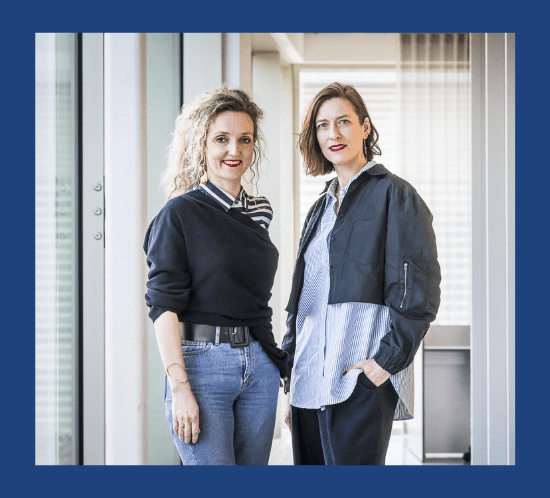
Each year Fashion Revolution Week has a theme and this year it’s ‘How to be a fashion revolutionary’. Knack reached out to ask Jasmien and 8 others for a tip on how you can have an impact on the fashion sector.
Jasmien’s tip? Chat while shopping. With each other and with the people in the store. You will find that it makes the shopping experience more fun, interesting and sustainable.
In the article, Jasmien mentioned that she recently went shopping with my dear friend Laura in Barcelona and with a group of friends in Brussels. She discovered some nice local stores and brands during her trip and wanted to share two of her favorite past ‘shopping = chatting’ experiences :
- Psyche Store in Brussel where Jasmien bought a pièce unique jacket by Eva Maria Bogaert. Eva works with fabric surpluses, end-of-series and accidental finds. Once a piece is sold, there will be no second. While standing in the store, the shop personnel and her friends actually helped her answer the question ‘Will I wear it 30 times?’ out loud.
- Recraft in Barcelona. They give hot air balloons a second life by making hats, bags, coats and so much more. They had a great chat with founder Tomas, who explained the difficulties of pricing and sustainable entrepreneurship with his amazing start-up.
Masjien would like to end with reminding you that anyone can have an impact on the sector. If we want to change the current circumstances we always need activists to stand on the barricades to demand action, but that doesn’t mean that there is nothing that you can do. The slogan of this year’s Fashion Revolution Week is ‘There are different ways to take part in the revolution’ and I couldn’t agree more.
Make sure to also read the useful tips from Elisabeth Van Lierop, Niki de Schryver (COSH!), Eline Reynders, Jonathan Janssens (Fair Fashion Fest Gent), Laura Van De Woestyne, Nina Maat (MUCE),Marieke Eyskoot and Fiore Farhand
March 12, 2024
SOS Mode Het Belang Van Limburg
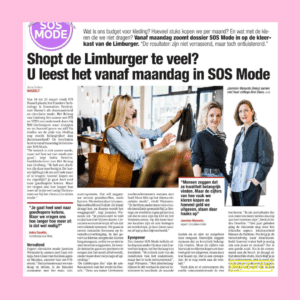
Het Belang van Limburg, together with FTI and Vito, had a survey conducted among 500 Limburgers: where do we shop and how much do we spend? And do we still consider the price of clothing more important than sustainability?
Price and quality.
The Limburgers were surveyed on their priorities when shopping, revealing key insights into their preferences.
- 88% of respondents emphasized the significance of quality.
- Following closely behind, 84% identified price as a crucial factor in their purchasing decisions. Sustainability is less important to the 500 shoppers. Only half of Limburgers consider the working conditions under which garments are produced, indicating room for increased awareness and ethical consumption practices. Environmental impact ranked high for four in ten respondents, the manufacturing location held importance for three out of ten shoppers.
It is normal to think about price and quality when we shop. When it comes to sustainability, things can be better. Although I think we are already doing better than ten years ago.
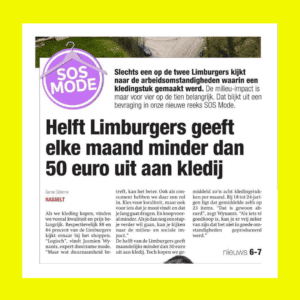
During an interview with Het Belang Van Limburg Jasmien shared she often hears ‘Jasmien, I want to buy more sustainable clothes, but it is just too expensive.’ This survey found that half of Limburgers spend less than 50 euros on clothing every month. Yet they buy a lot of clothes for that amount. More than 23 (!) pieces in total every month to be exact.
This is just absurd. And that while 88% find quality the most important factor? Masjien would like to know how you can buy 23 pieces of clothing with 50 euros and still find quality important.
Here’s something to think about: someone who buys 1 T-shirt at Primark every six months because they can’t afford anything else is not the problem. But someone who leaves the shop with five bags every week or every month is. Because the latter does actually have the purchasing power to make different choices and that is precisely where the problem lies.
It’s the conspicuous consumption habits of those with greater purchasing power that contribute significantly to the issue. Ultimately, making sustainable choices doesn’t have to break the bank—as long as one exercises moderation and considers the true value of their purchases.
After all, sustainability isn’t just about the price tag; it’s about making thoughtful decisions that prioritize both quality and responsibility.
So no, making a sustainable choice does not need to cost you hundreds of euros…
as long als you don’t buy 23 pieces 😉
The most important thing in this story is that we invest in quality, see the value and not be so careless with it. On the one hand, people say that they find quality important. But the figures for how often we buy clothes and how much money we spend are somewhat at odds with this. That’s an eye opener. There is still a lot of work to be done.
This research was carried out in collaboration with Flanders Technology & Innovation (FTI). From March 16 to 21, 2024, FTI will be in Hasselt for a festival on sustainable prosperity with more than 100 initiatives. Check ftihasselt.be for all information.
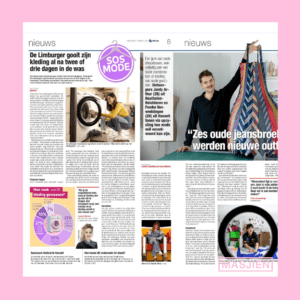
Online shopping and the longevity of clothes.
Most Limburgers expect clothing to last a maximum of three years. Our feeling is that three years is not that long. How long clothing must last to be sustainable depends on the garment itself, but due to the current fashion system, we are used to seasons and trends and wanting new clothes, which is actually absurd. In the past, clothes were made to measure, and they were handled with care. It was seen as something valuable. Our grandparents handle clothes very differently, even today. Because they did not grow up in the fast fashion system, where clothes are so cheap.
Limburgers often buy these clothes from large multinationals: 30 percent do this at least once a month and that is a lot. If you buy at such a fast pace, you are buying things that by definition you don’t need. Due to the low prices you don’t really think about if you actually need that piece. If you buy clothing from a large fast fashion chain, you support a business model that pushes overconsumption through low prices. That cannot be sustainable. If you buy from a small designer, you support them and their craft. Every cent you spend counts.
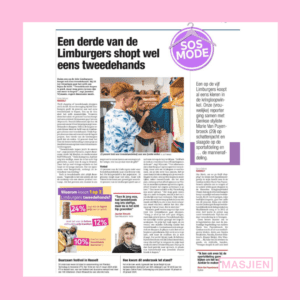
But where do people buy these clothes? The younger, the more people shop online. 3 in 10 buy something online every month. More than half of 18-24 year olds shop online at least once a week. People often order many colors and sizes online, then try them on and return them. What many people don’t know is that a large part of what we return is no longer sold, but is destroyed. One in three is destroyed. That is a gigantic impact that we do not think about. That also makes online shopping less sustainable.
So: don’t turn your living room into a fitting room.
With the arrival of web shops such as Shein, fast fashion has evolved into even faster ultra-fast fashion. It’s sad to see that a t-shirt is sometimes cheaper than a sandwich and unfortunately that is also how a lot of people consume it.
February 23, 2024
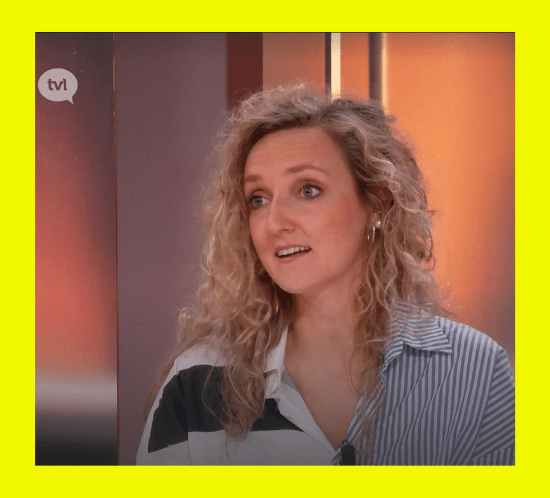
The Circular Fashion Track for FTI Hasselt on TV Limburg (Belgian news)
Jasmien was recently invited by TV Limburg together with Evelien Dils from VITO to talk about the circular fashion track for FTI Hasselt our ambassadors, the Limburg Six and about the importance of sustainability in general.
Being featured on a programme like this feels like a big win! Not because we can see MASJIEN on tv (which is a nice bonus, we’re not going to lie), but because most consumers are not too aware about the impact of the fashion industry yet.
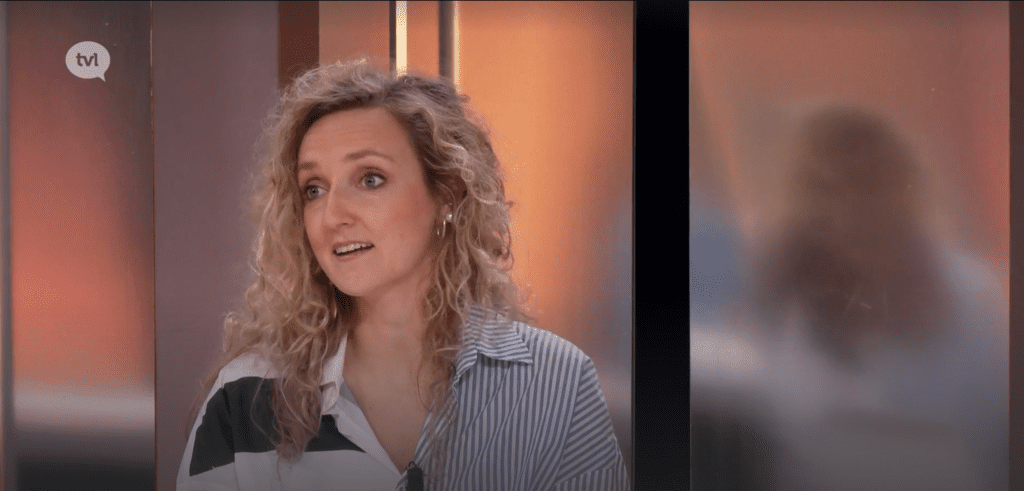
Curator for the circular fashion track for FTI Hasselt
We are so excited to be the curator of the circular fashion track for FTI Hasselt! It’s great to combine all the knowledge and knowhow of all these people, companies and brands and to translate it into something that is not only feasible for everyone, but to also get people excited about sustainability. We cheers to that, right?
TV Limburg also showcased COSH and visited La Bottega Hasselt, where visual installations by the Limburg Six will be revealed during FTI. Finally you get a view behind the scenes with Marylène Madou as one of the ambassadors of our track.
On the 16th, 17th and 20th of March you can discover the beauriful repair patches Marylène Madou created from leftover fabrics at Z33. Repairing and customizing clothing is one of the paths towards a more sustainable fashion landscape, so this is the perfect activity if you have some pieces that you’d like to repair.
January 15, 2024
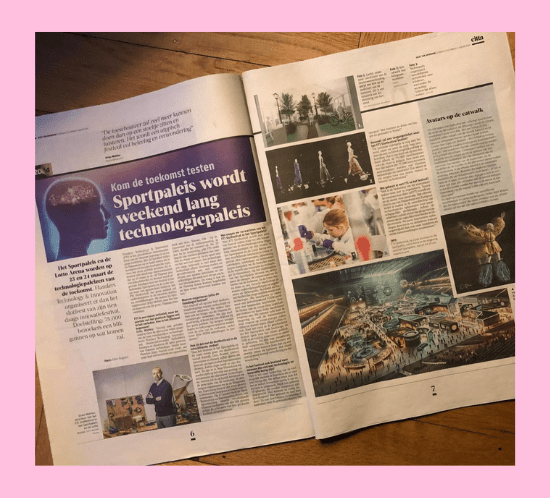
FTI In Antwerp Announcement in Gazet Van Antwerpen
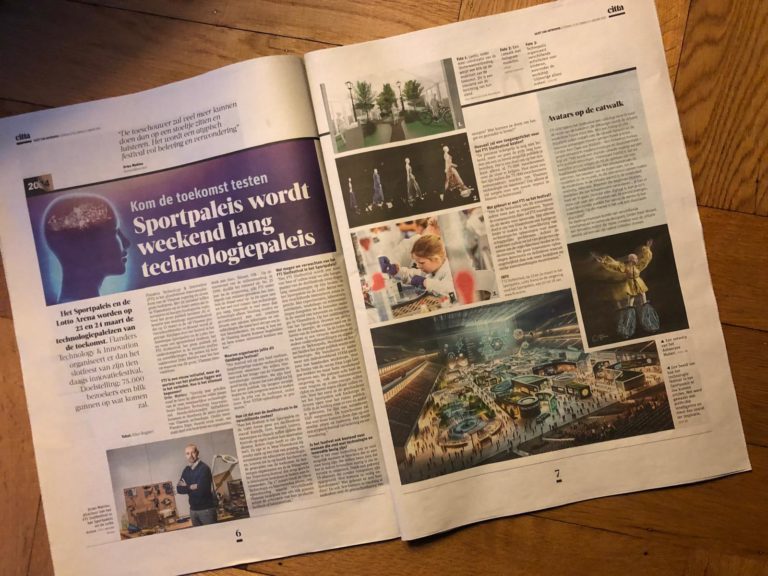
We’re thrilled to announce that our upcoming event, Flanders Technology & Innovation Antwerp, has been featured in Gazet Van Antwerpen! This coverage highlights FTI’s mission towards innovation and technology in the fashion sector.
The article provides details about how FTI started, why it’s such an important festival and some sneak peaks of the Final Festival. It’s a great recognition of the impact we aim to make with this event, and we’re grateful for the opportunity to reach a wider audience through this feature.
Click here to learn more about FTI Antwerp
December 23, 2023
Interview Scandinavian MIND: Fashion Talks in Antwerp
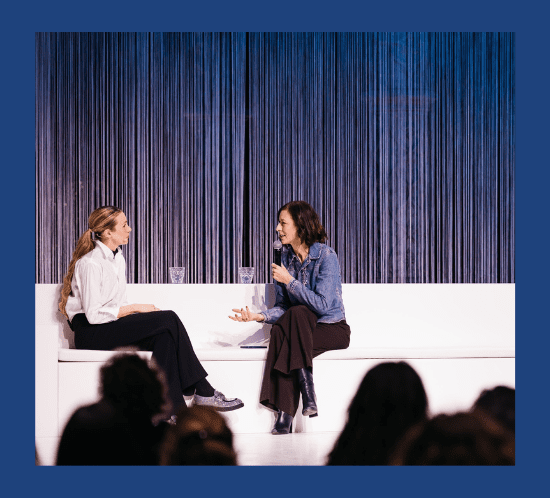
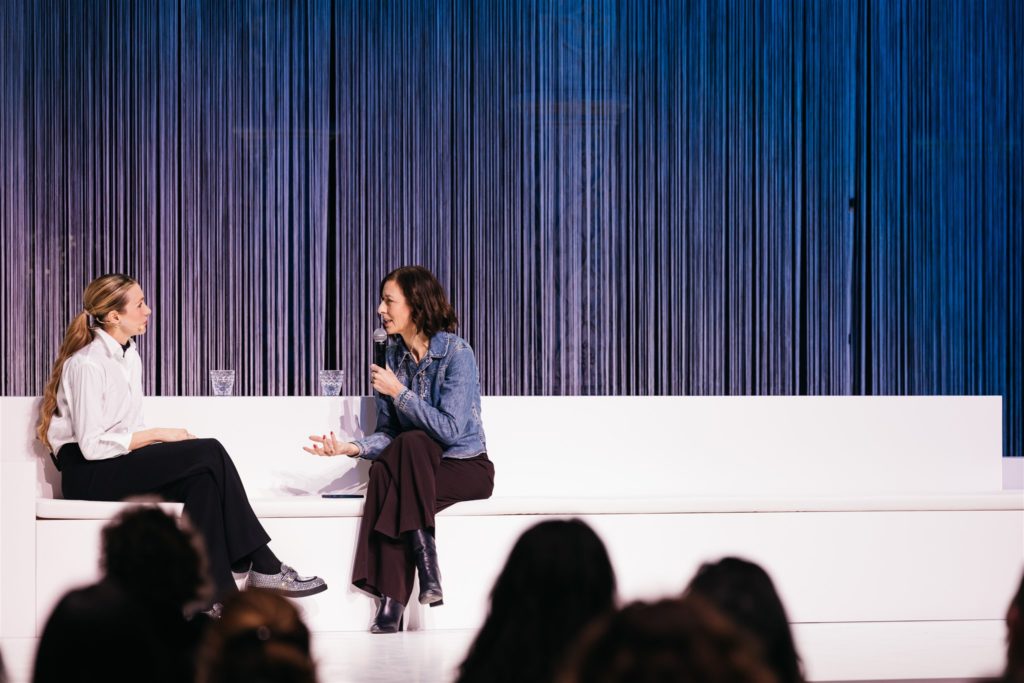
Scandinavian MIND broke down what happened at the Fashion Talks in Antwerp; where leading industry voices came together to discuss how tech enables transformation. Industry visionaries at McKinsey & Co, Ellen MacArthur Foundation, and Masjien lay out the roadmap for the forthcoming changes happening in fashion, leading towards growth and circularity.
Representing Masjien: Ann Claes
Scandinavian MIND is the magazine covering the intersection of lifestyle and technology. They believe that convergence of different fields is the way forward for technology, fashion, design, entertainment, gaming & other industries.
December 12, 2023
Interview Knack Weekend: Changemakers
What an absolute honour to be featured as one of Knack Weekend’s ‘Changemakers’.
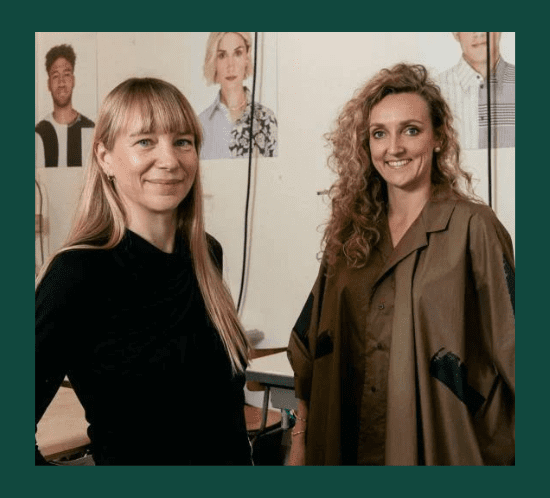
For this article, Jasmien had the pleasure to converse with Ruth Goossens, Editor-in-Chief of Weekend Knack & the driving force of REAntwerp, the amazing studio she started with Tim Van Steenbergen.
During the pandemic, there were calls to produce less, calls for a reset of the fashion industry. Little of that seems to be left now?
“How do you turn that ship around? We don’t think it can be done without strict legislation that streamlines everything. You already have to be a very profitable company to voluntarily decide to produce less today, while your competitors keep going. That’s signing up for bankruptcy in the current circumstances. It will be quite a transition for our economy and for consumers, but it can be done.
We remember when, between your main course and dessert at the table you could smoke a cigarette. It’s hard to imagine that now. So a major social turnaround is possible but you need ballsy leaders to take the right measures. And preferably at global level, because we find the fact that a brand like Shein could grow so much in recent years hallucinatory. The generation that demands a different kind of world, is also the generation that spends its money there.”
What do you think of the discourse that sustainable fashion is too expensive?
“Quality costs more money, that’s just the way it is. And I’m not talking about ‘sustainability’, but simply not buying junk. Clothes have proportionally not become more expensive than before, but we do spend more money on them. For us, the answer to this question is therefore twofold: first, what is the cost per wear of a piece. The more often you
wear something, the cheaper it becomes per wear. And second, the people who can’t afford it, who only have pennies for one T-shirt from Zara or Primark every season, are not the problem. It’s the people who buy five shopping bags one week and show up the again the next week, who need to change. They are wealthy enough to make different choices, but they simply don’t.”
Where do you hope the industry will be in 10 years’ time?
“I hope that by then there’s no work left for me. (laughs) I would love it if we get rid of ultra fast fashion. I know it’s ambitious to expect that in ten years, but I hope to see at least to see a slowdown. Sometimes they tell me I’m naive, but I’ve learned to see that it’s not an insult. You need some naive optimism to keep believing things can be different. Great strides have already been made in a decade. And there will still come, because I see around me many warriors pulling the cart and fighting for a greener world. That gives me hope.”
November 8, 2023
Interview for So Soir: Mode & Techno
So Soir, October 21st, 2023
THE FUTURE OF FASHION, IT IS NOW !
An expert in the intersection of fashion and technology, Belgian innovator Ann Claes underscores the pivotal role science can play in advancing sustainability throughout the entire lifecycle of a product. To achieve this, industry stakeholders need to embrace these cutting-edge technologies with an open mindset. For instance, adopting waste-free patterns, eschewing water-based dyes, and utilizing soluble threads can significantly enhance recyclability during the design and production stages.
Furthermore, the integration of blockchain-type databases introduces a new era of transparency, enabling a comprehensive view internally and among brand partners. This transparency proves crucial in the sales and communication phases, empowering consumers with detailed insights, fostering confidence in their shopping decisions, and allowing them to appreciate the sustainable strides taken by each company.
In the realm of online shopping, tools such as pruning, adjustment features, virtual trials, and robust visualization tools simplify the process. Personalization not only enhances customer engagement but also forges a unique connection and emotional value, showcasing a commitment to a more sustainable and personalized future.
Ann Claes also welcomes the arrival of gaming in the world of fashion: immersive experiences allow you to create a real connection with a brand. Also sustainable consumption can be improved: I am thinking in particular of care labels, smart devices, that can be connected to your washing machine or even resale applications and platforms.
For luxury brands, tech is already a daily reality: from Patou, who uses AI to track down counterfeit products, to Zegna which attempts to improve the purchasing experience in this way, including Valentino and Prada which, for their campaigns, mix real images and machine intervention.
AND TOMORROW ?
When asked about the future of fashion, Ann Claes is very positive. For her, the technology is not about to replace the human, quite the opposite. Each technology requires a starting point, whether it is a handmade sketch or choice of pattern. If, at otherwise, we continue to repeat data existing or to create copies of copies, the creativity could, it is obvious, disappear, she warns.
It is also impossible to talk about AI without mentioning the range of new talents that these advances make essential. In the Tian Su team, in charge of personalization concepts for consumers at Zalando, the human brain indeed remains central: Technological progress in the fashion industries are the result of combined efforts of numerous collaborators from varied areas of expertise. In the team of Stacia Carr, this collaboration takes the form of heads of product, UX/UI designers, product analysts, data, engineers, scientists, project leads and fashion experts. To this are added technical groups, business units, studios, distribution centers, etc. The synergy resulting from skills and unique perspectives from these diverse teams stimulates a global approach to innovation.
In the near future, Ann Claes looks forward to more systematic use of the passport digital (a sort of identity card of the clothing), already implemented by some brands. And if you, as a fashion consumer, are in a fun, ecological (and innovative) mood, the expert suggests that you buy, why not, a pair of virtual earrings for your next Zoom meeting.
September 20, 2023
YouTube Episode for Radio NRJ (Belgian radio station): how to make your closet more sustainable?
When a T-shirt costs only €3, you have to wonder about that. But what can you do yourself to make your closet more sustainable? Larissa, Louise & Ranaa check it out in this new episode of Grab A Coffee, with tips from Jasmien!
September 20, 2023
Interview for Feeling : How artificial intelligence is conquering the fashion world
Feeling, August 10th, 2023
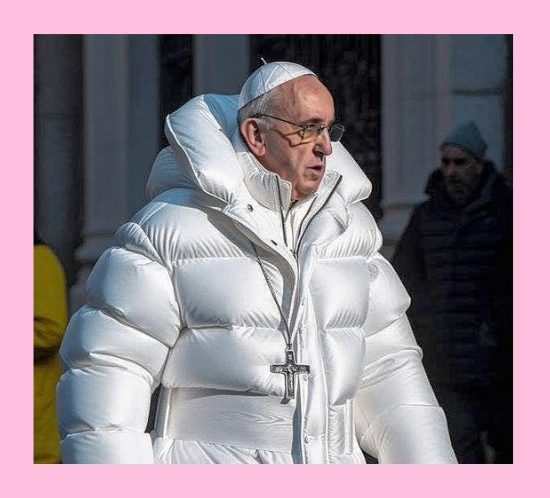
The pope in a puffer jacket? How artificial intelligence is conquering the fashion world
Chatbots that do your homework, deepfake interviews and computer-generated pop songs: AI is everywhere. And the fashion world is also eagerly jumping on the fully automatic bandwagon. Will artificial intelligence soon make designers and models of flesh and blood superfluous, or can man, machine and fashion exist in harmony?
In the fashion world, people are rarely surprised by an unusual look. Actor Jared Leto in a photorealistic cat suit? Yawn. Beyoncé in a UV-reactive stage outfit that changes color? Been there, done that. And yet some strange faces have made us stare at our screen in amazement over the past few months. Was that the pope as a hypebeast in an oversized puffer jacket? Will the entire Harry Potter cast, including Voldemort, star in the new Balenciaga campaign? Before you question the power of your Tom Ford glasses: the images described above are not real, but the work of generative AI, or artificial intelligence.
In 2023, fashion seems to be largely about generating memes and moments with cultural impact. Well, to put it in internet jargon: AI is the moment. After NFTs and the Metaverse, “artificial intelligence” is the latest buzzword in the world of technology and beyond. However, for every fashion house that comes up with an AI campaign, there is an artist or designer who sues for virtual plagiarism. Artificial intelligence is based on machine learning (see AI for dummies) and learns to recognize and predict patterns based on previous data. Show an AI application 100 dresses and your computer will spit out what looks like a dress. Show that same AI application a thousand or even ten thousand dresses and your frankenstein design – a new creation that builds on pre-existing images – can rival the work of a real, maybe not very original, designer.
Old technology in a new (puffer) jacket
That may sound futuristic, but AI is not new. The technology has been around since the 1950s and chances are you use it every day. Virtual assistants such as Siri and Alexa, smart cars and smart vacuum cleaners, the recommendations you get from Spotify and Netflix, are all based on AI. What is new is the speed with which everything evolves. For example, the internet is flooded with uncanny images, created with AI applications such as DALL-E and Midjourney. Those image generators convert a textual description, or prompt, into an image. The more detailed the prompt, the more realistic the end result, with the result that real and fake are increasingly difficult to distinguish.
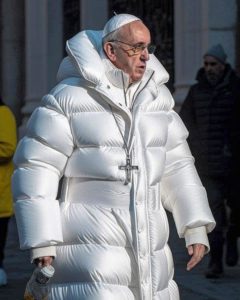
For example, US celeb Chrissy Teigen tweeted: “I thought the pope’s puffer coat was real and didn’t think twice about it. No way that I will survive the future of technology.” Teigen isn’t alone in her concerns. Computer scientist and AI pioneer Geoffrey Hinton himself recently sounded the alarm about the rapid and unbridled advance of technology. Within the fashion world, as in other creative sectors, people seem to be mainly afraid of job losses and the risk of plagiarism. While those concerns are legitimate, they are not holding back progress. Online trade magazine The Business of Fashion makes the analogy with the Luddites, who destroyed weaving machines in nineteenth-century England as a protest against the industrial revolution: “The Luddites didn’t get very far by destroying machines. In any case, the fashion world will have to start thinking about how to incorporate those tools in ways that take into account the new reality, without leaving workers out in the cold.”
The Emperor’s Clothes
That AI, in addition to dangers, also offers many opportunities within the fashion world, confirms fashion and technology expert Ann Claes: “AI can speed up or improve certain things. You can have a business plan or press text written out by ChatGPT and mood boards can be created faster in Midjourney. I mainly see AI as a tool to improve and optimize your work.” Sketching, pattern drawing, copywriting, grading; the applications are endless.”
Currently, large fashion companies invest the most in artificial intelligence. Claes: “Larger players can switch gears more quickly. For example, Zalando recently launched a ChatGPT application.” This application takes the form of a fashion assistant that guides you through the webshop’s offerings. For example, if you ask ‘What should I wear to a wedding in Santorini?’, the chatbot will know that it is a formal event in a warm climate and will link to relevant items.
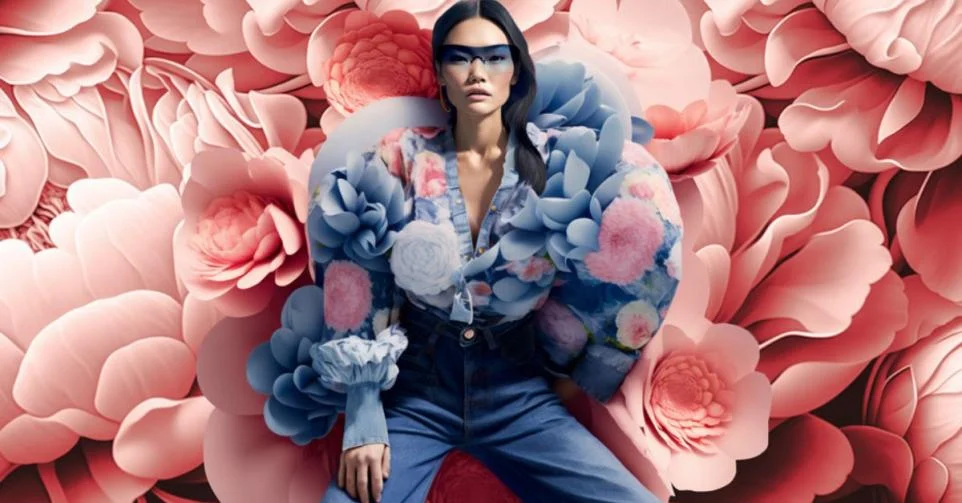
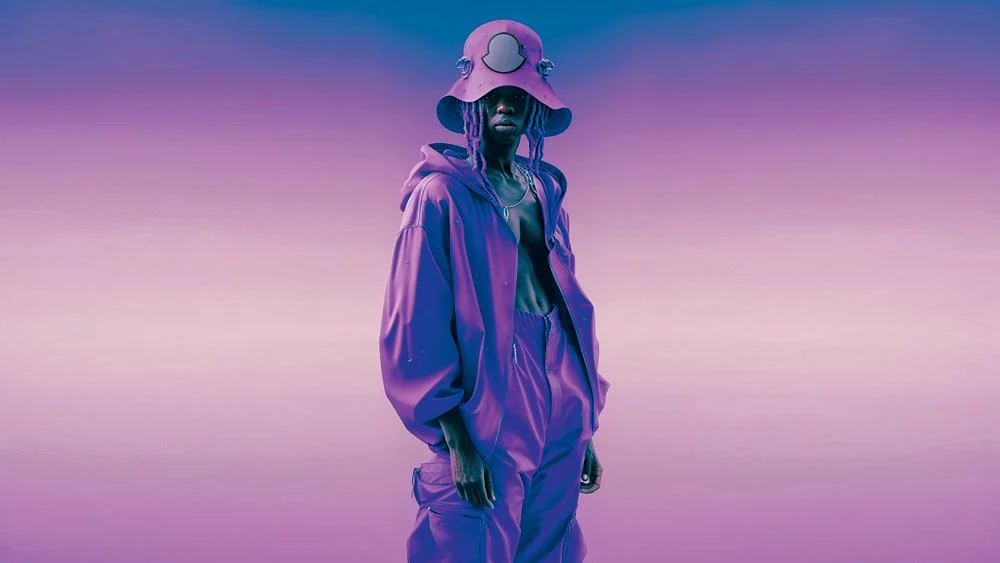
Fashion brands use AI not only as a personal shopper, but also as a creative director. The Spanish Stradivarius, sister of Zara, put its spring collection through the AI mangle and created dreamlike images in which virtual models wear floral blouses that don’t really exist. According to the brand, it is “an exaggeration of the collection that reflects what fashion could be if reality did not limit us”. Creative freedom or consumer fraud? Online shoppers can, of course, view the existing collection before pulling out their credit card. This way you avoid buying an artificial cat in a bag. In the luxury segment, virtual campaign image and real garment are closer together. For example, M3GAN, the AI killing machine from the horror film of the same name, wears an almost sold-out hoodie by Heaven by Marc Jacobs and the creations from Moncler Genius’ AI campaign in collaboration with Adidas and Alicia Keys walked the catwalk during London Fashion Week at the end of February. The emperor’s new clothes are now on sale.
Metamodels
Leaving aside the Moncler show, AI fashion is often worn by AI models. They populate digital parades and are increasingly popping up in the world of e-commerce. Levi’s recently announced that it would be teaming up with Lalaland, a Dutch tech company that develops software that brings virtual, but extremely realistic-looking models to life. Founder and CEO Michael Musandu, born in Zimbabwe and based in Amsterdam, started his company from a personal loss: “I never felt represented as a person of color when shopping online. Like any good technology enthusiast, I decided not to wait for the future, but to create it myself through artificial intelligence. With Lalaland we want to make webshops as diverse as the market they serve. We do that by supplementing traditional photography with AI-generated models.”
Major brands such as Levi’s and smaller labels such as the Dutch Ophilia use Lalaland’s software to create models in every possible size and skin color. That seems inclusive, but critics argue that real models with a diverse look are losing jobs because of this revolutionary cost-cutting campaign. The phenomenon is called ‘digital blackface’: the online appropriation of black images by non-black people. Musandu contradicts that: “Brands that take inclusion seriously will continue to hire diverse models, but it is impossible for them to shoot every look on nine different types. Thanks to our software, this is possible and you get an even better representation. In addition, we have created a completely new earnings structure for minority groups. They can license their data – say, images of their hair or hands – as one-off training material for our AI application. There will always be a need for real models to make an interpersonal connection with consumers and drive traffic to a webshop. An AI model can never compete with that.”
Anyone designer?
While international retailers are investing massively in the new technology, things are not going that fast in our country yet, according to Claes. “If I ask a hundred designers if they work with AI, a dozen may say they have already experimented with it and only a handful actually use it in their creation process.” AI is more popular among young Belgian creatives. After all, thanks to programs such as Midjourney, even people without a fashion background can conjure up amazing designs from their hats – with some IT knowledge or self-study.
“The available AI tools are more user-friendly than ever, so more and more people are using them.” Jerry Galle, artist and researcher affiliated with the AI lab of the School of Arts in Ghent, also sees this democratization: “AI offers incredible possibilities for a starting designer or artist. It is a kind of mirror for everything that floats around on the internet and a search engine within our culture. I think Andy Warhol would have found these developments very interesting.”
In the future, according to Warhol, everyone would be famous for fifteen minutes, but will everyone with a computer and internet connection be allowed to call themselves a designer in the same future? According to Shayli Harrison, the answer is twofold. The Australian graduated from the Antwerp fashion academy in 2018 and makes digital couture, or 3D assets, that your avatar can wear in games and the Metaverse. “If you’ve designed something in DALL-E and you want to call yourself a designer, go ahead, but fashion is more than pretty pictures. Being a designer also means having a critical eye and developing your own aesthetic. In addition, fashion is an applied art; you still have to apply them.” Claes also agrees: “There is a big difference between creating a beautiful image for your Instagram and actually creating physical production. This requires a lot of other skills that AI does not have.”
Fashion vs. machine
Even according to its biggest supporters, AI can never completely replace a human being made of flesh and blood, but we should not dismiss the technology as a gimmick. Harrison sees it as a way of thinking outside the box: “It leads to combinations and thoughts that you wouldn’t come up with yourself. I know several designers at major fashion houses who feed AI with existing designs from the brand as input and then see what comes out.” Galle also sees this working method as an interesting avenue for the designers of today and tomorrow: “AI provides visual links that you would not easily make yourself. The only drawback when working with existing datasets is that it sometimes seems pre-made, like a mash-up of existing images. That’s less exciting from an art or fashion perspective. Only when you re-enter the output and question the system you get an enrichment.”
So we get to the point: can AI-generated fashion, which is by definition based on previous designs, ever be truly original? “That’s a tough question,” says Harrison. “Fashion is cyclical anyway and refers to the past to create something new. In that respect, AI mode is not that different.” Besides being a designer, she is co-founder of Mutani, a company that connects designers with digital makers, helping to translate fashion into an online identity. Together with five other tech savvy alumni of the Antwerp academy, including current director Brandon Wen, she winkingly dubbed herself ‘The Antwerp Cyber-Six’, by analogy with the Six of Antwerp. Simply put, the virtual world is Harrison’s second home. She was therefore very interested in the first AI Fashion Week, organized by creative AI studio Maison Meta in collaboration with American webshop Revolve.
More than four hundred designers from all over the world participated in the very first AI fashion week, from which a professional jury ultimately selected three winners. They will soon have the opportunity to bring their work to life within a tech incubator and launch their collection on Revolve and sister website FWRD. So there remains a place for humans in this fashion world ruled by machines and algorithms. From the as-yet-unknown designers, who weave aesthetic sense and IT skills into original AI designs and guard their prompts as state secrets, to the manufacturers, studio and factory workers who will be required to produce the physical clothing. “I don’t see a complete automation in which an AI application autonomously designs and produces clothing happening,” AI artist and critic Galle reassures us. “Then you are already talking about a conscious AI application and the question is whether you can create consciousness within a binary system. I do not think so.”
Will AI play a lasting role in the future of fashion and the fashion of the future? According to Claes it is: “The genie is out of the bottle; you can no longer imagine AI without it. It will therefore become even more important for designers to have a clear vision and to curate it. Creativity remains the great differentiator and determines what we as humans can contribute.” Harrison also emphasizes this: “You only have a problem if the AI application is better at your job than you. (laughs) Anything made by human hands will become even more valuable in the future. Currently, companies are greenwashing, claiming that their clothing is sustainable. Perhaps new quality marks will be invented in the future to distinguish us from AI and brands will then start human washing: this product was made by a human being.”
Loading new posts...
No more posts