May 18, 2023
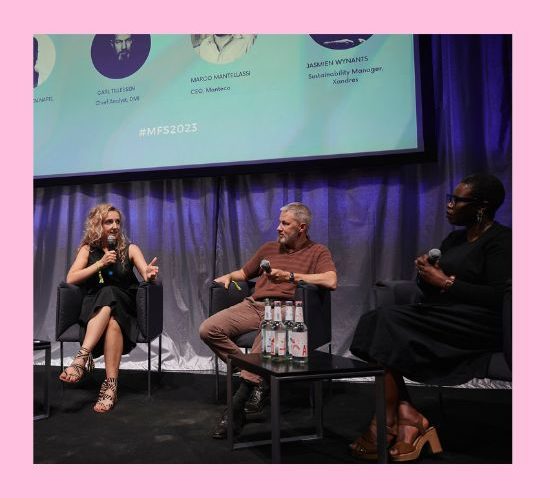
Talk sustainable fashion at Captains of Industry
Talk in 2023 about sustainability in the fashion industry and how to change as a company. Inspirational event for female leaders and C-level employees linked to a sailing cup in Belgium. Fashion as an inspiration to other industries.
Jasmien’s reflections on the event:
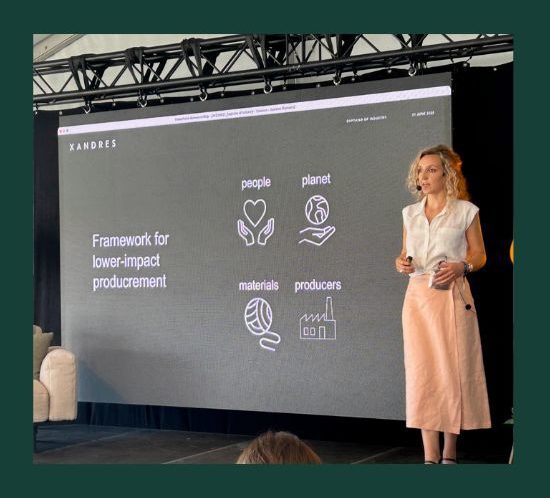
“A few weeks ago, I was honoured to speak at the Captains of Industry Ladies Cup in Nieuwpoort. Mieke Pieters from The Circular Kickstart invited me to talk about sustainability in the fashion industry and how Xandres is trying to lower its environmental and social impact.
When we wrapped up, Mieke asked me ‘which woman inspires me’. I answered that on an entrepreneurial level, I admire Lies Mertens for her amazing work but that earlier that week, a woman really close to me inspired me on a sustainability level as well… my grandmother, or ‘moemoe’ as we say in my hometown.
I visited moemoe that week and whilst she was preparing a classic Flemish dinner (‘chipolata’ sausage, potatoes, carrots and peas), I looked at her standing in the kitchen and realized that her kitchen sink and cooking fire were probably about 70 years old. That the pots and pans she was using were probably also used by her mother.
And then I saw her salt shaker. It was a regular plastic salt shaker from a convenience store but the label was so faded that I asked her ‘moemoe, you don’t use salt that often, do you?’.
And she said ‘no, not really, why?’.
I mentioned her salt shaker and the fact that she’s been using that tiny object for quite some time probably. And she answered ‘oh but I refill it of course’.
In my generation, people sometimes build entire ‘temporary kitchens’ because they want to renovate later on without realising the materials and energy we waste in this process.
So what woman inspires me when it comes to sustainability? My moemoe, and an entire generation of women that still ‘use’ instead of ‘consume’ the valuable objects in our life.”
August 22, 2022
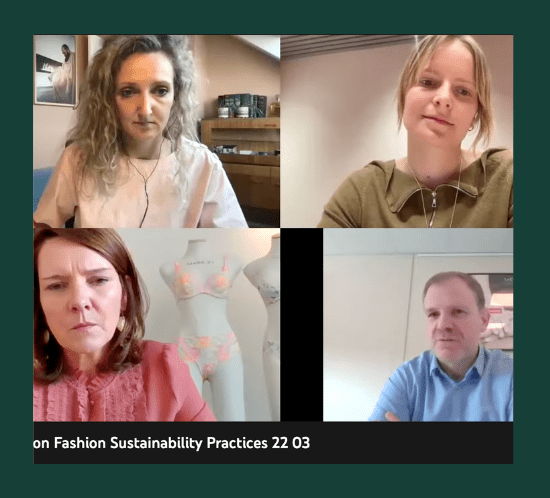
Webinar – Large-scale companies vs. fast-growing startups – Fashion Sustainability Practices
In this webinar for Lectra, Jasmien goes into conversation with Lieve Vermeire (CSR Manager Vandevelde) & Eva Engelen (HNST).
Not all fashion companies are created equal, so sustainability will seem like a totally different challenge – or opportunity! – to each of us.
To answer the question “Can sustainability go hand in hand with profitability?”, we need to establish that sustainability strategies can and will vary enormously.
That’s why Lectra invited customers, experts and partners from the industry to discuss the topic of sustainability from different and even opposing points of view. All related to Product, Process and People.
Speakers:
• Jasmien Wynants – Freelance sustainability expert, Jasmien has experience at Flanders DC and is the co-author of the “Close the Loop” circular fashion initiative. She is also Sustainability Coordinator at Xandres, the Belgian women’s fashion brand.
• Jeroen Deweer – Account manager at Lectra, Jeroen enables fashion companies across the Benelux to transform, digitalize and become future-proof.
• Lieve Vermeire – Sustainability and CSR manager at Van de Velde, the Belgian lingerie and swimwear giant that’s been shaping women’s bodies and minds for over a century.
• Eva Engelen – Sustainability and product manager at HNST, the up-and-coming jeans brand that challenges the industry’s current practices by being fully transparent, recyclable and sourced in Europe.

August 22, 2022
Webinar – How to make your fashion brand more sustainable?
In this webinar of Flanders DC, you get an introduction to sustainability thinking and circular economy. In addition to some concrete tips & tricks, you are shown the necessary tools to develop your own strategy.
As a fashion entrepreneur, you have an impact on different parts of the fashion cycle: designing with less textile waste or better materials, releasing fewer collections, producing locally and ethically, looking for take-back and recycling solutions,… You can also bring your customers into this story. During this webinar, we’ll familiarize you with the Close The Loop program. You will get an introduction to sustainability thinking and circular economy. In addition to some concrete tips & tricks, you will be given the necessary tools to develop your own strategy.
Jasmien Wynants is a sustainability expert and the driving force behind the Close The Loop platform, the reference in the field of circular fashion. She helps fashion companies develop a sustainability strategy and how to put it into practice.

August 22, 2022
Podcast – Communicating about sustainability for fashion companies
In this podcast from Only Humans you get some insights on communicating about sustainability from the perspective of a fashion company.

August 22, 2022
Podcast – In conversation about sustainability with fashion brands Terre Bleue/Zilton/Gigue and Filou & Friends
In this podcast, sustainability expert Jasmien Wynants talks about implementing sustainability within fashion companies. Jasmien was the driving force behind Close The Loop, Flanders DC’s platform that promotes circular enterprise within the fashion sector. She talks to Peter Perquy (CEO of Duror Fashion Group, the group behind Terre Bleue, Gigue and Zilton) and Rudi Maes (founder of Filou & Friends). How are they working on sustainability within their companies? What aspects did they tackle first? How did they stimulate employees and stores to jump on the bandwagon?
Podcast recorded by/for Flanders DC.

August 22, 2022
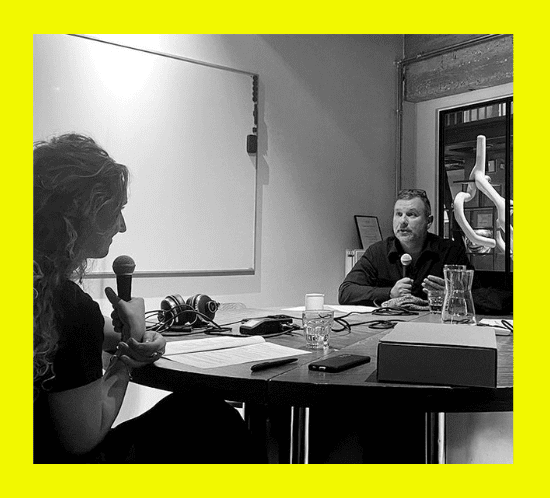
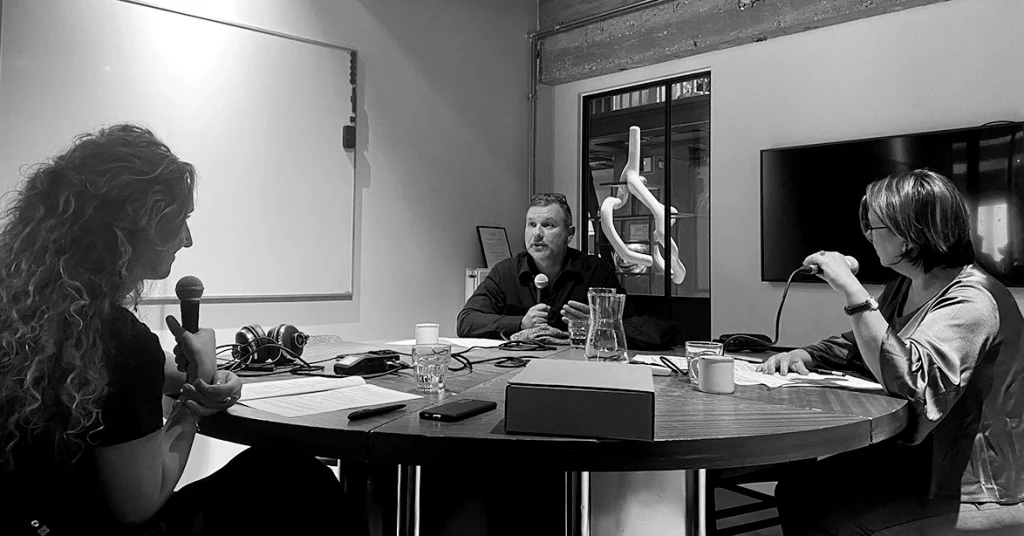
Podcast – In conversation about sustainability with fashion brands KOMRADS & Wright
In this podcast, Jasmien Wynants talks about sustainable business in the fashion industry. Jasmien is the driving force behind Close The Loop, the platform that encourages the fashion industry to embrace the circular model. She talks to Nathalie De Nil from fashion label Wright and Mark Vandevelde from sneaker brand Komrads. What does sustainability mean to them? What challenges do they face? What do they think of greenwashing and how do they look to the future?
Podcast recorded by/for Flanders DC.
June 15, 2022
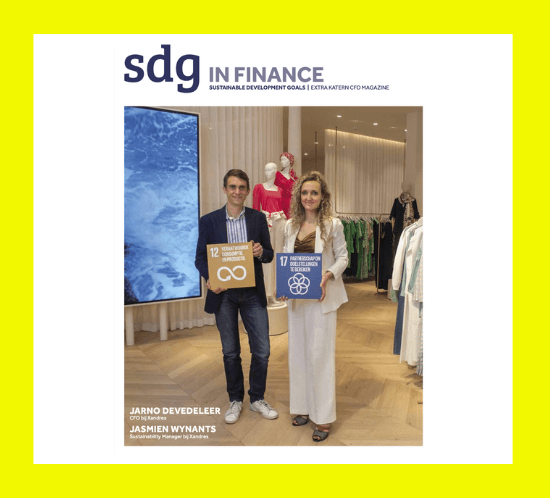
CFO Magazine in conversation with Jasmien and Jarno on sustainability & finance at Xandres.
Interview with Jasmien Wynants and Jarno Devedeleer (CFO Xandres) in CFO Magazine, written by Niels de Boysere
Finance supports sustainable ambitions Xandres
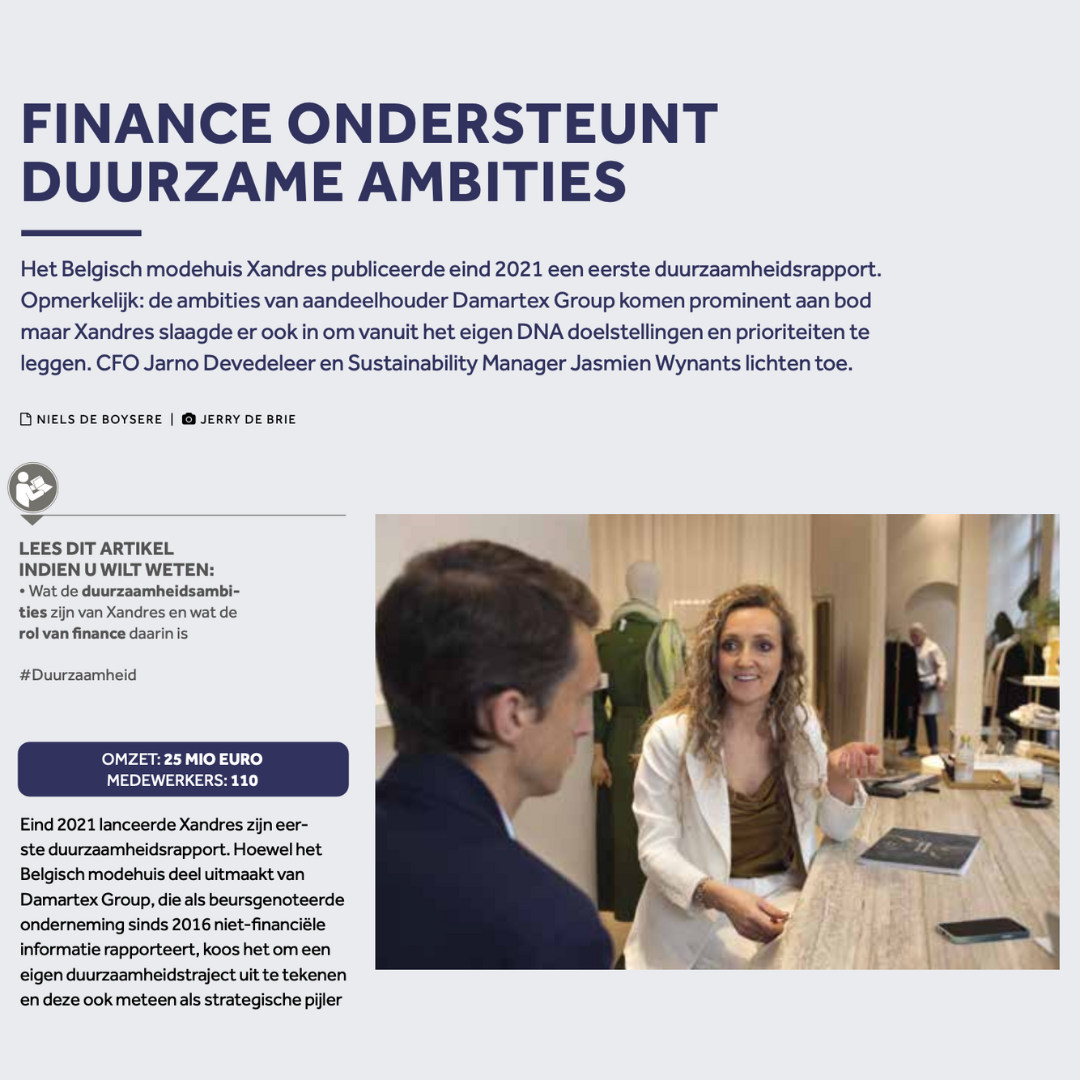
Belgian fashion house Xandres published its first sustainability report at the end of 2021. Remarkable: the ambitions of shareholder Damartex Group are prominently featured but Xandres also managed to set goals and priorities from its own DNA. CFO Jarno Devedeleer and Sustainability Manager Jasmien Wynants explain.
Turnover: 25 million euros; employees: 110
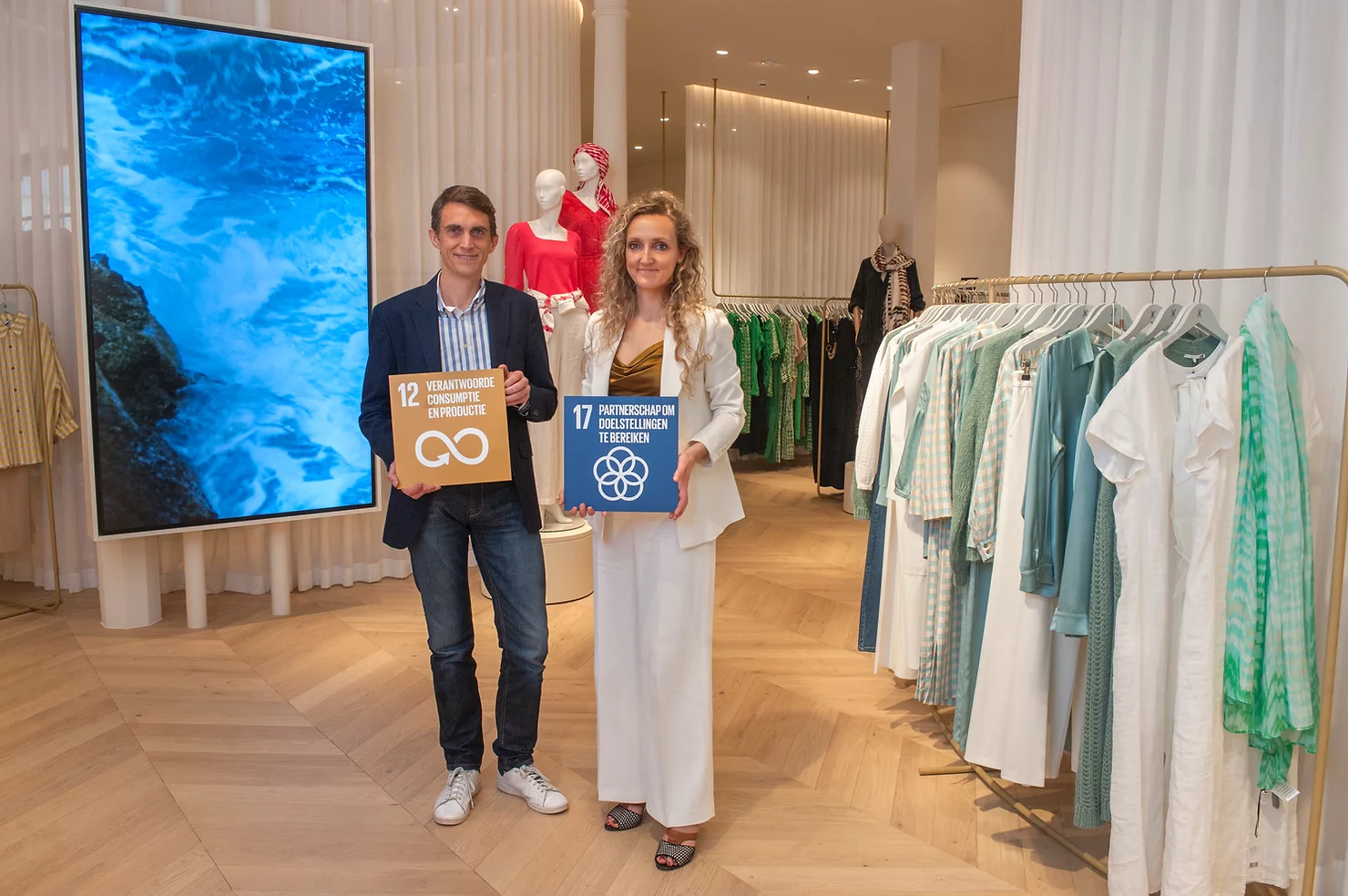
At the end of 2021, Xandres launched its first sustainability report. Although the Belgian fashion house is part of Damartex Group, which as a listed company has been reporting non-financial information since 2016, it chose to outline its own sustainability path and also immediately included it as a strategic pillar. A conscious choice for CFO Jarno Devedeleer. “We have been working on the sustainability of our products and the production chain for some time,” he says. “That makes it possible to start choosing or prioritizing things from our DNA. Of course, we remain part of Damartex Group. And it has already formulated clear, strategic pillars for sustainability. So from a group perspective, there are different initiatives going on that inspire us but that happens just as much the other way around.
“Mandate at the highest level”
In order to make the sustainability ambitions a reality, a Sustainability Manager was recruited in early 2021. Wynants felt strongly about this trajectory and the ambitions of Xandres, so the collaboration was quickly successfully launched. “We chose to build our own strategic section on top of the already existing framework,” says Wynants. “To do this, we concretely looked at: who is Xandres and what is our identity apart from sustainability? This quickly led us to quality, craftsmanship, longevity, etc. We translated these issues into our own sustainability strategy, set our own objectives and produced our own report. The group has been an inspiration for this, but we have set out our own guidelines from within Xandres. Something like this has to come from the inside. If that is not the case, it is not ingrained enough in the company and the chance is too great that the subject will slip into the background too quickly. This all departed from management, which is precisely why it was given a separate mandate.”
From code of conduct at suppliers…
“We know that there are numerous things coming our way legislatively, without already having a concrete idea of exactly what everything will look like,” says Wynants. “And if you look at our various stakeholders, you see that we are being encouraged, especially B2B-wise, to act on this. We are doing this in the first phase of our sustainability strategy, for example, very concretely towards our suppliers. We developed a ‘framework for sustainable procurement’ to have a clear grip.” It is important to note that Xandres does not run its own production sites but rather works with production partners. Of those, 40 percent are located in Macedonia.
“Those production partners are asked today to sign a Code of Conduct as a first step towards a responsible supply chain. This indicates that there is no child labor, no exhaustive working hours or unfair working conditions. The Code of Conduct is a promise from them to us, and is based on the general principles of Corporate Social Responsibility. Step two was to train our procurement team so they would have the right information in order for them to ask critical questions of suppliers, have the right templates, … We started doing that last year and are now gradually expanding by training our design and procurement team at the Sustainable Fashion Academy.”
… towards sustainable auditing
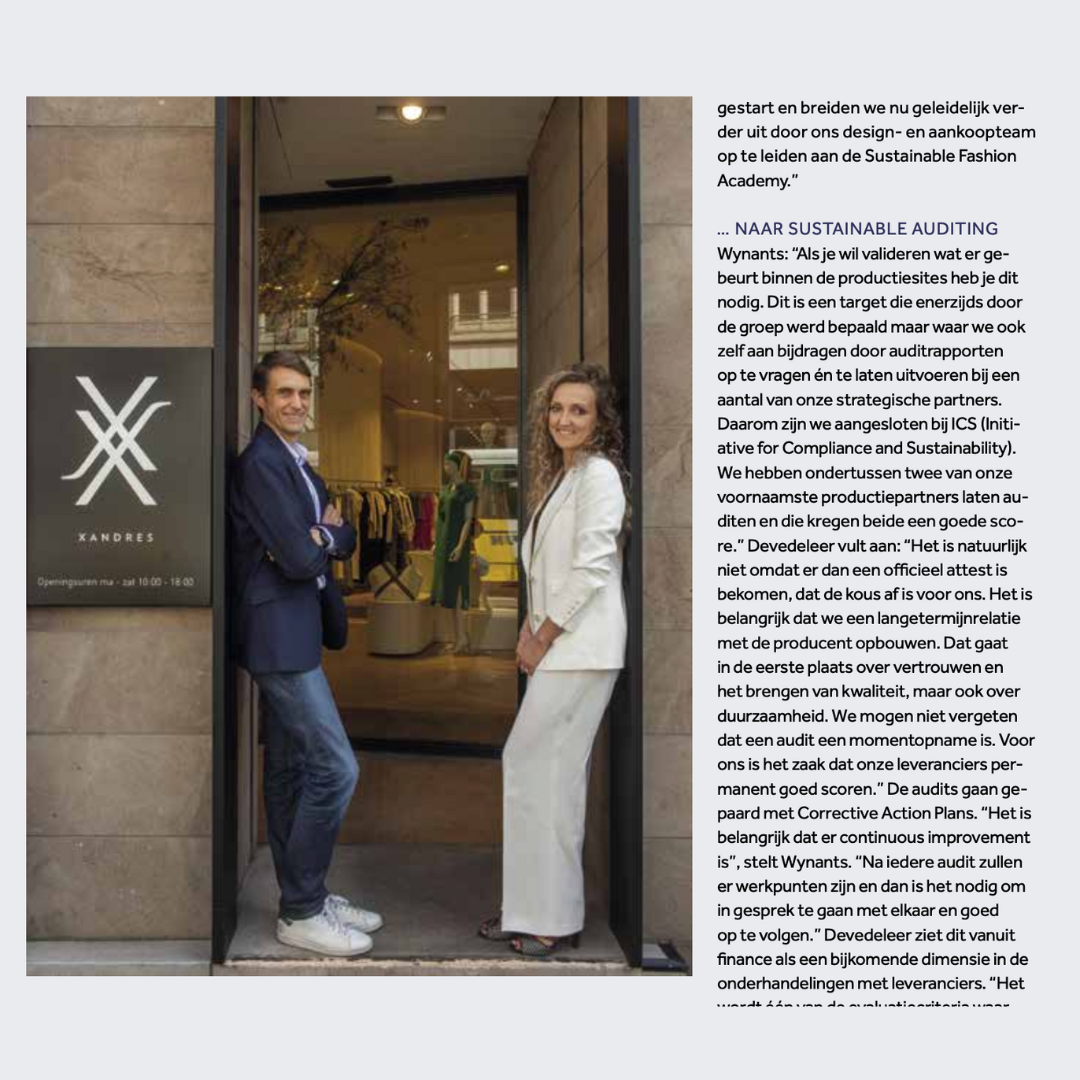
Wynants: “You need this if you want to validate what is happening at the production sites. This is a target that was set by the group on the one hand, but which we also contribute to by requesting audit reports from a number of our strategic partners and having them carried out. This is why we joined ICS (Initiative for Compliance and Sustainability). We have since had two of our main production partners audited and they both received a good score.”
Devedeleer adds: “Of course, just because an official attestation has been obtained does not mean it’s a closed case. It is important that we build a long-term relationship with the producer. This is primarily about trust and delivering quality, but also about sustainability. We must not forget that an audit is a snapshot. For us, it’s about ensuring that our suppliers score well on a permanent basis.” Audits are accompanied by Corrective Action Plans. “It is important that there is continuous improvement,” states Wynants. “After every audit there will be working points and then it is necessary to have a conversation with each other and follow up properly.” From a finance perspective, Devedeleer sees this as an additional dimension in negotiations with suppliers. “It will be one of the evaluation criteria that will give us a lot more objectivity about the supplier,” he says. “For this, by the way, we have also adapted our ERP system because it adds quite a lot of administration for the purchasing team.”
CFO as a realist
“We know that there are numerous things coming our way legislatively, without already having a concrete idea of exactly what everything will look like,” says Wynants. “And if you look at our various stakeholders, you see that we are being encouraged, especially B2B-wise, to act on this. We are doing this in the first phase of our sustainability strategy, for example, very concretely towards our suppliers. We developed a ‘framework for sustainable procurement’ to have a clear grip.” It is important to note that Xandres does not run its own production sites but rather works with production partners. Of those, 40 percent are located in Macedonia.
“Those production partners are asked today to sign a Code of Conduct as a first step towards a responsible supply chain. This indicates that there is no child labor, no exhaustive working hours or unfair working conditions. The Code of Conduct is a promise from them to us, and is based on the general principles of Corporate Social Responsibility. Step two was to train our procurement team so they would have the right information in order for them to ask critical questions of suppliers, have the right templates, … We started doing that last year and are now gradually expanding by training our design and procurement team at the Sustainable Fashion Academy.”
CFO Devedeleer himself is mainly involved in the strategic process for a more sustainable company. “Our team mainly comes in to support reporting and setting the right KPIs,” he says. “As CFO, I then have to intervene myself in the balancing act between planet, people, and profit. Sometimes you also have to push choices if our result cannot support certain ambitions. Of course we want to be as sustainable as possible, and we might ask ourselves questions about the production of our clothing abroad… But in terms of cost efficiency alone, there is no doubt about that. Let alone the knowledge that has been acquired and the specialization, as well as the supply of raw materials. You would have to map out the entire chain again. In addition, you are sometimes forced to follow certain flows because of tax issues or customs problems. In addition, of course, I have to ensure that resources are freed up, because this process does have a certain cost. An additional cost. You have to be able and dare to set up this exercise as an organization. Do you charge everything to the customer if you only want environmentally friendly fabrics? And how do we finance all of this? Ultimately, this is a classic exercise that simply belongs to our role…”
“When we choose not to participate in actions like Black Friday but resolutely and permanently opt for Green Friday (counter-movement to the shopping frenzy on Black Friday, and an action against overconsumption and impact on the environment, ed.), this has a financial backlash. Nevertheless, we see this as a very positive story that we are very consciously choosing. This is an example where we are not just looking from financial criteria, but clearly throwing sustainability in the mix…”
“Daring to question the system”
Wynants is very clear about the usual suspect in sustainability, ecology,. “For sustainable fashion, we actually have to question the whole system. About a third of the ecological impact of a garment lies with the consumers. We have to systematically extend the life span so that we can get out of the fast fashion system. Sustainability is more than ecology. If you buy a T-shirt made of organic cotton and only wear it three times before you throw it away, wouldn’t you have been better off buying a non-biocotton one that you put on many times? We also see a role for ourselves as a brand there. We need to get our customers on board with this way of thinking. To raise awareness, we fall back on a Repair & Care program to give people tips on maintenance, on washing and ironing the article, but also, for example, if there is a hole in the clothing to have it adjusted. Xandres is also one of the few brands where you have a lifetime free repair. That too has come from the DNA of the company: we stand for quality and longevity and we want to go the extra mile in that.”
Devedeleer: “That’s a pure cost but of course we don’t leave it at that. It is important to make the most of the life cycle of a piece. In our flagship store in Antwerp, we are also currently testing an application where our saleswomen can see the clothing history of consumers and help them choose an article. If there are combination possibilities with an article that is already hanging in the consumer’s closet, we want to give that advice. In this way, we go against pure consumption but also contribute to extending the life cycle of a garment.”
Finally, Xandres is also deliberately entering into partnerships to bring more sustainable clothing into stores. “We believe in collaborations and so we seek them on different levels,” Wynants explains. “We have been in the Close-The-Loop network of Flanders Circular & Flanders DC since 2018, where we collaborate with other Belgian SMEs in the field of sustainability. We get inspired by companies who, for example, started their entrepreneurial story from a principle of circular economy. In this way, we also hope to have a further impact and to inspire others because, to be clear, we are not an eco-brand. However, that does not mean that we cannot do better year after year. For example, we set concrete goals in terms of increasing the use of materials with a lower environmental impact and set up collabs that we can learn from. For example, we currently have a collaboration with Raramuri, a Belgian sandal brand that has started to work with our residual materials and has them developed into new products in social employment workshops. Not only do we learn from this, we also give a small, unknown brand the opportunity to appeal to our target group and gain exposure for it. In this way, we are also trying to have an impact.”
About Xandres
Xandres NV is a Belgian fashion company with a rich history of producing quality clothing for women from size 34 to 56. In 2016, France’s Damartex Group acquired Xandres’ operations.
About ICS
ICS is an international sector initiative to improve working conditions throughout the supply chain of retailers and brands. It consists of more than 65 multinationals from the textile, retail, footwear, electronics and furniture sectors. The members work together using the same tools to make audits reciprocal, thus combating ‘audit fatigue’, sharing knowledge and best practices. The audits themselves are conducted by ICS-accredited auditing companies but do not bring specific certifications or labels. Members do share the same rules when critical non-conformities are identified. The vast majority of ICS audits are partial or unannounced. Wynants: “Connecting our audits to ICS is a commitment we make. We do not know to what extent this audit, will become one of the mandatory audits for the textile sector and sustainability reporting. It’s hard to estimate but this will give us coherence with the expectations of the group.”
Biographies
JARNO DEVEDELEER has been CFO at Xandres since 2019. He started his career at EY and was successively in various finance roles, at Kinepolis, CDK Global, as well as one operational role Colruyt Group. At Colruyt Group he spent most of his career, over 9 years.
JASMIEN WYNANTS became Sustainability Manager at Xandres on 1 April 2021. Prior to this she worked for 8 years at Flandres District of Creativity. Wynants also holds the title of Circular Fashion Mentor at the Circular Economy Club, the international network of circular economy professionals.
November 18, 2021
Interview for Trends on European Horizon2020 project SCIRT: ‘Recycling for the sake of recycling is not the solution’
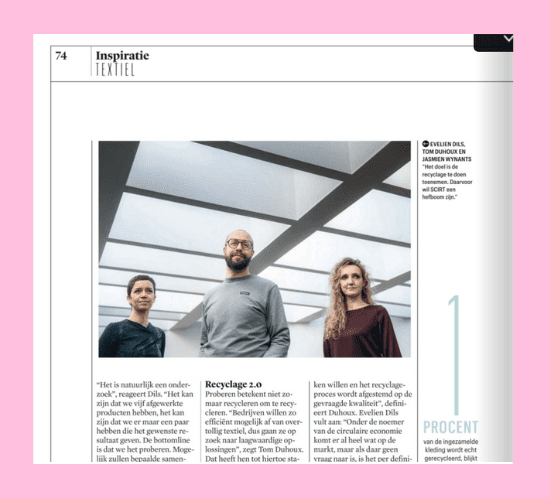
Interview with Jasmien Wynants, Tom Duhoux (VITO) and Evelien Dils (VITO) in Belgian magazine Trends, written by Sarah Vandoorne.
Five Belgian and French clothing brands are joining forces with research institutes to put high-quality textile recycling into practice. From recycled discards they want to create and sell new designs. “Only if we work together is a circular economy achievable,”.
It is a towering ambition: to recycle fibers that were until now considered unrecyclable. Yet it is the only ambition that matters, according to Evelien Dils and Tom Duhoux of the research center VITO and Jasmien Wynants, sustainability expert at Flanders DC. “By opting for less uniform clothing, we can bring about change,” says Jasmien Wynants. “Yes, we could have started a project to break down corporate clothing from one type of material, but then we would have been too unambitious.” We don’t participate in low-hanging fruit, says Evelien Dils either. “The European Commission wants to invest money to see what is possible, to push for change, see how far we can get.”
With European support, just before summer VITO, Flanders DC and other research institutions, non-profit organizations and SMEs from five countries joined forces with five Belgian and French clothing brands: Decathlon, Petit Bateau, Bel&Bo, HNST and Xandres. Their journey was christened SCIRT, which stands for System Circularity & Innovating Recycling of Textiles. Freely translated: textile-to-textile recycling.
Monomaterials
For years, industry specialists have been looking hopefully to the future of textile recycling. Although much is in motion, the basic premise remains deplorable. The process is expensive, energy- or labor-intensive, the supply is limited, and the quality is often inadequate because the process shortens the textile fiber. For the latter reason, each recycled fiber requires as much or even more new material to provide strength to the garment. With short, expensive fibers alone, you won’t get a quality product. The result? Less than 1 percent of all collected clothing is actually recycled, according to figures from the Ellen MacArthur Foundation. That’s not exactly hopeful.
When progress is made in recycling, it often involves monomaterials. These are fabrics that consist of one type of fiber, such as 100 percent cotton, a natural fiber, or 100 percent polyester ¬ a synthetic fabric. A mixture of the two – the popular polycotton – is a lot harder to recycle. Never mind taking a mixed fabric of wool, polyester and elastane in hand, as Xandres does with a pair of pants in the study.
“Xandres uses that fabric mix frequently, which means that in the long run it would not stick to just one type of product,” admits Wynants, who in addition to her part-time job at Flanders DC assists the fashion house from Destelbergen as a freelancer. “I do wonder if the research institutes expect that all five brands will succeed in their objective, because that remains to be seen,” adds the sustainability expert.
“It is, of course, a study,” Dils responds. “It may be that we have five finished products, it may be that we only have a few that give the desired result. The bottom line is that we are trying. Possibly certain compositions will not get 100 percent recycled, but even then we can measure what percentage is maximally achievable.”
Recycling 2.0
Trying doesn’t just mean recycling for recycling’s sake. “Companies want to get rid of excess textiles as efficiently as possible, so they look for low-value solutions,” says Tom Duhoux. That has provided them with stability so far. They were able to process their waste streams at a reasonably constant speed into products of reasonably homogeneous quality at a reasonably fixed price.
“Recycling for recycling’s sake has never been the solution,” says Duhoux. He calls that mindset “recycling 1.0,” an outdated process. Low-value solutions are not exactly synonymous with circular. “Hence the need for recycling 2.0, where we look at what the brands want and the recycling process is tailored to the requested quality,” defines Duhoux. Evelien Dils adds: “A lot of things are already coming onto the market under the banner of the circular economy, but if there is no demand for them, it is by definition not circular.”
Investing in recycling takes time and money. “Only by working together is a circular economy feasible,” is Jasmien Wynants convinced. These are collaborations that did not just spontaneously arise, says Tom Duhoux of VITO. “Everyone seems to be waiting for each other. Is the demand big enough? Are the brands on board with this? I understand that an SME in, say, West Flanders, thinks: how can we contribute to this? But by bringing in all the know-how and supporting machine builders, we find solutions together.”
The bulk of the investments are for the machine builders, such as Valvan Baling Systems in Menen. That previously developed Fibersort, a machine that can check what composition a pair of pants or T-shirt has. Sorting clothing by fiber is an important stage before recycling takes place, SCIRT’s pilot project shows. An earlier 2020 report by Circle Economy, which conducted research based on data from the Fibersort technology, confirms this. “Machine builders like Valvan get direct contact with potential customers through our project. That’s interesting for them,” Duhoux points out. “The goal is to increase recycling. For that, SCIRT wants to be a lever.”
‘We are still at the stage where people are filling bags full of bargains every month or even every week every time they pass a Primark’ Jasmien Wynants, Flanders DC
Combination of techniques
Sorting is followed by recycling. In its report, the Dutch Circle Economy talks about mechanical and chemical recycling. The Belgian textile institute Centexbel also lists thermomechanical and thermochemical recycling. Together with the German Ecologic Institute, the research institutes from Belgium – Centexbel and VITO, two research partners of the European study DG Grow – looked into the advantages and disadvantages of each technique. Classic mechanical recycling weakens the quality, innovative chemical recycling weakens the quantity. Especially the latter technique requires a lot of money and energy. Thermomechanical recycling requires less input, both financially and ecologically, but you can only achieve it with dark fabrics of the same composition. The technique is very sensitive to fiber contamination, so discards are not a thankful input source.
“This study is not a final report,” warns Duhoux. It is not a classic ranking, he emphasizes. But what is the solution? “All technologies in combination, tailored to the desired end product,” the researcher concludes. “In large volumes, mechanical recycling continues to have its place, despite its drawbacks. In small volumes, as with SCIRT, we are more likely to look at other, less traditional forms of recycling.”
Before scaling up, therefore, a reduction stage is needed. This is precisely why the researchers are working with a limited number of brands to conduct research. “This is not just a production issue,” Dils adds. “It is not our intention here to just produce five garments once and be done with it. In addition to the technology, we are also focusing on measures that will make the transition financially feasible.”
No greenwashing
High-quality recycling requires investment, Dils knows. Policy plays a role in this. In Belgium, it is mandatory to collect textiles separately. From 2025, it will be mandatory throughout Europe. But designers, brands and consumers also have to be on board. Dils: “In terms of consumption, little has changed in recent years, despite all the communication. That’s why we make new garments from discarded goods, so-called post-consumer textiles.”
That too is an ambitious goal, Jasmien Wynants believes. “You can also manufacture preconsumer textiles, from unsold garments and production waste. But then you miss out on an enormous amount of textile.” Designers today are admittedly focusing more and more on recyclable design, notes Flanders DC’s sustainability expert. “But those are clothes that should only be recycled in five or ten years. Until then, we’re stuck with everything that’s already made. We’re still at the stage where people fill bags full of bargains every month or even every week every time they pass a Primark.”
There are companies with a lot of manufacturing waste. They can repurpose that and then claim that they are working with recycled raw materials. But that seems to me to be quite a perverse effect’ Tom Duhoux, VITO
“We are focusing on post-consumer textiles because that amount collected will only increase,” says Tom Duhoux. “It’s good to start thinking now about how we can recycle non-reusable textiles to the highest possible quality.” A useful side effect is that consumers and brands are also sensitized in this way.
An asset of a project like SCIRT is that it tries to avoid greenwashing companies. “There are companies with a lot of production waste. They can reuse that and then claim that they are working with recycled raw materials,” Duhoux believes. “But that seems to me to be quite a perverse effect.”
1 percent of collected clothing is actually recycled, figures from the Ellen MacArthur Foundation show.

July 28, 2021
Expert opinion for article in Knack Weekend: How sustainable are second-hand clothing platforms like Vinted really?
Article including Jasmien’s expert opinion in Belgian magazine Knack Weekend, written by Merel Thiers
Online second-hand clothing platforms such as Vinted, Vestiaire Collective and Depop have seen explosive growth in the last year. The benefits are many: you make room in your overflowing closet while giving items a second life and earning money on the side. But are the platforms as sustainable as they like to make out?
Vintage has long since shed its dusty image, but the second-hand clothing market seems to be booming like never before. According to large-scale research by online secondhand store thredUP, the secondhand market will double in size by 2025, meaning that it is growing eleven times faster than the regular clothing market. Online resale platforms, where you can buy or sell second-hand clothing, are meanwhile mushrooming. The online second-hand platform Vinted is the unsurpassed front runner in our country. The Lithuanian company settled in Belgium in 2018 and can now count on more than a million Belgian users.
Larger chains are not letting the second-hand trend pass them by and are jumping on the bandwagon by setting up their own second-hand platforms. Zalando, for example, expanded its offer with a “pre-owned collection” and H&M launched its second-hand fashion platform “Sellpy” at the beginning of June. In both cases, the platforms largely take care of the sales, while the users simply send the clothes. At Zalando you can exchange your credit for a Zalando gift card or donate it to charity, while from Sellpy you get a percentage of the proceeds.
Two sides of the coin
The benefits of second-hand clothing platforms seem to be self-evident: you make room in your overflowing closet and give items a second life while still earning something yourself. In other words, you bring clothes back into circulation instead of throwing them away or letting them gather dust in your closet. On the other hand, buying a second-hand garment is also good for your wallet. According to sustainable fashion platform COSH, in addition to saving money, you also save an average of 1 kilogram of waste, 3040 liters of water and 22 kilograms of CO2. The second-hand platforms are happy to play their part in the evolution towards a more sustainable, circular clothing industry.
Yet critics question this sustainable role. Business of Fashion writes that resale platforms may just be fueling “binge shopping,” by providing a market for quickly discarded items. Melissa Watt – ethical fashion journalist and author of “Not What It Seams,” a newsletter on fashion and sustainability – also believes that resale platforms mimic the fast fashion cycle. After all, the model is equally dependent on a constant influx of new items, most of which are barely worn. This is also evident on Vinted, where most items are sold under the label “unused without a price tag” or “little used. According to Watt, users wear a garment once or twice and resell it, after which other members buy the trendy pieces for a fraction of the original price. ‘This way it is easy to get caught up in an endless treadmill of trends. In other words, online reselling can unintentionally feed our disposable relationship with clothing,’ she writes.
Hilde van Duijn, an expert in the field of sustainable textiles, fears that the second-hand platforms will be used by chains as an excuse to ‘consume even more cheap clothes with a clear conscience’, she told de Volkskrant. Fast fashion chains like H&M and Zalando seem to offer their customers a ‘guilt free’ alternative: a golden mean between fast fashion and real awareness, which still binds the consumer to them.
According to Jasmien Wynants, sustainable fashion expert at Flanders DC, the issue is twofold: ‘If you can give something a second or third life – whether through second-hand sales, swapping, swishing or swapping – then you extend the life of that garment, of the energy and of the raw materials that were needed to produce it. So you are always reducing your impact on the environment when you resell a garment instead of throwing it away. But if it is an excuse to just buy something, wear it once, and resell it, then you can question its sustainability as a whole. However, it is not that simple to find out those motivations’.
Consumer also responsible
Marie-Julie De Bruyne is a PhD researcher at Ghent University and studies customer engagement in the circular economy. She agrees that the question requires even more research, but emphasizes the role of the consumer, in addition to that of the companies themselves: ‘We need much more than just the value chain to be as sustainable as possible. In the case of resale platforms, where users are not only consumers but also sellers, the user plays a crucial role to effectively achieve the sustainability objective’.
De Bruyne states that according to research, the economic benefits in clothing alternatives are still the main motivator for most consumers. ‘If they then buy second-hand at a slightly lower price, consumers naturally have more money available to possibly buy more. Then you see that the intention of giving a second life to one garment, might be giving life to several new garments, which negates the positive effect. Also, if you buy a lot of second-hand clothes but quickly throw them away and don’t bring them back into the circle, there is a limit to sustainability’.
According to research by Vestiaire Collective, second-hand platform for luxury goods, buying new items was found to be the main driver for thirty percent of sellers. Similarly, The RealReal, also a luxury second-hand platform, indicates that the majority of their sellers use their commission to store in the regular clothing market. With models like Zalando’s, where you get a Zalando gift card in exchange for your discarded garments, one can wonder to what extent that will lead to the purchase of a new item on the webshop, rather than a second-hand one. Jacintha De Graaf, head of Zalando Benelux, says of their pre-loved collection, “We know that our customers like to make sustainable choices and exchange items they no longer wear to make way for something new.
Alternatives
So what should we look for in resale platforms? After all, according to a recent Finnish study, reselling clothes is still the most sustainable option, compared to other alternative options like recycling or renting clothes. It seems that, as consumers, we should be especially aware of our own motives and where we (re)invest our money. ‘Of course it is still best to buy less but more qualitative and take care of your clothes,’ says Jasmien Wynants. After that it is best to give your clothes a second life in your own environment, through acquaintances or Swishing exchange events for example. That way you keep the chain short and you don’t need a middle man or extra transport.
Niki de Schryver, founder of sustainable fashion platform COSH! agrees: ‘Vinted is actually a spin-off from a transport company. That transport of course has CO2 emissions, and a big disadvantage is that before the sale you don’t know how far the garment will eventually go’. COSH! developed a step-by-step plan that helps you make choices when donating or selling clothing. Via their overview of recognized clothing and textile collection points, you know where your donated clothes will end up or at which local second-hand sales points you can resell your clothes.
Concrete tips for sustainable second-hand shopping:
Go through your closet again and ask yourself how you can wear or combine certain items in a new way. Can you still repair, adjust or upcycle the item? If you really want to get rid of it, first ask yourself if someone in your environment would like to take it over.
Do not buy an item just because it is second hand or cheap, but think carefully about what you buy. Most platforms allow you to save items, giving you another night to think about them.
Pay attention to the location of the seller and buy as locally as possible. You can specifically track sellers in your area and even meet in person to eliminate transportation.
Ask for measurements of the garment to avoid unnecessary returns. One brand’s M is not another brand’s M. As a seller, you can take on-the-fly photos and list your measurements so buyers can better judge how a garment will look on them.
Read a seller’s reviews to avoid scams and other woes. Beware, for example, of drop-shippers: sellers who resell new products, often from Asian webshops such as Shein and AlieExpress. The products are often fake and anything but durable.
On many platforms you can already enter filters such as sizes and brands for the items that appear in your overview. If you are looking for a specific item, you can enter search filters. The result: less aimless scrolling and a lower risk of impulse purchases.
At Vinted you can indicate Homerr as a shipping option. Homerr uses collection points and existing routes of logistics service providers. It sometimes takes a little longer for your package to arrive, but it is much more sustainable.
Loading new posts...
No more posts