Column by Ann for De Tijd: Will conversing with AI friends become the norm?

A monthly view on technology, shared by Ann Claes for Belgian newspaper De Tijd. 

Avatars are more than toys for children. They are increasingly being developed into powerful digital tools.

November 2, 2023, De Tijd

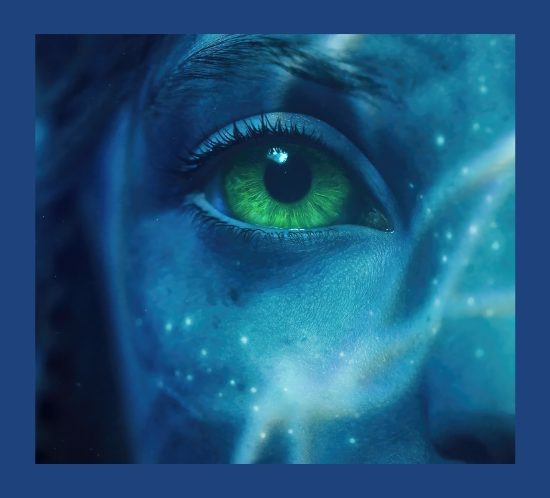
What first comes to mind when you hear the word “avatar”? The blue creatures from James Cameron’s science fiction films? Or maybe you think of Aang, the bald character from the Nickelodeon series “Avatar. Or do you think of avatar lookalikes on Instagram for your stories? Or rather game characters?

As recently as 38 years ago, ‘avatar’ had only a spiritual meaning. The Sanskrit word “avatar” literally means “the descending one,” referring to incarnations of divine beings in human or animal form who bring peace and balance. That changed in 1985 with the computer game “Ultima IV: Quest of the Avatar” or with Neal Stephenson’s cyberpunk novel “Snow Crash. The creations in the game and the novel already exude a little less calm and balance.

This year, 16,800 research articles were published already on avatars. These studies range from the best technological evolutions to the impact and psychology behind them. Technological evolution is moving fast, our society and regulations are still lagging behind.

A new era where adopting multiple identities and conversing with AI friends may become the norm. 

Avatars are evolving into powerful digital tools, customizable and versatile, present in online worlds and marketing strategies. Some of the best-known avatars are virtual influencers such as Lil Miquela and Imma, the product of marketing teams. Consider also rapper Travis Scott, whose virtual concert in the online game “Fortnite” reached more than 27 million visitors and generated millions in digital merchandise.

A shift is underway from role-playing games coordinated by filmmakers and game developers to applications in the metaverse where users take much more initiative. Users are creating impact themselves, and that can have both positive and negative consequences. We are at the dawn of a new era where adopting multiple identities and conversing with AI friends may become the norm. “Creating an avatar should be as important a step as the birth of a child and should not be reduced to clicking a few buttons,” writes researcher Heera Shin. Awareness already seems urgent to me.

Artificial Intelligence and the development of avatars

At the same time, there are everyday applications that give me aha experiences. Consider the use of avatars to optimize e-commerce, such as the start-up Lalaland. Which allows clothing models to be created with AI, acting very inclusively through numerous body types. Better visualization can lead to better choices, more sales and fewer returns.

Artificial intelligence is accelerating the development of avatars today. The movie “Her,” which received an Oscar in 2013 with a story about a man who develops feelings for his virtual assistant with a female voice, seemed to show a distant future a decade ago. ‘Be Right Back,’ the best episode of the ‘Black Mirror’ series, depicts the next variation of an avatar: a deceased person brought back to life virtually. The “digital descendant” is ready for a new chapter with his digital identity. With this, I like to tip off possible new references for the word “avatar,” beyond blue mythical creatures.
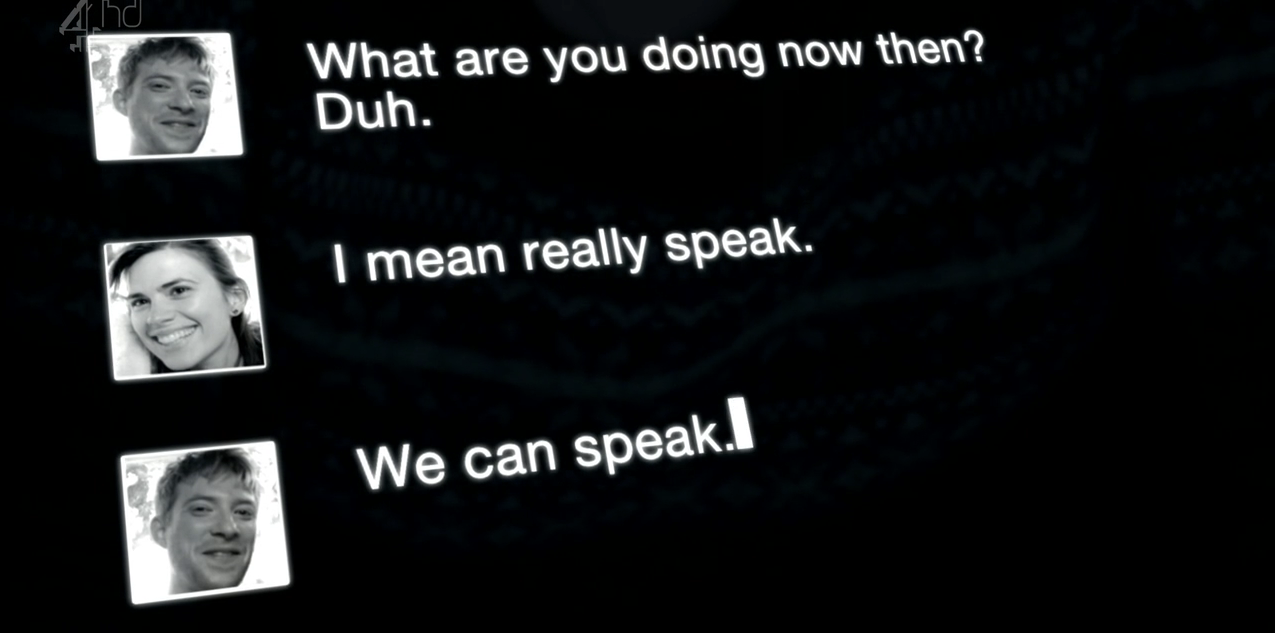
'Be Right Back,' episode of 'Black Mirror'

Article by Jasmien for Fashion United: Why everyone is talking about circular economy as the solution?

On ‘Sustainability Clarified’ – a series of Jasmien Wynants for Fashion United.

In this series, we take you into the wonderful world of environmental science. Each article clarifies a key topic related to ‘sustainability’. We zoom out to the bigger picture and then look in more detail at how these complex concepts are linked to the fashion industry.

This time, we talk about… the circular economy.

April 14, 2023, Fashion United

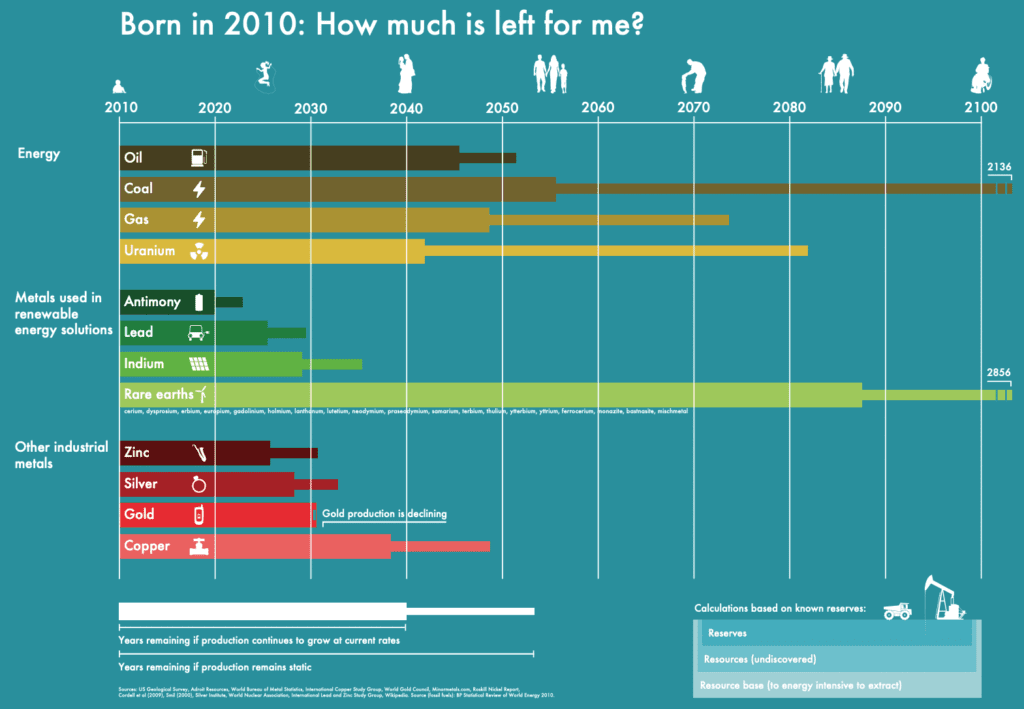
A system under pressure: are there limits to growth?

We don’t really dwell on it, but we live within an economic system every day. A system that changed over the years. Our thinking and actions, here in industrialised countries, are founded on an idea of ‘unlimited economic growth’. Since the end of World War II, consumption has been increasing. We strive for annual economic growth in the form of ever-increasing wealth. But is such perpetual growth realistic?

In nature, nothing grows forever. The means and resources needed to do so are simply not endless. The smallest bacteria to the largest trees have a certain maximum size and at some point reach a ceiling in their growth. That we often assume infinite growth in our economy, with businesses and economies striving for continuous increases in profits and productivity, is contrary to the limitations of our planet. We already see many consequences linked to this today: resource depletion and environmental damage.


Image by Circular Flanders: the depletion of resources

From linear to circular

So a sustainable economy should strive to balance economic growth with preserving the natural systems and resources needed for our prosperity. Hello, circular economy!

We often think of ‘circular economy’ as recycling, but it is much more than that.

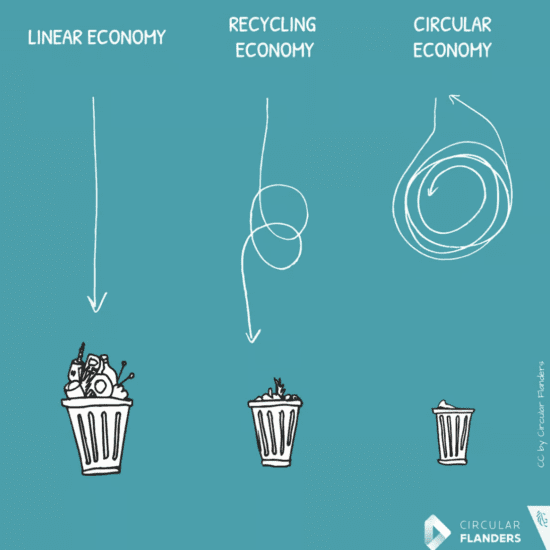
The simplest way to explain circular economy is to compare it to the system we know today: the linear economy. That system is based on the ‘take – make – waste’ principle. We take new raw materials (like cotton), we use them to make a garment (like a T-shirt), we sell it to the consumer, who wears it and throws it away again.

The circular economy goes against this and focuses on longevity of products in the first place. The central question here is: how can we use as few new raw materials as possible, use them as efficiently as possible and keep them in the loop for as long as possible? So how do we ensure that we don’t actually create any waste at all?

The difference between a linear economy and a circular economy. Illustration via Circular Flanders.

Goodbye ‘planned obsolescence’, welcome ‘right to repair’

Just a step back in history. The concept of ‘planned obsolescence’ emerged in the 1920s. Manufacturers were experimenting with ways to limit the lifespan of products to stimulate demand for new products.

One of the first examples was a cartel of lamp manufacturers formed in 1924 to agree on the production and sale of light bulbs with a limited lifespan. Later, this strategy was also applied to electronics, household appliances, cars, smartphones and also clothing.


Although this concept has been around for many decades, in recent years there has been an increasing focus on its negative impact on the environment and society. There is therefore a growing demand for sustainable and circular products, which are designed to last and are easy to repair and recycle.

The call is also growing stronger from Europe. There, we are looking at a ‘right to repair’ – the right we have as consumers to buy quality items that we can repair. Moreover, the Union’s strategy for sustainable and circular textiles has an important goal in favour of the circular economy: ‘make fast fashion out of fashion’. It even launched an entire RESet the Trend campaign around that.

So what about a circular fashion system?

As you can guess, it’s not easy. To change an entire system requires a transition from one system to another. It is complex but undoubtedly requires efforts from various actors.

Fashion companies must dare to question the current business model. This can be done, for instance, by setting up rental or partial systems or designing quality pieces across seasons (slow fashion). It also looks at closing cycles: can clothes be collected and reused? How can clothes be made to last and be easily recycled in the end? And that without harmful effects on people and the environment?

Consumers also have a role to play because while something may be made to last, shoppers should of course take care of it and not get tired of it too quickly. Between 2000 and 2014, global clothing production doubled (MckKinsey). We are buying more clothes than ever and also throwing them away at an ever-increasing rate. This problem of overproduction and overconsumption is not sustainable. Therefore, it is important to think carefully with every purchase whether you need it and will wear it long enough.

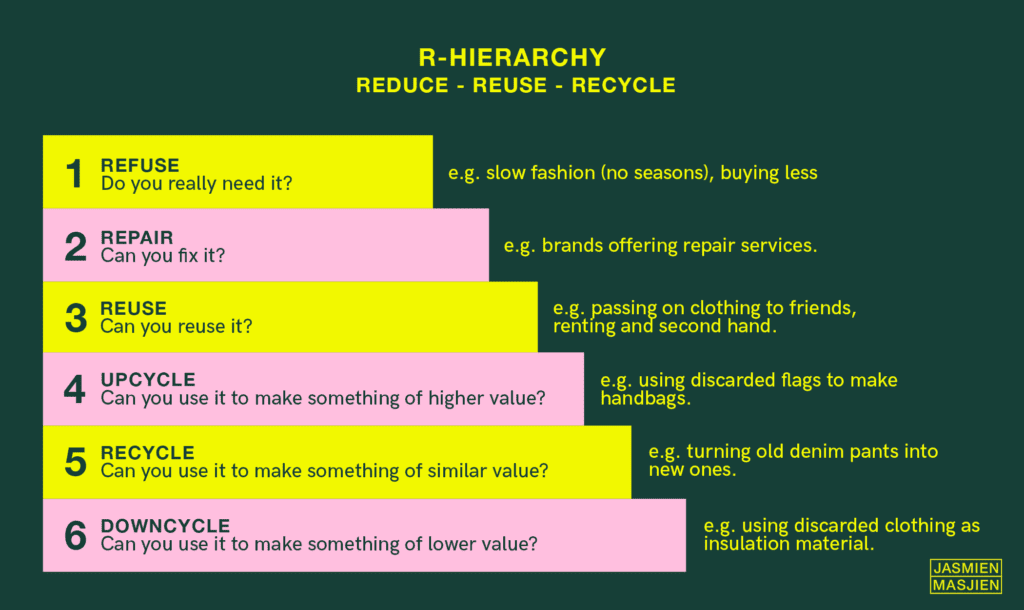
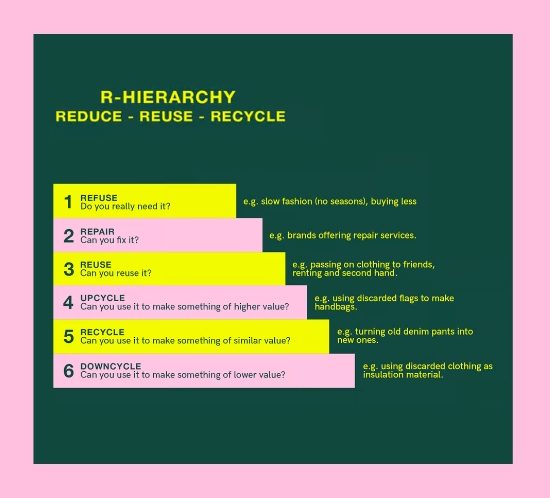
One of the best reminders both for businesses and consumers is the ‘R hierarchy’ that can guide you in making decisions.

The extended version of the 'R hierarchy' applied to clothing. So the basics: 'reduce - reuse - recycle' can also be interpreted a bit more broadly. Image by MASJIEN.

And then, of course, the key question arises: will all the world’s problems then be solved?

A transition of an entire system does not happen overnight. We sense a system that is faltering and see increasing pressure also from Europe and upcoming legislation gives hope.

However, the fashion industry plays in a global and complex chain with all its challenges. We export and dump a mountain of textiles in Africa and Asia every year. According to EEA. the amount of used textiles we export from the EU tripled in the past 20 years.

In addition, we have also seen great economic success in recent decades with large (ultra) fast fashion players conquering the internet with clothes sold at dumping prices, at unseen speeds and in huge quantities. The most vulnerable in the chain: garment workers in the Far East and low-wage countries still pay the price here.

A circular system is complex but conceivable. It can be part of the solution, as long as we do not lose sight of the international character, the social aspect and the focus on ‘degrowth’ (aiming for a stable level of production and consumption in balance with the planet’s limits).

We asked the scientist… Veerle Vermeyen, PHD candidate circular economy for clothing at KU leuven

“In the previous articles in this series, it has already been mentioned several times that bringing less new clothing to market is one of the most impactful actions to achieve a sustainable fashion system. Doing more with less is central to the circular economy. This can be done by using clothing that is already in circulation as intensively as possible. After all, we then avoid spending unnecessary resources on the production of new clothing and the processing of discarded clothing. So don’t be too easily seduced by messages from companies encouraging more consumption under the slogan of ‘sustainable production’.”

“The benefit of more intensive use may become clearer by thinking about the ‘impact per use’: the more often a garment is worn, the smaller the relative impact of production, transport and waste disposal become in the total life cycle of the garment. For example, the total impact of production and waste disposal of 15 T-shirts worn twice each is much greater than the impact of one T-shirt worn 30 times. More intensive use can be achieved on the one hand by a shift towards ‘slow fashion’, where consumers consciously choose quality and timeless clothing with the intention of wearing it for a long time. On the other hand, there is still room for the necessary variation in outfits through greater use of rental clothing or second-hand channels, where different users together ensure that a garment is actively worn.”

“However, clothing will always age through use and thus be discarded, so new clothing will also always be needed. Here, it is important to think about the use and discard phase already during the design phase, as this will greatly determine the extent to which repair and recycling are possible. For instance, garment-to-garment recycling (a cycle where the materials in discarded garments serve as input for new garments) is currently practically impossible due to the complex mix of materials and chemicals used. Europe wants to address this in the coming years by using new regulations to break down the current barriers to garment-to-garment recycling and thus start closing the cycle.”

Article by Jasmien for Fashion United: What do biodiversity and ecosystems have to do with fashion?

On ‘Sustainability Clarified’ – a series of Jasmien Wynants for Fashion United.

In this series, we take you into the wonderful world of environmental science. Each article clarifies a key topic related to ‘sustainability’. We zoom out to the bigger picture and then look in more detail at how these complex concepts are linked to the fashion industry.

This time, we talk about… biodiversity and ecosystems.

November 15, 2022, Fashion United

Ecosystems and ecosystem management

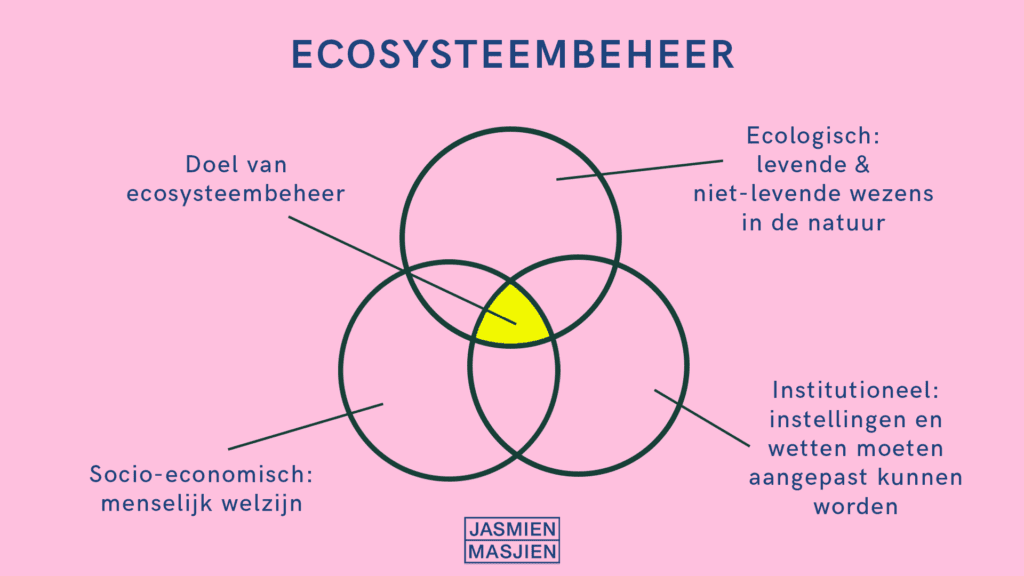
An ecosystem is a system that comprises all organisms within a given area, their interaction with each other and their interaction with the environment. Plants, animals and micro-organisms influence each other and together form a living community. It involves both ‘nature’ (forests, rivers, grasslands) and ‘culture’ (fields, plantations).

The latter systems are ‘managed’ by humans to optimise yields (food, fodder, timber). However, nature can also be managed, often with the overall aim of preserving (or restoring) biodiversity.

Is it about ‘nature management’ then?

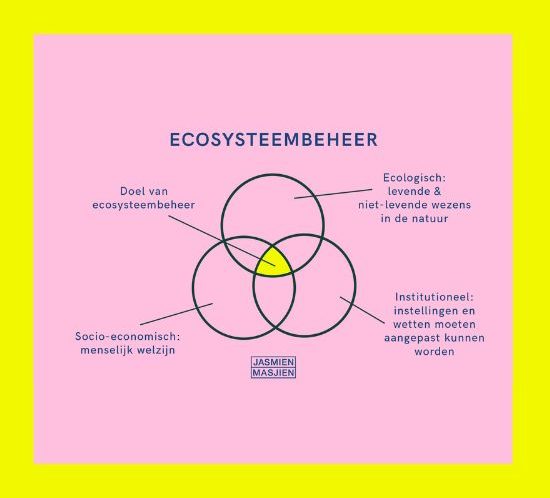
There is an important difference between ‘nature management’ and ‘ecosystem management’. The latter explicitly looks at human benefit. After all, ecosystems perform a number of functions that are valuable, such as pollinating crops, absorbing CO2 from the atmosphere, etc. These are called ecosystem services. 

Ecosystem management puts our human needs at the centre of biodiversity management and looks for 'win-win' solution

Globally, we are seeing a decline in these ‘ecosystem services’. This has not only ecological consequences, but also an economic impact. To give an example: many tropical coastal areas (think of exotic destinations like Fiji, Aruba or Indonesia) are home to mangroves. These are coastal forests whose large, thick roots can often be seen protruding above the water. Mangroves are very important for biodiversity and carbon sequestration, but are highly threatened worldwide. If mangroves disappear around coastal areas, not only is it detrimental to biodiversity, but also the protection of that coast (and the people who live there) is threatened, as well as the income from tourism linked to these sights. There is a correlation between ecology, economy and human carrying capacity that we often give too little thought to. 

Biodiversity loss 

Biodiversity is the variety of life, in all forms on Earth. It is not just about the number of species, but also their genetic variation and the interactions these species have within complex ecosystems.

Earth’s biodiversity is declining. This is partly due to an ever-increasing ‘extinction rate’. Normally about 1 to 5 species die out per year, but scientists estimate that this rate is already 100 to 10,000 times higher. Beyond that, ‘biodiversity loss’ is more than mere species extinction, but also involves the decline of populations. This is largely due to human development. The huge growth in population has far-reaching and complex consequences (as you can also read in the piece on global warming), including impacts on freshwater, pressure on agriculture, flood risk, more diseases, more deaths from heat and climate refugees.

And why should we care? 

The decline in biodiversity has a bigger impact than we sometimes think. A species lives in an ecosystem and affects it. Protecting tigers goes – to put it bluntly – far beyond ‘saving those beautiful critters’. Predators keep ‘prey animal’ populations down. If the predators disappear, herbivores are given free rein, and that too can have major consequences for an entire ecosystem.

Another example is deforestation. This not only leads to the disappearance of the panda and orang-utan, but has major consequences for nature and humans. The more trees we cut down, the more CO2 is released (especially from the forest floor) and the faster the earth warms up. The more natural areas are affected, the greater the risk of (new) viruses jumping from wild animals to humans. By reducing forests, humans and animals live closer together. In addition, we also come into contact with potential pathogens during logging, which would normally remain in a contained ecosystem.

The European Commission indicates that more than a football field of forest disappeared every second in 2017. Deforestation is most concentrated in tropical rainforests. These disappear at a rate of 13 million hectares a year. Or also: about the size of Greece.

Biodiversity loss thus plays a crucial role in all kinds of processes, including climate change, and is linked to many changes. Humans are the main cause of the rapid decline in biodiversity, but can therefore take action to change this.

Man inside or above an ecosystem?

When we talk about climate change, we are quick to say ‘we are doing it for the planet and nature’ or ‘we want to save the earth’. Understandable, as scientists estimate that 99.9 per cent of all species are already extinct (on a timescale of 3.5 billion years). However, what we often forget is that we humans are also just one species. Earth has existed for about 4.5 billion years. Humanity about 200,000.

Man’s impact on the environment and nature has increased exponentially over the past few decades. So curbing its impact, we are certainly not only doing it ‘for the planet’, but also (and maybe even mainly) for ourselves and those who come after us.

And can we talk about fashion now?

Unfortunately, the fashion industry also contributes to biodiversity loss.

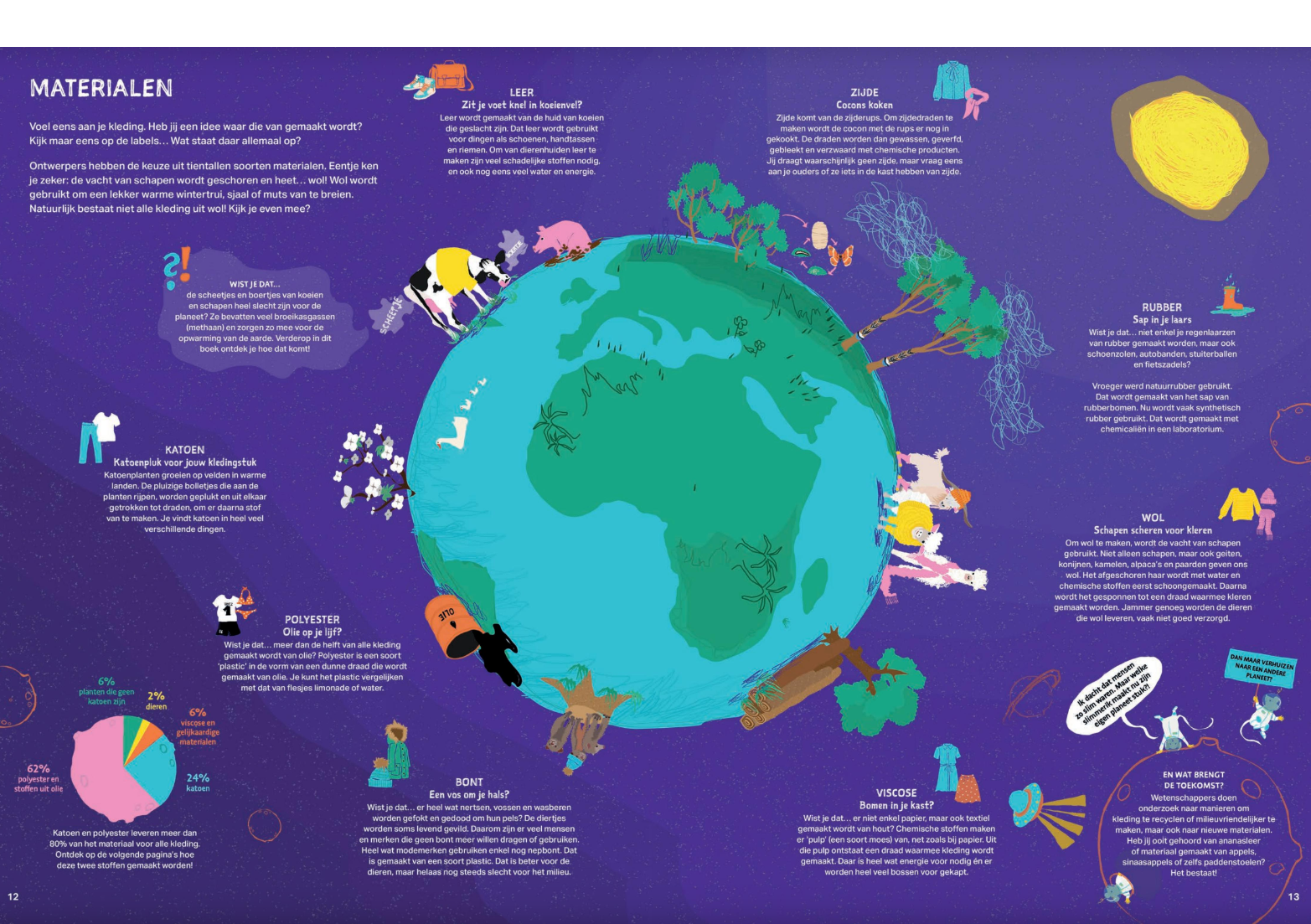
Cotton is used in about 25 per cent of our clothes. We consume clothes like hotcakes. To maintain this rate, a huge area of land is needed to grow cotton. On top of that, cotton grows best in warm countries like China, India, the US and Brazil. Since cotton is a very thirsty crop, it often strains rivers and groundwater in those regions, leading to soil depletion and water shortages. One of the most famous examples is the parched Aral Sea on the border of Uzbekistan and Kazakhstan. The lake used to be one and a half times the size of the Netherlands. Today, all that remains is one big sandpit.

And to add to that, growing cotton requires a lot of chemicals that not only damage the soil, but also cause a lot of insects, birds, trees – entire ecosystems – to disappear or wither away.

There is one material that is used even more than cotton: polyester (62 per cent of our clothes contain polyester or some other similar oil-based material). When polyester clothes are washed, tiny micro-plastics are released every time. Those tiny particles flow with the water from our washing machine, through the sewage system and along rivers and lakes to the sea. Not surprisingly, this has a major effect on marine ecosystems.

Also during the production process (mostly during dyeing, bleaching, coating, post-treatment), very harmful substances often end up in the water streams around the production facilities. In the factories where our clothes are produced, wastewater is far from always properly treated before it is discharged. This will be discussed in more detail during the next contribution.

Perhaps a positive note?

The fashion industry is looking for ways to do better. Some of the initiatives that can have a positive impact on biodiversity include:

  • Using regenerative farming techniques for natural materials.
  • Sustainable forest management for fabrics such as viscose, bamboo and other fibres that use trees, grasses or plants (you may also recognise the most well-known label from paper bags: FSC)
  • The search for systems to filter out microplastics when washing our clothes
  • Initiatives that encourage us to buy less and wear our clothes longer so that there is less need for new raw materials.


.

We asked the scientist… Hans De Boeck, Global Change Ecologist at the University of Antwerp 

“Biodiversity loss is closely linked to other ‘global changes’. Each of these global changes has negative impacts on biodiversity, either directly (think deforestation and overexploitation) or indirectly (through climate change, pollution, the encroachment of invasive species, etc.). Thus, when we address these global changes, we also ensure that biodiversity loss is reduced. So many of the measures the fashion industry can take to reduce its climate footprint, for instance through more sustainable use of materials, are also important for reducing pressure on diversity. In addition, work can be done to minimise harmful techniques and processes throughout the chain, from raw material (e.g. pesticides, water use) to end product (e.g. during dyeing and bleaching, transport) and afterwards (e.g. washing, recycling).

The biggest challenge, however, is ever-increasing clothing consumption. If the benefits of better production techniques, recycling, etc. are outweighed by simply producing more and more clothing, then obviously there is no progress. The danger here too (just as was noted in the article on climate change) is ‘greenwashing’ by (parts of) the fashion industry: taking marginal green steps to ease the conscience of consumers and thus sell more and more. The most ‘green’ clothing is still the one that should not be produced.”

Future Fabrics, what?​

Column by Ann for De Tijd : Blockchain makes business models more sustainable

A myriad of individuals converge at blockchain events, an occurrence not limited to Belgium. This technology finds application across domains, fostering sustainable practices in sectors like fashion while elevating creator recognition.

March 30, 2023 – De Tijd

My recent and forthcoming weeks orbit around the world of blockchain once more. A stint in Paris marked my presence at the Paris Blockchain Week, where I addressed the audience at an event spotlighting Metaverse Fashion Week (unveil more details through #MVFW23). Presently, I hold a slot among 35 speakers at the inauguration of Blockchain4Belgium, elucidating the profound impact of blockchain on diverse business paradigms

What consistently astonishes me is the sheer scale of these events. Paris once again beckoned 10,000 enthusiasts (merely three weeks post the NFT Paris event, which drew 18,000 attendees). Belgium, too, has embraced blockchain with fervor, boasting a professional cohort of about a thousand aficionados.

Thursday heralds a physical rendezvous, with 300 attendees assembling at Blockchain4Belgium, an initiative spearheaded by Mathieu Michel, the Federal Secretary of State for Digitization. Here, insights and requirements will be exchanged, paving the way for policy recommendations. The purview encompasses regulations, along with educational and sectoral support.

Blockchain, inherently a versatile technology, encompasses multifaceted applications. Notably, non-fungible tokens (NFTs) serve as ownership certificates within the blockchain realm. Naturally, cryptocurrencies like Bitcoin and Ethereum also have their role. My primary focus, however, pivots away from cryptocurrencies. I even believe it should be nearly invisible, a facet pivotal to seamless integration of blockchain technology into widespread business models. Increasingly, platforms offer dual payment options – cryptocurrencies and traditional fiat (euros, dollars, etc.).

Phygital. Blending the Physical and Digital Realms.

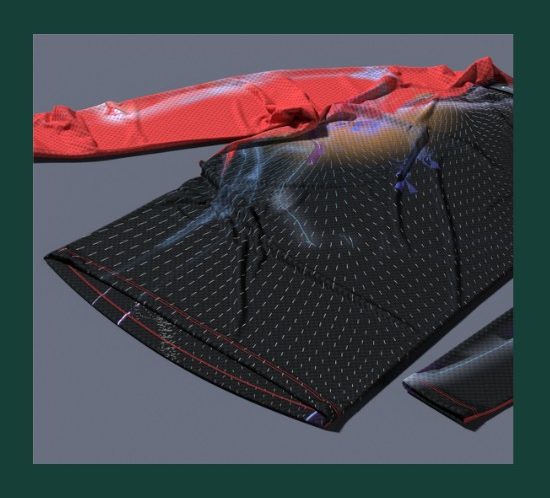
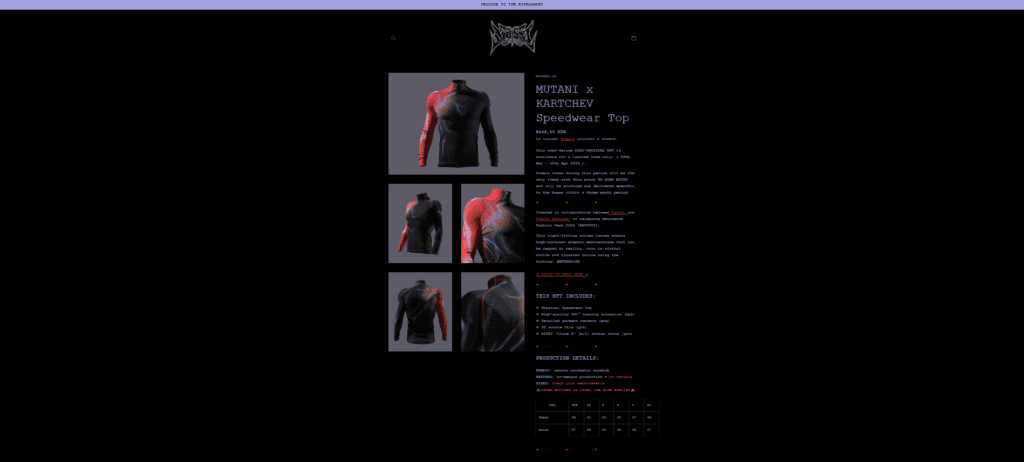
For Metaverse Fashion Week we are launching a phygital with Mutani.This entails the simultaneous purchase of physical and digital assets, intertwined through a chip. This unique offering graces an ordinary e-commerce venue hosted on the Shopify platform. Thanks to our partnership with Belgian Venly, NFTs are available in our webshop, including a design cycling jersey, attainable in both physical and digital formats.

The buyer pays in fiat and does not have to go through complicated procedures. Immediately upon purchase, the buyer receives the NFT and its digital iteration, accompanied by a blockchain-linked certificate of ownership for the physical jersey. All of this is bundled into a digital wallet, generated for the customer and delivered straight to their email inbox, streamlining the entire process.

For our designers, this marks an evolution in crowdfunding, an advanced realm where digital prototypes carry no carbon footprint, circumventing overproduction. The certificate of ownership establishes a precious rapport between the consumer and their acquisition, transforming it from a disposable item into a cherished possession. Furthermore, this certificate enables future resale, with designers garnering royalties. As the second-hand market gains traction, smart contracts ensure the original creator’s enduring involvement.

My curiosity is piqued regarding the cycling jersey buyers and their perception of the digital variant and accompanying NFT. As with any technological stride, adaptation to customer and corporate needs remains paramount. Government’s role, too, is pivotal, albeit a work in progress.

Article by Jasmien for Fashion United: How global warming and the fashion industry are inextricably linked

ON ‘Sustainability Clarified’ – a series of Jasmien Wynants for Fashion United.

In this series, we take you into the wonderful world of environmental science. Each article clarifies a key topic related to ‘sustainability’. We zoom out to the bigger picture and then look in more detail at how these complex concepts are linked to the fashion industry.

This time, we talk about… global warming.

October 11, 2022, Fashion United

Global warming, what is it?

It is important to distinguish between ‘global change’ and ‘climate change’. The latter is just one example of the many changes on our planet that we are aware of and falls in line with examples like ‘biodiversity loss’ and ‘nitrogen enrichment’.

Global change is nothing new. Consider the ‘continent drift’: the continents as we know them today did not exist in that form millions of years ago but stuck together. Those movements admittedly took millions of years to take place. Such changes had a lot of impact but were slow, whereas today’s climate change is happening much faster. Two major tipping points caused that acceleration, which is why we can now see the world changing before our eyes.

The first tipping point is found with the industrial revolution. In the eighteenth century, this made us much less dependent on human and animal power for heavy labour because machines could take over. In addition, the production of artificial fertilisers in the early twentieth century led to a huge increase in agricultural productivity.

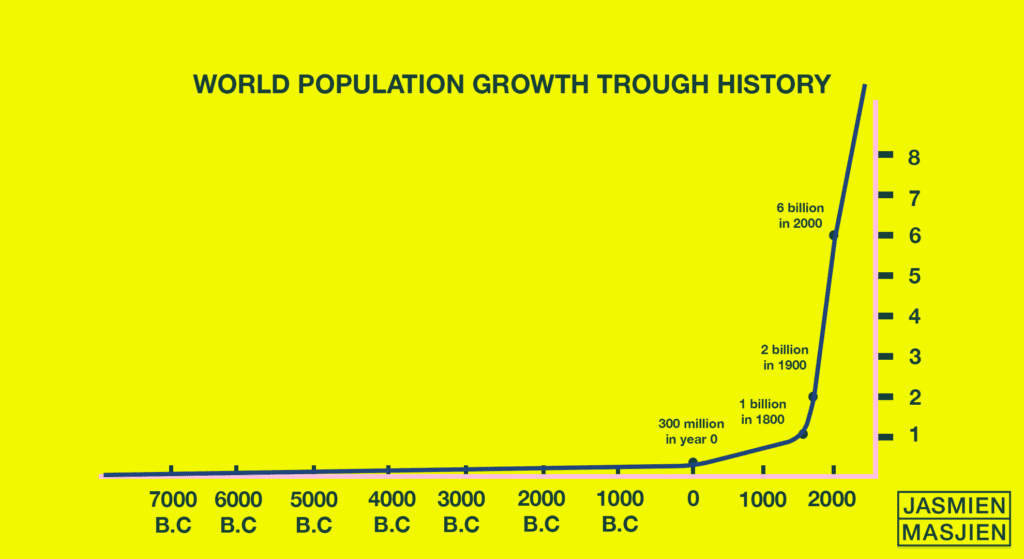
Together with a general advance in medical science, these “revolutions” allowed us to feed more mouths, and live better and longer. Population growth exploded, and that had consequences… Because more people means more CO2.

Global warming, what is it?

Humans live. We move around, heat our homes, switch on the lights, and we use fossil fuels to do so (oil, gas, coal, lignite). The enormous increase in population and the use of more and more machines (industrial revolution) have caused us to burn more and more fossil fuels. And it is precisely these fuels that cause rising CO2 concentrations … which in turn lead to global warming. The food industry and the fact that we have started eating more and more meat over the past 100 years are also major contributors to greenhouse gas emissions. Cutting down forests to make way for (food for) livestock releases a lot of CO2. (Plants and trees extracted and stored CO2 from the atmosphere for tens of millions of years. We now burn that CO2 and it all returns to the atmosphere in a very short time).

World Population Growth

The greenhouse effect: it’s not just CO2 that warms the earth

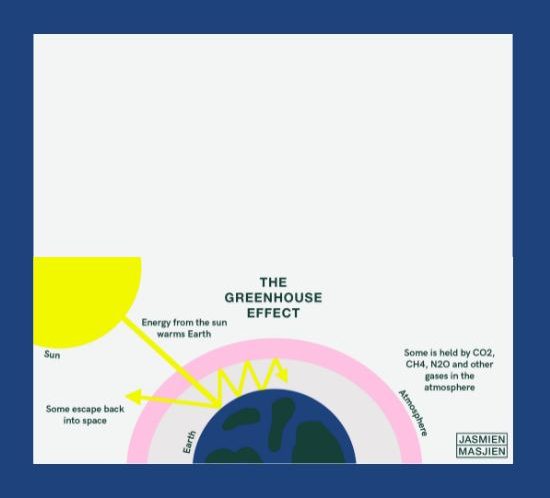
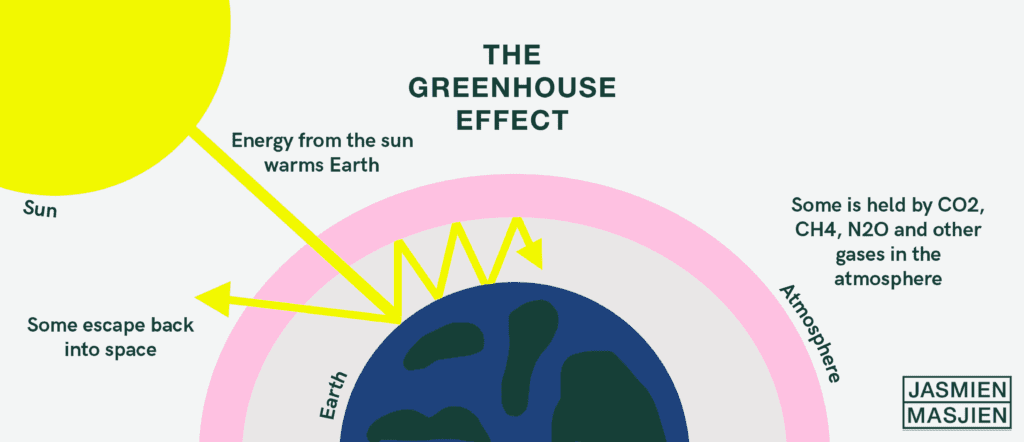
Just over half of global warming is caused by the increase in CO2 thanks to the famous ‘greenhouse effect’. Besides CO2, methane and nitrous oxide are also important greenhouse gases because they cause more warming per molecule. Methane comes mainly from agriculture (cattle are ruminants and emit methane in the digestion process, for instance). Nitrous oxide also occurs in agriculture but also in industry and traffic.

Greenhouse gases help the earth keep up with heat. And that is just as well. We know that without greenhouse gases, the Earth’s average temperature would be more than 30 degrees lower than now. And so our planet would be largely unlivable. But… the concentration of greenhouse gases has skyrocketed in recent years, trapping much more heat.

The Greenhouse Effect

This ‘greenhouse effect’ has more consequences than just global warming. The expected increase in extreme weather (drought, heat waves, downpours,…) is just one of the consequences. Entire ecosystems are put under pressure by climate change, there are shifts in seasons, impacts on fresh water, a strain on agriculture, rising sea levels, melting glaciers, flood hazards for low-lying areas, increased mortality from extreme heat, economic consequences, dehydration, wars, climate refugees,…

And the biggest danger? That’s what climate scientists call the ‘snowball effects’. There are many possible ‘positive feedbacks’ that we don’t all know about yet, but which it is estimated that ‘once set in motion, they are still hard to stop’. Like a ball that pushes you down a small slope and into a deep valley. To get that ball back down the slope, you have to push much harder than to get it moving initially.

The danger of the global temperature rise exceeding 1.5-2 °C is there… and climate scientists fear that we will then end up in a ‘hothouse earth’ that will be difficult to get out of.

So that 1.5°C, what about it?

So in 2015, world leaders at the Paris Climate Agreement agreed that the warming of our planet should be limited to 2 degrees (and preferably 1.5 °C) compared to pre-industrial levels. The 1.5 limit is an important one because it is the point at which climate effects will thus become increasingly harmful to humans and the planet. And some of those effects are also irreversible.

Unfortunately, the likelihood of faster global warming is increasing all the time. The World Meteorological Organisation (WMO) announced in May 2022 that there is a 48% chance that we will be at that 1.5 degree warming even before 2027. (The years before, that probability was assumed to be rather small).

And can we talk about fashion now?

There is a strong call for industry, governments, consumers, all of us to make a maximum effort to combat global warming. So the fashion industry also has a role to play in this.

According to the Ellen McArthur Foundation (A New Textiles Economy: Redesigning Fashion’s future), total annual greenhouse gas emissions from textile production are more than those of all international flights and shipping combined (1.2 billion tonnes per year).

The fashion industry emits a lot of greenhouse gases during the production phase, but it is also an international industry that sends parcels and containers all over the world to get clothes from the producing countries (often in the Far East) to shops and customers. Not to mention the amount of packages we order and return every day while shopping online.

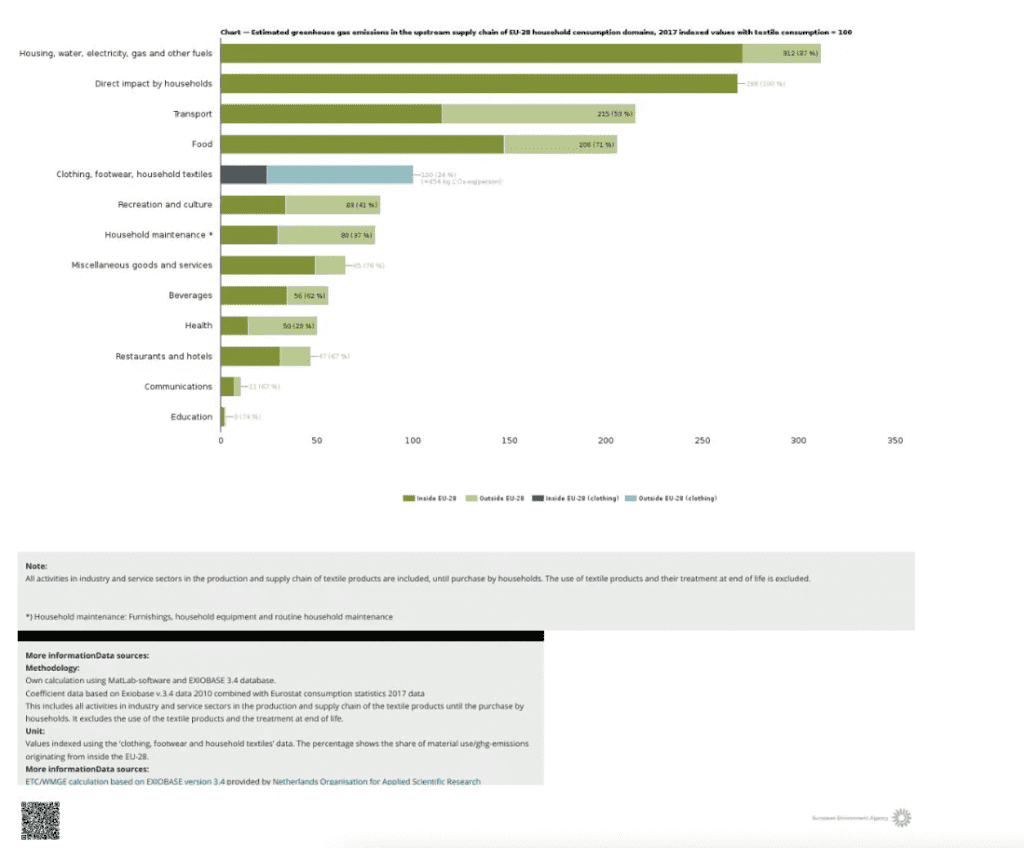
According to the European Environment Agency (EEA), textile production generates around 15-35 tonnes of CO2 equivalent per tonne of textile produced. Clothing, shoes and household textiles rank fifth in the EU in greenhouse gas emissions. This is more emissions than : recreation & culture, beverages, health, restaurants & hotels and communications, among others (Figure 3 from EEA below).

Activities in industry and service sectors in the production and supply chain of textile products included. Use of textile products and end-of-life treatment excluded. Image courtesy of EEA.

Not only does the use of fossil fuels in making and transporting our clothes lead to an increase in CO2, deforestation also contributes. Trees store carbon, but so when you burn them, that carbon is released back. When trees are cut down, the roots rot and the organic material is converted into CO2 and methane… which again leads to more greenhouse gas emissions. So every time we have to make space to grow livestock (both for food and leather) or establish cotton plantations, for example, this has an effect.

A lot of fashion companies are therefore now setting up ‘Science Based Targets’ (SBTs). This is part of an initiative by CDP, UN Global Compact, WRI and WWF whereby company targets are set to stay within the 2°C increase. Companies start by measuring their carbon footprint (Carbon Footprint) to get a better picture of where their major impacts are and how to reduce them. They then set concrete targets for their short-term and long-term emissions reduction strategy.

Finally, it is important to look not only at the industry but also at the fashion consumer. We then spontaneously think of how we can reduce our impact by washing, ironing or using the dryer less, washing at lower temperatures but also by cherishing our clothes for longer. After all, it is too bad to throw away a garment that required so many raw materials and fossil fuels after only a few uses?to the fashion consumer. We then spontaneously think of how we can reduce our impact by washing, ironing or tumble-drying less, washing at lower temperatures but also by cherishing our clothes for longer. Surely it is too bad to throw away a garment that has required so many raw materials and fossil fuels after only a few uses?

We asked the scientist… Hans De Boeck, Global Change Ecologist at the University of Antwerp 

“Keeping climate warming within limits, below +2°C and if possible below +1.5°C, is very important because scientists from all kinds of fields estimate that the negative consequences for people and nature become very large above these limits. Every sector will have to make a solid effort, including the fashion industry. This is not only necessary, it is also useful in the longer term for the sector itself, e.g. because energy costs can be reduced.”

“There is work to be done. The clothing sector is very wasteful: hardly any discarded clothing is recycled (< 1 per cent), and unsold products are still too often simply destroyed by incineration. Moreover, we buy more and more clothes, in the US, for example, 3x more than in the 1960s. Fast fashion is a minor disaster for the environment. Although it does not sound very appealing, the best ‘climate measure’ is simple enough to buy less new clothes. Other options for greening: consciously look at the fabrics used, with animal products like wool and silk grosso modo having a higher climate impact than plant-based ones like flax, hemp and cotton. Further: recycle and reuse more. Finally: putting clothes in dryers or ironing less or not at all, as both are energy-consuming activities. Clear indications on clothing about the climate and/or environmental footprint may be useful to raise awareness, although care must be taken to avoid greenwashing (selling something as environmentally friendly when it is not) encouraging consumers to buy ‘more’ anyway.”

Future Fabrics, what?​

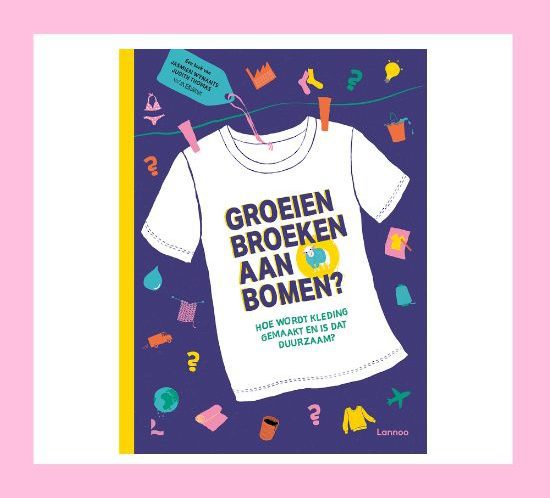
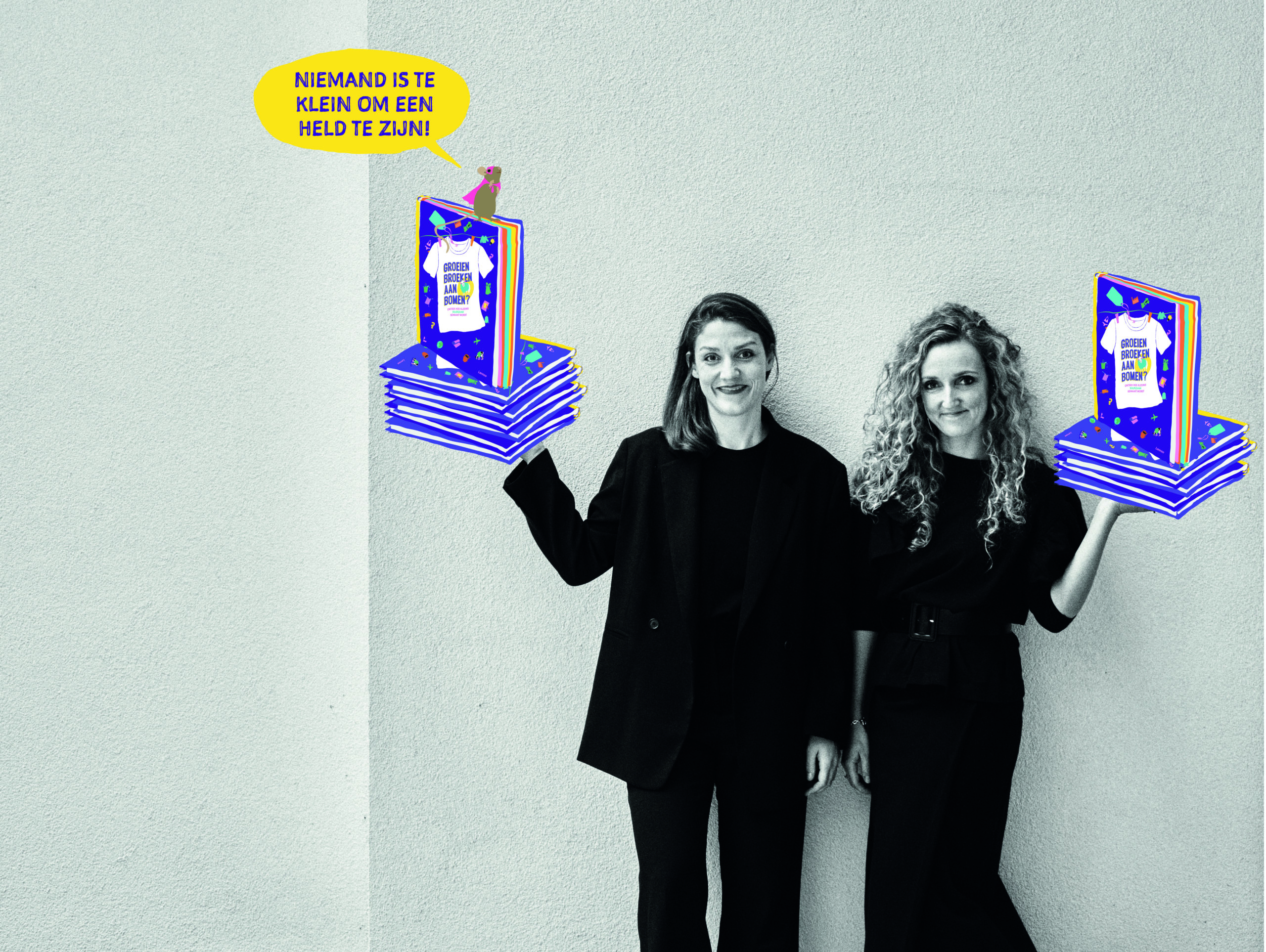
Jasmien co-author childrens’ book ‘Do pants grow on trees?’

Childrens’ book by Jasmien Wynants & Judith Thomas (Lannoo, 2023) 

How is your T-shirt made? What is the impact on the planet? And can it be better?

Did you know:

– your T-shirt has already traveled the world before it ends up in your closet?
– it takes the same amount of water to make one T-shirt as you drink from birth to age seven?
– clothing is made from trees, plants, cows, sheep and even oil?
– an entire truck of clothing is burned or dumped every second?

Learn more about it and discover how it can be improved.

The book is written for everyone interested in this topic, from 8 to 108. 

Our recommendation? Read it together with your children, we promise you’ll learn at least one new thing about the fashion industry or what you can do as a fashion lover.

Published at Uitgeverij Lannoo with support of MoMu Antwerp. 
Order via the webshop or reach out to book a reading or workshop.

Column by Ann for De Tijd : Handbag with a passport

The fashion industry grapples with numerous challenges, but technology offers a pathway to addressing these issues.

May 12, 2023, De Tijd

For many, fashion stands as a cornerstone of their identity. Ever-evolving trends serve as mirrors reflecting societal changes, nurturing the dreams of many. Within its realm thrives a community brimming with passionate individuals, wielding creativity and beauty as their tools.

Regrettably, a darker underbelly exists – rampant overconsumption, hazardous materials, and exploitative production practices. This somber reality has propelled the industry toward a sustainability crusade spanning several years. Urgent recalibration is imperative, as underscored by the words of British fashion luminary, Vivienne Westwood: “Buy less, choose well, make it last.”

Despite its seasonal innovation, the fashion domain clings to conservatism. In tandem with calls for transparency and behavioral shifts, technology emerges as a potent ally in accelerating sustainability.

Data analysis empowers smarter procurement and production decisions. Innovative tools like Shavatar, ContourLab, and Zalando’s virtual fitting room aid online shoppers in accurately assessing sizes and body types. This not only slashes return rates but also augments customer satisfaction.

Renowned sustainable fashion expert Jasmien Wynants laments in the book ‘Groeien Broeken aan Bomen?’ that every passing second globally witnesses a voluminous dump of textiles, incinerated or discarded onto wastelands. These precious resources merit reincarnation.

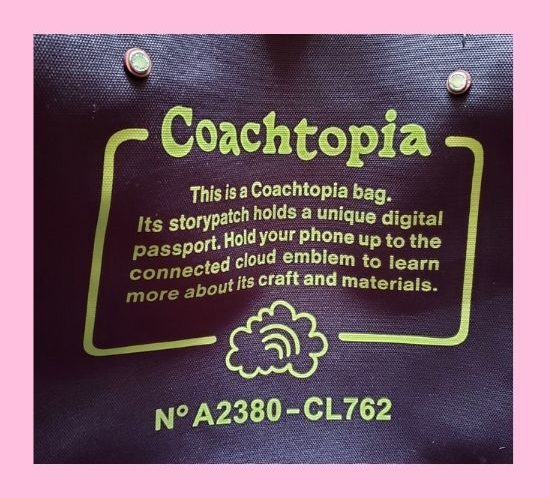
NFC chip with blockchain digital passport at Coachtopia
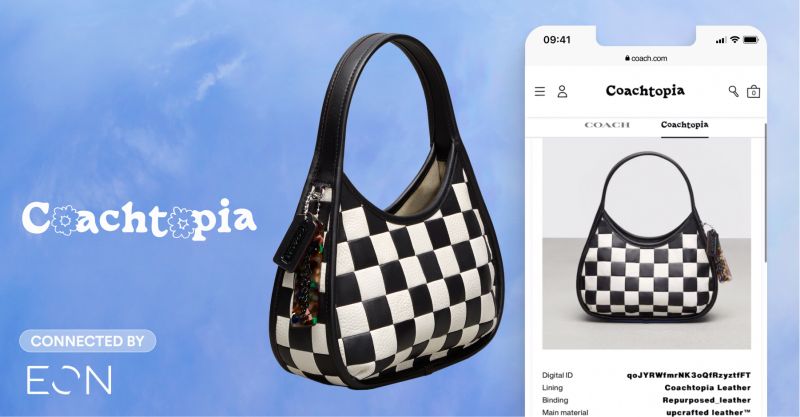
Digital product iD by EON for Coachtopia

Coachtopia, an offshoot of fashion powerhouse Coach, morphs this cycle into an engaging escapade. With a TikTok frenzy and an enthusiastic Gen Z community, discarded materials and excesses are transformed into novel products, primed for recycling.

Each item bears an NFC chip that, upon a phone’s touch, unveils a digital dossier – divulging insights into materials, design, and ecological footprint. This passport also charts the product’s journey, whether it undergoes repair, reuse, or reinvention.

The startup EON champions these digital product passports, leveraging blockchain for transparent verification and monitoring. Teaming up with esteemed French luxury brand Chloé, EON streamlines the process of sharing product information on second-hand platforms. This democratizes the process of buying and selling high-end items.

Buoyed by the new EU textile strategy, the eventual incorporation of digital product passports into legislation looms. This development holds immense promise. Let’s infuse these passports with ingenious concepts, aspirations, and narratives. Alternatively, envision embracing virtual fashion, an innovation with minimal ecological repercussions. This avenue might wield the most resounding influence. While I wholeheartedly embrace every stride toward a cleaner fashion industry through innovation, technology undoubtedly remains its linchpin, propelling it toward a pristine future.

The world of web3 in 8 keywords by Ann for Flanders DC

You’ve probably heard of web3 by now. Web3 heralds a new evolution of the internet, in which the end user plays a crucial role. What exactly does that mean and can it be useful for entrepreneurs in the creative sector? And what exactly do terms such as blockchain, wallet and metaverse mean?  An article written for the online magazine of Flanders DC

1. Web3

What exactly is web3? To understand this properly, let’s go back to the beginnings of the world wide web. Initially, the internet was intended to provide information in an easy and global way. Web pages made content available to anyone whose computer had an Internet connection. That was web1.

Over time, this static content became increasingly dynamic and interactive. Responding became possible, even sharing content was possible, photos and videos took their place on the internet and social media also saw the light of day. That is web2, the internet as we know and use it today and where major players (Google, Amazon, Meta,…) are in control and especially our data. These large companies use our data (content, reactions, play time, insights,…) to earn money, so that the user immediately becomes the product of these services.

Web3 takes a different approach and wants to return the power of data to its owner in order to create a more democratic internet. You therefore remain the owner of your information, your ‘work’,… and can decide for yourself what happens to it. And that is just now possible by means of a new technology. Instead of storing this data centrally at the major players, it ends up in a network of different computers and servers. This system is called a blockchain.

illustration © Toykyo
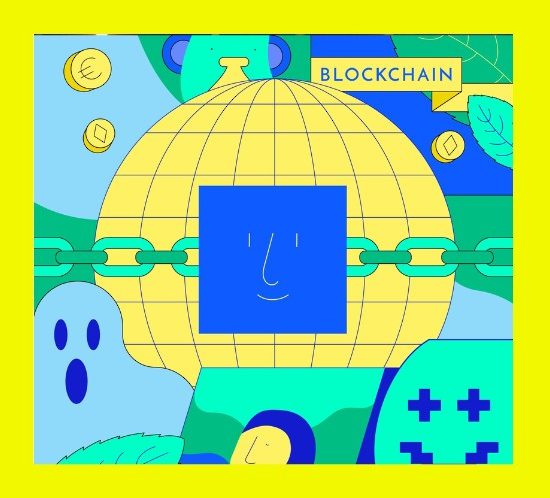
2. Blockchain
 

Simply put: each blockchain consists of several computers and servers that contain part of the data (or copies of it) as links. Together, these links form a chain of data called a blockchain. Because these different computers and servers always compare the stored data with each other, it immediately becomes impossible to modify or falsify and the dependence on one external party for data storage is therefore also superfluous. The data is encrypted, making the blockchain decentralized, traceable and secure.

There are different blockchains, each with their own uniqueness, such as Bitcoin, Ethereum, Solana, Lukso, Algorand, Tezos, Cardano, …

Be sure to check out this video in which expert Jef Cavens explains blockchain with references to the fashion world.

3. NFT
 

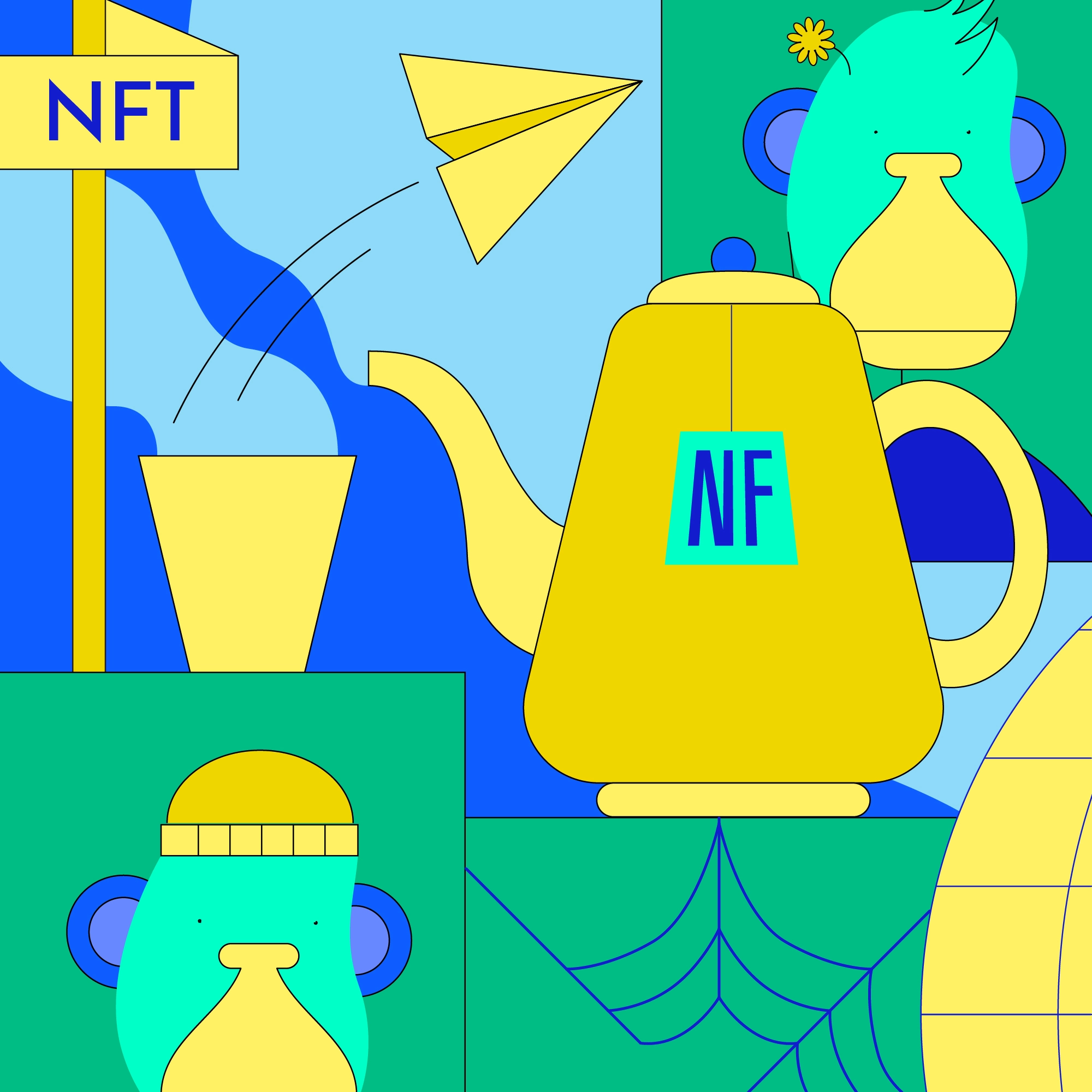
We often hear the word NFT in the news these days, but what exactly is an NFT? NFT stands for ‘non-fungible token’ (translated: non-fungible or unique token) and works on the basis of the technology that creates a digital ownership certificate with which you can prove that you are the owner of the digital content. An NFT is therefore not the item in itself. The information about this certificate, with a timestamp, is stored on a blockchain, making it unique and traceable. Storing this information on a blockchain is what we call “minting”.

Discover together with Ryan Gill from Crucible & Ann Claes in this Flanders DC webinar what exactly NFTs can mean for creative entrepreneurs.

illustration © Toykyo
4. Smart contracts

When you place an NFT on a blockchain, you also create a smart contract. This smart contract describes what the NFT entails, which rights have been sold exactly (copyrights, commercial rights,…), but also whether or not royalties flow back to the original author in case of resale. That makes it interesting to be able to follow every transaction in the future and, if it continues to increase in value over time, to even earn money from it.

5. Cryptocurrency

Cryptocurrency is a form of digital money that does not require the intervention of banks or other financial institutions to register transactions. All transactions are tracked on a blockchain. Bitcoin is by far the best known digital currency, but there are hundreds of other digital coins including Ether, Tezos, Polkadot, Dogecoin and Ripple.

6. Wallet

A wallet is literally a digital wallet where you can store your belongings. This contains the items you own on the blockchain(s). These can include NFTs and crypto coins. The wallet is anonymous and publicly accessible. Anyone can view your wallet and add something to your wallet. If someone else puts something in your wallet, it’s called an airdrop.

To move items in a wallet, you need the security codes. If you have lost these codes, you can recover your wallet by using a unique code of 12 words, also known as a ‘seed phrase’. Popular systems for a wallet are, for example, Metamask and Trust wallet, but there are also external, cold wallets such as Ngrave and Ledger. Please note, if you have lost access to your wallet, there is no one who can help you further. There is no help desk or customer service. You are therefore responsible for this yourself.

Wallets are regarded as an important part of your digital identity and, in addition to the functional aspect, also have a showroom effect. For example, Twitter, Instagram and Spotify make connections with your wallet so that you can ‘flex’ or display your valuable assets on other existing platforms.

7. Metaverse

The term metaverse is currently used in a variety of ways. The term is often used for an immersive virtual world where people — usually on the basis of an avatar — can meet each other, work together, learn, play, etc. This 3D world can be supplemented with Virtual or Augmented Reality experiences to offer a more immersive experience.

Metaverse and web3 are often linked as the metaverse can also be seen as a third and immersive version of the internet, as a digital version of normal life where you can work, shop, relax, earn,…

However, the web3 philosophy does apply to the metaverse. Just think of buying and owning digital clothes for an avatar in a decentralized way. These title deeds can be stored with blockchain technology. Emerging platforms such as The Sandbox and Decentraland are built on this concept.
8. Digital identity

We spend more and more time online. The digital world will become increasingly important in the future, especially among the younger generations. Just like in the real world, the will for an own identity is very strong. In daily life, the choices about our clothing, haircut, possessions, who our idols are, which parties we attend, … make us who we are and how we present ourselves to others. This need also exists in the digital world. Consider, for example, the use of filters, the number of likes, the type of contacts, …

Creating a digital personality (or even several) will go hand in hand with the items you own. Here, too, uniqueness and scarcity are important, which is where NFT technology comes in handy. For example, you will be able to unpack or even trade a limited edition digital sneaker, just like in the real world today.

Do you want to know more? Then listen to this podcast episode of Vers van de Metapers (also available via Spotify).

Op-ed on COVID & fashion by Jasmien: That one push. That one glimmer of hope.

Opinion piece on COVID, fashion & sustainability for Sarah Vandoorne, Ontketing.

June 12, 2020

Words. They are quickly written and even more quickly said. Sometimes we attach too little importance to them; or in my case too much. If you ask me about the current crisis, what I think about it and what I think the future will look like, I am afraid to speak my mind. Quite frankly: putting them on paper in black and white terrifies me.

When you asked me to “briefly answer these three questions for your series”-which to me is a best case, worst case and most realistic scenario for the fashion industry after corona-you no doubt had no idea what war you were unleashing in my head. Of course, like everyone else, I pause to reflect on this alienating situation and reflect on the future. But writing down my ideas in a simple ‘question and answer formula’ is not the same as musing about them with my husband during the daily aperitif. Because let’s be honest: nobody knows what the future will bring.

Words. They play an important role in this crisis. We use them to comfort each other from a distance or to congratulate on paper. I listened in amazement to the new words that emerged; each one hauntingly beautiful and just hauntingly at the same time in their layering. ‘Huidhonger’, ‘whatsapperitief’, ‘balconversatie’, ‘toogviroloog’. They illustrate what we want to and can’t do, what we creatively bridge and how we yearn for the truths and certainties we thought we had before.

Words. The ones you use the most or that are most important to you depend on where you were born, how (and if) you make money, who your parents are, whether you are a parent yourself, and whether your health allows you to lie awake over anything else.

I haven’t done much complaining in the past few weeks. There’s a simple reason for that. The words ‘poverty’, ‘illness’, ‘fear’, ‘uncertainty’, ‘cold’, ‘hunger’ or ‘survival’ do not dominate my daily life.

The words that do dominate here are ‘slowing down’ and ‘reflection’. These words often surface in my ‘bubble’ – in conversations with colleagues, friends and family, or in the articles, webinars and podcasts that come to me daily. And if I do try to formulate an answer to your question “How I hope the fashion industry can change after Corona?”, I hope these 3 words are the base for it.

We have known for some time that the fashion system faces great challenges. That was true even before Corona. The pace at which the industry must run is unsustainable; not ‘sustainable’ in the long run. We saw much earlier that there are ever greater and pernicious challenges surfacing throughout the chain. More and more designers are undergoing creative crises due to the constant pressure of the ever-shortening seasons. The system of mass production (and consumption) is depleting our resources and mercilessly testing the limits of our planet. We also have known for a long time that this same system takes its toll on the producing countries, where textile workers are underpaid and produce under inhumane conditions clothes that we (often without thinking about it) degrade to rags when a new color or print is ‘in fashion’.

It is very painful to see that a lot of fashion companies are now in an extremely difficult position and there are a lot of bankruptcies looming. I don’t want to make light of that: my heart bleeds when I think of the people behind the brands who have put heart and soul into their own business. But I cherish hope that the ‘shit’ that is now heading our way, can be the manure to finally grow towards a better fashion system. Designers and companies called earlier to seize this moment to review the fashion calendar and reboot the system in a different way. With more de-stressing. With perhaps a little less, and somewhat slower, but a little better and with the space to breathe. With the space to market creations that respect boundaries of the planet and the people on it.

‘I cherish the hope that the “shit” that is coming at us now can be the manure to finally grow towards a better fashion system.’

So best case scenario, Corona is now the catalyst that was needed to redefine the industry. Worst case scenario, we miss that opportunity and choose to remain stagnant and literally go further backwards. If we do not succeed in making a real effort now.

Jasmien co-author book chapter: How Technology Influences the Circular Economy

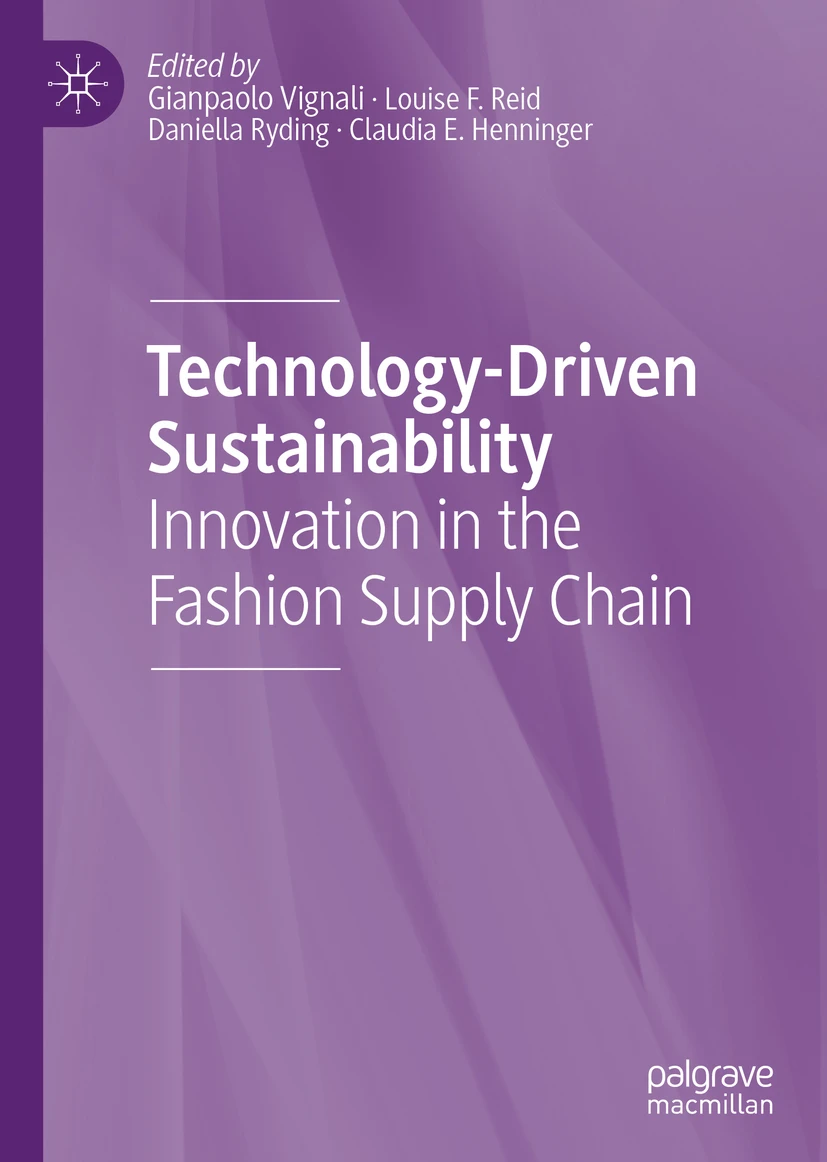
Jasmien co-wrote a chapter titled ‘How Technology Influences the Circular Economy’ in the book ‘Technology-Driven Sustainability, Innovation in the Fashion Supply Chain’ (Palgrave, 2019) – with Nina Bürklin.

Over the past decades, the fashion industry has become one of the most resource-intensive industries in the world. Throughout the whole value chain, from production to usage as well as with regard to disposal of clothing, there’s a huge impact. Nevertheless, advancements in modern technology have served to develop innovative solutions to enhance a circular economy leading to waste reduction, design for longevity and service offerings.

The study at hand is the first to closely investigate the concept of a circular economy based on a holistic seven-stage framework. Combining conceptual foundations with multiple case studies, it contributes to a further understanding of sustainable development through technological innovations.

This chapter contains a multiple case study approach based on the seven-stage Close The Loop framework established in 2015 (resources, design, production, retail, consumption, end of life and systems thinking/sustainable entrepreneurship). Thus, each phase in the cyclical process is discussed conceptually and further illustrated through best practices from a database of more than 350 innovative cases in fashion. Lastly, concrete managerial implications for hands-on strategies to be implemented in fashion are derived.

Results depict the current status quo of technology in fashion and propose the implication of diverse innovations to foster a circular economy. These can range from 3D-virtual prototyping in order to save resources up to block chain systems to increase transparency along the whole value chain. Further findings include the use of technology to create a stronger bond between consumers and their clothing to avoid quick disposal of their items.

Loading new posts...
No more posts